


Anticipate cloture of your ELP after 15 years goes beyond the simple administrative aspect: this is a key moment to shelter your savings in housing and decide with discernment the future of your savings. Understanding the rules, tax implications and practical alternatives helps you not to lose in return or rights, while orienting your capital without stress towards projects that are adapted to your life and that of your family.
Summary of key points
- ✅ The ELP is automatically closed after 15 years for those opened after March 2011.
- ✅ Closing results in loss of loan and government premium benefits.
- ✅ It is advisable to anticipate closure to optimize taxation and transmission.
What to remember: what becomes of the ELP after 15 years?
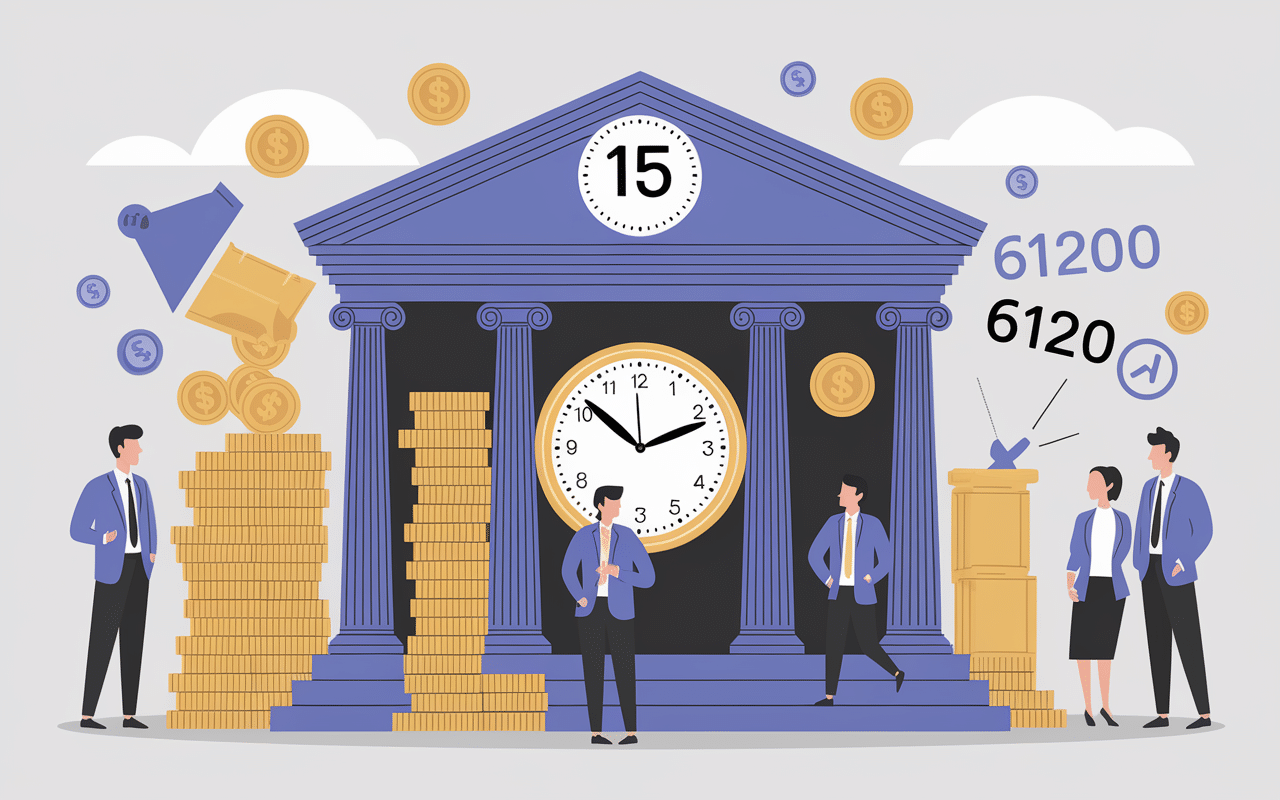
When a ELP) was opened after 1 March 2011, your bank automatically closes after 15 years. In practice, this means that any additional payments are not possible, the initial interest rate disappears, and the loan duties and possible State premiums cease. The funds are given to you, but the tax treatment depends on the date of opening. For LEPs opened before 2011, their duration may be longer, even if you can no longer deposit money after 10 years. It is better to anticipate the deadline, otherwise you will see, melt some advantages or complicate the transmission of your heritage.
Please be aware that the ELP ceiling is set at 61 200 €, and each withdrawal or closure triggers payment of social contributions (17.2%), sometimes of PFU (12.8%) interest on plans over 12 years old.
Life of the ELP: what limits?
The duration of an ELP is framed – for those opened from 1and March 2011, 15 years is the maximum allowed. Previous ELPs may remain longer, sometimes indefinitely, but with restrictions on deposits and associated profits.
Small reminder: at departure, you must pay 225 €and ensure a minimum of 540 €/year during the savings phase. Often the saver thinks he can let his ELP live without constraint, forgetting the calendar, while the bank automatically closes the plan 15 years for those opened after 2011. The conditions of management and saving change radically.
| Date of opening | Maximum duration |
|---|---|
| Before 1and March 2011 | Unlimited (but impossible after 10 years) |
| After 1and March 2011 | 15 years (later automatic closure) |
In all cases, the ELP's regulatory ceiling remains fixed at 61 200 €. Some keep in mind an old note or dated advice, but it is worth checking with your bank advisor to avoid surprises!
Automatic closing: what consequences?
Reaching the age of 15 for his PEL regularly generate questions: « After the closing, what happens to my money and my rights? » Let's go straight ahead: the system is framed, but it's best to inform yourself about the right decisions, instead of the default options offered by the bank. A heritage management trainer recently pointed out that few savers really anticipate this shift, which can influence their strategy, especially in family.
Recovery of funds and interruption of benefits
When closing, ELP funds are transferred to your associated current account, or sometimes a waiting booklet. The protected interest rate ceases to apply, you also lose access to the loan and the State premium if they were still in effect.
- For example, for an ELP opened in 2013 at 2.50%, the annual yield gap from Book A (2024: 3 %) may represent a significant difference, sometimes several hundred euro.
- At the time of closing, some see a total interruption of rights, even though the bank sometimes offers transitional support to reinvest capital smoothly.
A real case: Marie saw her plan closed at 2.5% in July 2024, with 30 000 € paid back, losing both the interesting yield and the option on the associated mortgage.
Taxation: taxes and social levies
When the ELP is closed, the interest generated is subject to social contributions (17.2%), and if your plan is over 12 years old (opened after 2018), PPU 12.8 % Also. I am told that it seems on a regular basis that the amounts deducted may surprise me when the plan has worked well.
- For example, on 8 000 € interest over 15 years 1 376 € social levies to be deducted from the outset; In some cases, the PFU adds 12,8 %either around 2 392 € total withdrawn.
- Please note: the tax on exit depends directly on the opening date and profile of your ELP. A preliminary simulation is relatively recommended to avoid regrets, especially if a family transfer or donation is in sight.
Good to know
I recommend that you simulate taxation before the closure of your ELP to avoid any surprises related to social levies and the PFU.
Taxation and transmission: what to know

The reflection on the ELP regularly goes beyond traditional savings: some plan to pass on all or part of the capital to their relatives. However, at maturity, the ELP does not benefit from any specific inheritance provision or special deduction each euro is released, possibly to be reinvested or subsequently transferred by your own means.
Gift, transmission and succession cases
Amounts retained on an ELP can be part of a global family donation. Unlike life insurance (which offers a dedicated discount), the transfer of ELP capital follows the standard discount between child and parent: 100 000 € every 15 years. It is common to see families asking themselves the question in the final: « Is it really as flexible as life insurance? » According to a heritage expert, it is best to consider appropriate planning or even realigning savings towards more flexible investments.
In order to minimize the cost of transmission, it is often recommended to look for more technical envelopes or to be advised on estate mounts. (It is not uncommon for housing savings to lead to a review of the overall organisation of the heritage).
To diversify your investments after closing your ELP, discover the 7 unknown benefits of the PEA to optimize your savings.
To better prepare the future of your savings and avoid bad surprises, discover the PEE taxation after 5 years: what you need to know to optimize your exit.
Optimize PEL output
Once your ELP is closed, repositioning your capital becomes the priority: return, availability, transmission, taxation... Several ways are possible! Sometimes choosing the right support takes longer than expected: you can be influenced by offers or the pressure of the moment. According to some professionals, it's best to give yourself a few weeks to think, the best choice never comes in the rush.
Comparison of post-PEL savings alternatives
Here are some examples to keep in mind when it comes to reallocating your funds:
| Product | Ceiling | Average yield (2024/25) | Taxation |
|---|---|---|---|
| Book A | 22 950 € | 3 % | Exemption: |
| LDDS | 12 000 € | 3 % | Exemption: |
| Life insurance (euro funds) | No ceiling | 2,60 % | 8-year discount: 4,600 € (persons alone), 9 200 € (couple) |
| SCPI | No ceiling | 4,72 % | PFU/Tax Order according to duration |
- The right investment depends on your uses: do you want immediate liquidity, secure yield or prepare a transmission? (An advisor recently reported that each option may be suitable for a given profile, but never at all.)
- Before acting, giving time for reflection is often beneficial: using a simulator or organizing a consulting interview can clarify the logic of transfer, while avoiding rushing to a new product.
Should we be accompanied?
The approach to the end of an ELP frequently invites (re)thinking all its heritage. Between estate management, new management for savings, or taxation, it's not always easy to drive everything alone!
Platforms see growing demand for personalized support: Better rates, for example, 4,7/5 on Trustpilot, with 3,315 customer reviews, sign of real comfort to get help. A suitable appointment can benefit all those who seek to optimize their arbitrations and to advance calmly in these rather technical approaches.
- Consult a simulator or experienced advisor is useful to accurately anticipate the net amount after closing, choose the best calendar and define according to your family and heritage.
- Rules are changing rapidly, as are strategies: tailor-made support offers an opportunity to transform the end of an ELP into a truly constructive project – in practice, those who are followed often evoke a more serene decision.
FAQ – Your latest concrete questions on the release of the ELP
Each situation requires special attention. Finally, there are some answers to the most common questions heard during interviews, on the Internet or in discussions between relatives:
- My ELP is coming to an end, is it better to wait for the fence or to prepare for it sooner?
Better to anticipate, simulating any remaining taxes and interests. A pre-term withdrawal may sometimes be more advantageous on the tax side, especially if you expect a change in family or tax status. - Is it possible to open a new ELP after closing?
Yes, the option exists, but the rate applied will be that of the moment (regularly lower than before). A minimum of 225 €then 540 € per year is required. - Does the bank charge when transferring funds?
As a rule, there is no fee on the pure exit of the ELP, but beware of the transfer fee if you then reinvest in certain products. Remember to check each condition accurately before entering into a new establishment.
If there is any doubt, a meeting with a heritage expert or specialized digital accompaniment can provide you with additional insight, always in relation to your profile and expectations of the moment.