


The 10th anniversary of your PEL represents a real turning point in the management of your savings, with concrete decisions to consider if you want to preserve your interests and enjoy the benefits of theOnline banking savings. The idea here – to make the choices available clear, through honest comparisons and concrete explanations of transfer or closing procedures, to make sure your priority is peace of mind, looking for performance or a tailored family approach.
PEL after 10 years: which concrete options to choose for your savings?

Your Housing Savings Plan (LSP) is in its tenth year and inevitably the question arises: should we continue, close it or opt for a different option? Let's take a closer look at how to turn this moment into a real opportunity for your finances.
Three main paths open: keep your ELP open (with certain restrictions and partial loss of benefits), choose closure (to exploit your capital elsewhere) or transfer this money to more dynamic solutions such as life insurance. In practice, an essential point – your ELP's interest rate can far exceed that of many books today (2,25 % on some PELs opened in 2024, against 3.0% net taxation for Book A in the 1st quarter of 2024, to get an idea).
Summary of key points
- ✅ After 10 years, the ELP offers three main options: maintain, close or transfer
- ✅ The ELP interest rate may remain advantageous compared to other books
- ✅ Each choice has a specific fiscal and heritage impact
At a glance: the choices at your disposal
Here are the major leads to explore at the key date:
- Live the ELP until the 15th year (but impossible to feed and loan rights freeze from the 10th year)
- Fence to release accumulated capital (to purchase, or reinvest in another medium)
- Choose a transfer to an alternative product: life insurance, PER, SCPI, or preferred rate booklet, for example
The stake is not thin. Each decision directly changes taxation, yield potential or the ability to pass on capital. Don't worry, everything will be reviewed, taking a concrete example along the way.
What happens to the ELP after 10 years?
At that time, the ELP's status was subject to adjustments – no more new payments or additional loan fees. Despite this, interest continues to run at the initially guaranteed rate, which is consistently higher than what is offered by current investments.
Operation and conditions after maturity
After 10 years, the ELP remains active but under a particular regime:
- Scheduled payments automatically cease
- The interest rate is maintained at that of the original contract (a real asset when the market drops)
- Lending rights no longer move (it is no longer possible to increase borrowing capacity via the consolidated LEP year after year)
- The ceiling remains at 61 200 € – no longer allowed to add new funds
It is also noted that, after 15 years, the ELP is automatically converted into a classic banking booklet (a rate set by your bank, often lower, subject to different taxes sometimes less favourable).
Concrete example
Camille, who signed an ELP in 2014 2,50 %See his contract come to an end. In the meantime, his interests 2,50 % (excluding social contributions) are credited each year, i.e. approximately 1 500 € Annual 60 000 € placed. But be careful, in the 15th year, the bank generally operates a completely different pay system... Some customers report on this fairly late. It is therefore worth informing yourself in advance.
Should we keep, close or transfer your ELP after 10 years?
Choosing sometimes involves giving up... The right balance will depend on your project, the level of risk accepted, or even the immediate need for cash or transmission.
Maintain the ELP: relevant advantages, disadvantages and profiles
The ELP can be retained until the 15th year. If the originally negotiated rate remains attractive, it can be a defensive strategy appreciated in the face of inflation, according to several advisors. Funds remain available at no withdrawal costs. However, it is no longer possible to increase them, and lending rights are frozen or even cancelled in the tenth year.
In short, this maintenance will seduce especially those who are concerned with security and without a pressing real estate project. However, for those who want to boost or optimize transmission, other solutions deserve a look. Some feedback shows that it is not uncommon to want « keep » this contract out of concern, while a careful comparison reveals a lower interest at the end of the day.
Closing the ELP: why, when and at what tax cost?
Closing the ELP at 10 years often corresponds to a need for liquidity (purchase, family transmission, or strategic reallocation). Pay attention to applicable taxation:
- Gains generated after 2018 are subject to UFP (30%: 12.8% tax, 17.2% social contributions) at the time of closure
- For creation LEPs prior to 2018, only interest generated after that date shall be submitted to it.
Before deciding, it's best to ask his bank for a simulation. According to one bank advisor interviewed, many savers think they are doing a good tax deal, while in patient two or three years, their savings could have been more profitable. Sometimes a simple advice appointment makes a difference.
Transfer funds: when alternative becomes paid
Many savers often use the term ELP to rethink their heritage strategy. For example, life insurance makes it possible to capitalise on tax reduction after 8 years (up to 4 600 €/year/person, 9 200 € for a couple), while the PER or some booklets boost both flexibility and yield prospects. However, each envelope has its subtleties, it is better to ensure that its contours are controlled.
An online simulator offers a significant gain to evaluate the winning option. It is sometimes assumed that all alternatives are worth, in reality, the difference in return or taxation can reach several thousand euro depending on the profile of the saver (family, future retired...). A heritage expert mentioned the case of a young couple who had won nearly 4,000 € over five years after comparing two similar supports.
Taxation and succession of a mature ELP
Often left out, taxation and transmission can sometimes unexpectedly erode your savings. It's better to lean for a moment to avoid bad surprises.
What samples at the fence, and how to anticipate them?
For holders of an LEP opened after January 2018, all interest earned after the 10 years shall be subject to the UFP of 30 %. If the plan is older, only interest received since the reform is affected. Social contributions (17,2 %) remain in force every year from the first euro.
To illustrate concretely – on 10 000 € interest generated from 2018 onwards, it remains approximately 7 000 € net after taxation. Some users are surprised, hence the importance of anticipating and accounting. A wealth manager shared that many discovered the magnitude of the levies only when receiving the transfer...
Transmission and succession: can we do better for our loved ones?
At the opening of a succession, the valuation of the ELP adds to the estate, with bank charges capped at 1 % of stock (maximum 850 €, often less so anticipated). But for those whose transmission of wealth is a priority, life insurance or certain secure euro funds stand out, thanks to specific discounts (up to 152 500 € per beneficiary in life insurance, as prescribed).
The question to ask is: why miss an estate advantage when a well-thought-out reorganization would make it possible to optimise transmission, while limiting costs?
Comparatif PEL / Other solutions: which placement should be preferred after 10 years?
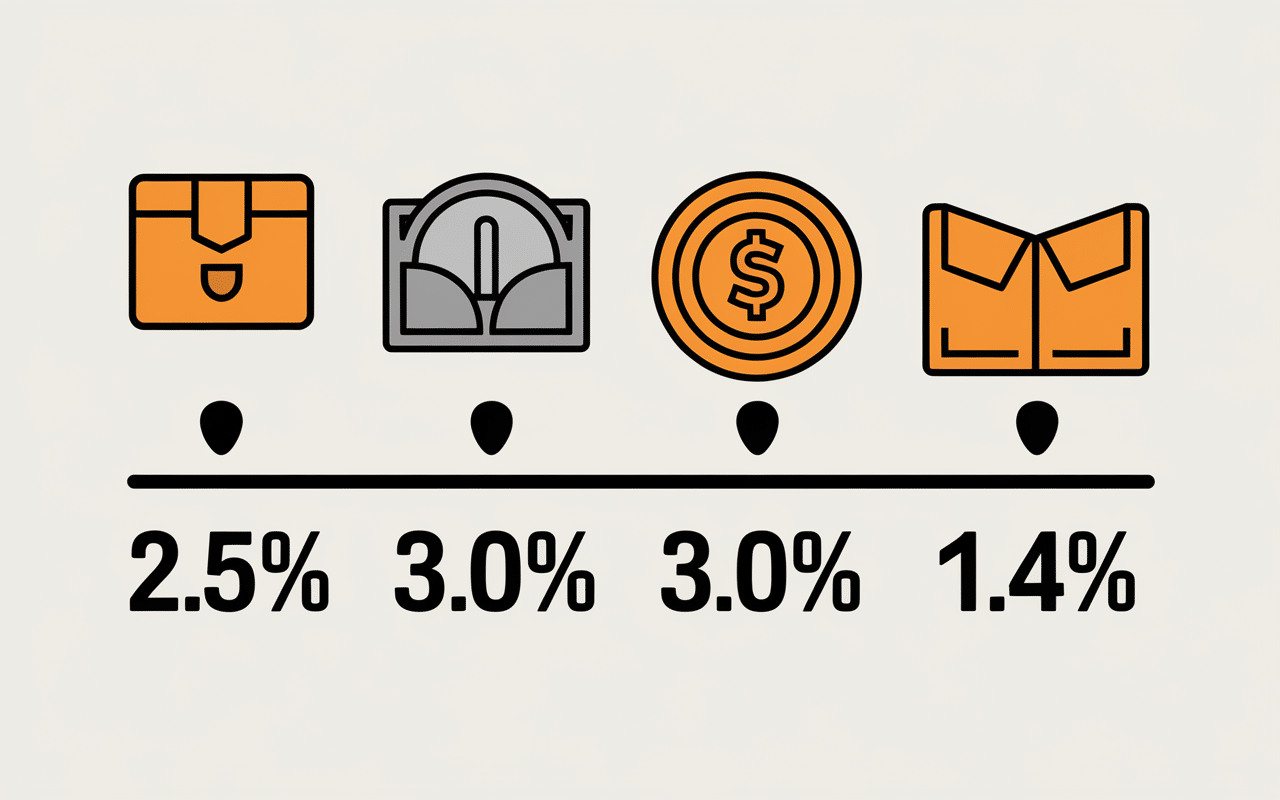
Do you hesitate between keeping your ELP or exploring other banking options? You are offered a short comparison, tailored to guide your choice according to age, family situation or short- and medium-term goals.
Simplified comparative table
| Product | Average net rate (2025) | Taxation | Liquidity | Strengths / Weaknesses |
|---|---|---|---|---|
| PEL (2014) | ~2,5 % | 30 % PFU interest after 2018 | Immediate (except for ongoing immo project) | Stable, secure, capped, taxed |
| Life insurance | 1,4-3,2 % (EUR 2024) | PFU or IR, allowance after 8 years | Under conditions, flexibility | Transmission, variable yield |
| Book A | 3,00 % (2024, net of taxes) | Zero taxation | Immediate | Ceiling (22 950) €), yield sensitive to public decisions |
Finally: keep an eye on the ELP rate – as long as it remains higher than that of Book A, it retains real potential. Also monitor taxation, and do not exclude the estate virtues of life insurance if transmission is one of your priorities. A wealth manager was gliding that some holders of "old" ELP thus accumulated double interest compared to a recent Book A.
Tables, simulators and concrete approaches for deciding
If you like to have practical tools, simulators or check-lists are real allies to slice calmly.
Key steps to manage the maturity of its ELP
- Give the exact picture of your situation. Rate and capital of the ELP, links with your projects soon (1 to 5 years)
- Use a simulator to compare net tax returns (PEL, life insurance, booklet, etc.)
- Ask your bank advisor for a complete statement and a tax impact simulation
- Remember to download or print a dedicated checklist, often available via the customer area or on the bank's website
Small anecdote: Most clients surveyed who use a simulator change their mind after seeing the net amount over 5 years. A figure that in some cases upsets the final choice!
Where to find simulators and useful accompaniment?
Today, there are many simulators offered by banks, but also at heritage management expert sites. Product Career Projection, Tax Compare, Succession Simulator... A simple request (sometimes in visio) will allow you to get a truly tailor-made accompaniment. In the end, a click is sometimes the starting point for a whole new strategy.
To go further: the official government simulator (Here) provides a reliable benchmark, as well as interactive guides for major comparators. A trainer often stressed how these tools help to "object" each choice.
FAQ – All your questions about the ELP after 10 years
Here is a compilation of the regular questions, and the answers adapted to the current context:
Do you have to close your ELP after 10 years?
Not at all. The ELP can simply remain open until the 15th year, but it can no longer be fed and loses its lending rights as early as 10.
What is the interest rate retained?
The opening rate remains valid (e.g. 2,25 % for an ELP of 2024). A "old" ELP can therefore show yields that are rarely crossed today, hence the interest to check, on a case-by-case basis.
What are the tax impacts at the close?
Interest acquired after 2018 is automatically taxed at 30 % PFU. It is useful to distinguish the cumulations of interest "before/after 2018" before committing, as a reminder, social levies from 17,2 % are collected annually.
Can you transfer your ELP to another bank or product?
Transfer between banks is rarely accepted after 10 years; the majority of establishments close the first application. To take advantage of another medium (life insurance, boosted booklet, PER...), the fence is necessary, which can result in the loss of some historical assets.
What difference with life insurance?
Life insurance offers more modularity on payments, a tax softened after 8 years (annual reduction of 4 600 €/person), and real benefits in case of succession for relatives (152 500 € a reduction per beneficiary, subject to official conditions). A heritage advisor pointed out that for many families, these discounts make all the difference to transmission.
Bonus checklist: your 4 key steps
- Identify precisely the opening date and the ELP rate
- Simulate net return and tax impact according to each scenario
- Schedule an appointment for informed arbitration
- Learn widely about alternatives (life insurance, PER, booklets, SCPI, etc.)
Need to go further?
I recommend you test, interview simulators and confront solutions... And why not register a video or telephone interview with a certified advisor? The value of your savings deserves your full attention is not always obvious, but each well prepared step counts.