

It is better to control the EEP taxation after 5 years, even though the subject sometimes seems arduous ; In practice, the benefits are real: a tax-free exit on income, lighter approaches and the certainty of protecting your projects, without being restrained by taxation. As an advisor, my goal is to accompany you step by step through the rules of Business Savings Plan, providing enlightening examples and field tips, so that each choice remains simple, understandable and reassuring for you and your loved ones.
Taxation at the exit of the EEP after 5 years – what you really need to know
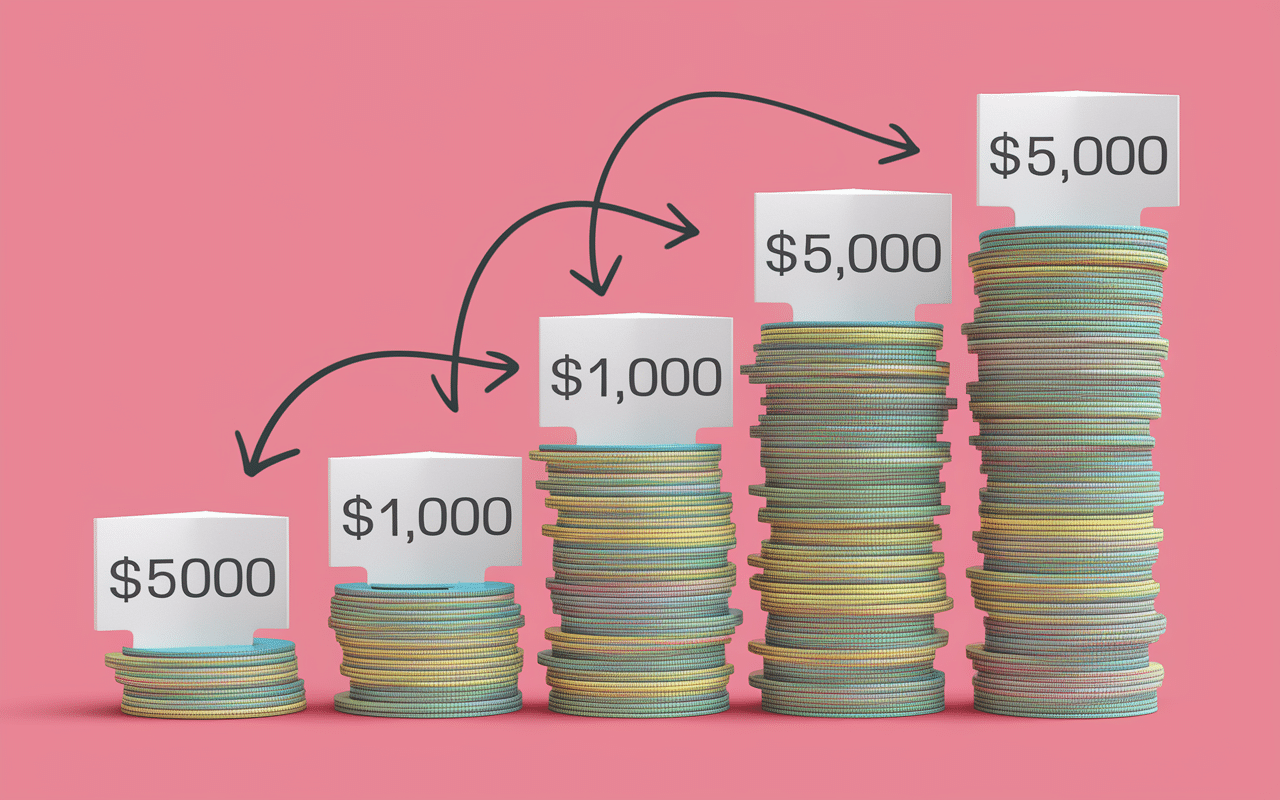
Good news: after 5 years, the Business Savings Plan (BSP) gives you the right to withdraw your savings without going through income tax, whether on capital or on earnings. In other words, only social levies (CSG, CRDS, etc.) which reach 17,2 % Today, the gains are being affected. On 1 000 € gains, there is still 828 € net for your projects.
Keep in mind: except in the case of an unjustified early exit, any bad tax surprise is ruled out. In practice, the manager collects directly what he has to and manages the formalities: no specific declaration, provided the transaction takes place within the framework provided, and the capital becomes available for your future needs. This mechanism applies equally to participation, interest, abundance, or your voluntary EAP payments.
Another point to consider – how does this mechanics work in practice, and what are the useful rules to follow in detail? Let us look more closely at practical cases, numerical examples and updated benchmarks.
Summary of key points
- ✅ Retirement without income tax after 5 years, only social contributions apply.
- ✅ Each deposit has its own 5-year time limit.
- ✅ Early exits are possible under legal conditions, with necessary proofs.
What is the EEP? Principles and simple operation

Before dealing with taxation, a reminder is required: the Company Savings Plan works as a collective safe in your name, proposed by your employer to integrate premiums (participation, interest), but also to supplement your personal payments and those of the company in the form of abundantly.
Each payment remains locked in 5 years (incompressible duration), but one detail deserves attention: these 5 years are calculated from each deposit, not from the opening of the plan. At the time of the withdrawal, some of the subtlety of the count was eroded.
Some highlights illustrate this feature:
- The ceiling for voluntary payments is reached 25 % your annual gross remuneration.
- Abundant employer may represent up to 3 times your payment, capped at 3 844,8 € (or 6 920,64 € If business titles are concerned).
- Funds can be placed on several media: FCPE, SICAV, corporate shares... Each chooses according to its saving profile.
- Standard release occurs after 5 years, except in exceptional circumstances defined by law.
For example, Sophie pays each year 1 000 €. Even if she leaves the company, her EEP remains transferable, portable and never lost: a trainer recently pointed out that beyond figures, the flexibility of the scheme reassures many employees as they progress.
Taxation after 5 years: exemptions, levies, and concrete cases
At times, hesitancy persists during the release: will taxation increase the transaction? In fact, the rules are clear: the income tax exemption applies to both capital and EIP earnings, only social contributions are due on capital gains (interest, dividends, etc.). This clarity seduces many users, according to some managers.
What is exempt, what is not exempt
After five years, your EEP savings benefit from a particularly advantageous derogation scheme:
- No income tax on withdrawn capital, including accumulated capital gains.
- Abundantly employer remains taxable within the limit of 3 844,8 € or 6 920,64 € (scale 2024 for separate corporate shares).
- To remember: only earnings are subject to social levies (17,2 % in effect), settled directly by the plan manager.
Here are two examples:
| Situation | Amount withdrawn | Social levies (17.2%) | Net amount received |
|---|---|---|---|
| Capital without gain (initial payment) | 4 000 € | 0 € | 4 000 € |
| Value added generated | 1 000 € | 172 € | 828 € |
| Total release (capital + gains) | 5 000 € | 172 € (on the earnings of 1000 only) €) | 4 828 € |
The question of the ELP tax return is a regular one: in practice, if the deadline is met (more than 5 years) and there is no unjustified early exit, nothing to report. However, an error in proofs or an out-of-frame exit results in the loss of the tax advantage. It is therefore best to follow the steps to the letter: a professional recently insisted on this point during a training session.
How to unlock EAP funds: steps, deadlines and evidence
The move to the act, i.e. to remove your EEP, takes place in several well marked steps. Today, the vast majority of managers offer a convenient online platform, but it is best to prepare documentation in advance to avoid any complication.
Practical steps to unlock your funds
The usual procedure includes:
- Access via your employee area from the account content (Amundi, Natixis, etc.).
- Selection of the reason – "Release after 5 years" on the payments concerned.
- The addition of a personal BIR for the transfer of funds.
- Validation of the application, either electronically or by paper form when required.
The transfer usually takes place under 8 to 15 working daysnet of social contributions. No proof is required during this "classical" release. Each year, your account content sends you a summary tax certificate. As an anecdote, a user recently reported having released more than 12 000 € In just a few clicks, without further formality the simplicity of the EEP is regularly welcomed by some experts in the sector.
What it's best to anticipate
If you have changed employer or address, check that your information is up to date. Keep all written records: statements, certificates, emails... This can be valuable in case of administration control or for future ceiling calculation.
Last point to note for peace of mind: the social share is taken automatically and the manager sends you the net. It is regularly observed that no additional declaration is required.
Good to know
I recommend that you keep all your EAP supporting documents and e-mails, they may be essential in the event of a check or to prove the compliance of your release request.
Early release and special situations: major exceptions
The early withdrawal of the EEP before the expiry of five years remains reserved for situations laid down by law. Point of vigilance: taxation remains leniency if the demand is well justified and duly documented. For some employees who experienced unforeseen circumstances, this flexibility was crucial, according to the managers interviewed.
The 10 official reasons for early release
Marriage, birth, divorce with children, acquisition or extension of principal residence, overindebtedness, disability, death... The Labour Code (articles L3332-25 to L3332-27) is rather generous in this regard. The application must be filed under 6 months after the event (excluding death or over-indebtedness where the delay does not exist).
- The withdrawal remains exempt from income tax, following the same pattern as the traditional exit at 5 years.
- Social contributions 17,2 % target earnings only (in 2024).
- A proof adapted to the event is imperative (birth certificate, real estate compromise, Bank of France certificate...).
Note however: an unfounded application or without proof valid before 5 years cancels the overall exemption, capital and earnings becoming retaxable to income tax. Several professionals have already noted that this kind of scorn transforms in an instant a "fluid" savings into a complex tax case. This is also why, in significant life changes, it is often advisable to be supported in advance.
PEE, PEA, PER, life insurance: the tax match at the exit
Is it really the EEP that offers the best tax exit among long savings products? It is worth replacing the device against its main "competitors", to better measure where optimizations are hidden.
Just as it is essential to understand « can one keep an ELP over 15 years: regulation, consequences and choice to make », mastering the EEP tax after 5 years allows you to optimize your exits and take full advantage of your wage savings.
To take full advantage of your Business Savings Plan, find out how Maximize your company's help through a wealth of wage savings.
To optimize your savings strategy, discover also the 7 unknown benefits of the PEA to optimize your savings, an ideal complement to the EEP.
| Product | Taxation at exit | Social levies (earnings) | Flexibility/liquidity |
|---|---|---|---|
| EEP (after 5 years) | Exempt from tax | Yes, 17,2 % | Average (blocking 5 years, exceptions foreseen) |
| PEA (Plan d'Epargne en Actions) | Exempt from tax (after 5 years) | Yes, 17,2 % | Good (deletion possible from 5 years, in slices) |
| RIP (Retirement Savings Plan) | Taxable exit (rent or capital, depending on the chosen option) | Yes, 17,2 % | Low (retirement possible, especially in retirement, rare cases of derogation) |
| Life insurance | Allowance if detained over 8 years, then IR or PFU (7.5% or 12.8%) | Yes, 17,2 % | High (possible purchase based on contract and duration) |
Under comparable conditions, the EEP competes with the EAP, while remaining more flexible at the company level: to this adds abundance and the support of certain costs. When the time comes for an unanticipated expenditure, several advisers stress that the "fluidity" of the EEP really makes daily life easier.
FAQ: common points and mistakes to avoid
Many users ask about the same points – and fear of a false step is never far away. Here are the answers from the field to remove the most usual doubts:
Is it necessary to declare the withdrawal of the EEP to taxes?
No, if the withdrawal meets the 5-year deadline or falls within an authorized advance framework: no additional returns and no taxation. The manager collects the social share, all the rest is paid to you without formality attached.
Can we lose the tax exemption?
Yes, it is possible – an unwarranted early exit, or an unaccepted proof, cancels the tax benefit. Capital and earnings then become taxable on income tax. Some experts recommend paying particular attention to the reason given in order to avoid disappointment.
What net amount remains on capital gains?
In practice, you perceive 82,8 % of the initial gain or 828 € for 1 000 € capital gains after social contributions. It is generally observed that the calculation is direct, without hidden surprise.
Does the employer's abundance really remain exempt?
Yes, as long as the ceiling of 3 times your payment is not exceeded, within the limit of 3 844,8 € (or 6 920,64 € for actions) and 8 % Annual PASS. This principle is often the best lever of the EEP, based on returns to business.
Can you transfer your old EEP to a new company?
Yes, this is quite possible thanks to the principle of portability: the process is done with your account content and does not lead to any taxation or loss of priority. Sometimes an employee keeps acquired rights several years after leaving.
Is there a tip to maximize your EEP?
When approaching retirement, it may be smart to transfer a portion to the RIP. This keeps the tax advantage even if the EEP ceiling is not used. In the family, this transfer is useful for securing medium- and long-term projects, some family counsellors suggest planning this kind of arbitration well before retirement.
Express Glossary and Key Sources
- Social levies: all CSG/CRDS contributions applied to earnings and dividends as part of a withdrawal.
- Abundance: amounts paid by the employer to supplement personal contributions on the EAP.
- PASS (Annual Social Security Base): 46 368 € for 2024.
- Justification: document to be provided for any early release (marriage, real estate acquisition, etc.).
To go further or download updated templates, access official resources: Public Service: PEE Taxation | Fiscaloo.fr : PEE Guide | Keys to the Bank
For a personalized tool, do not hesitate to download my net gain calculator or join one of the collective sessions dedicated to the EEP – you can then prepare your withdrawal with increased optimization and serenity.