
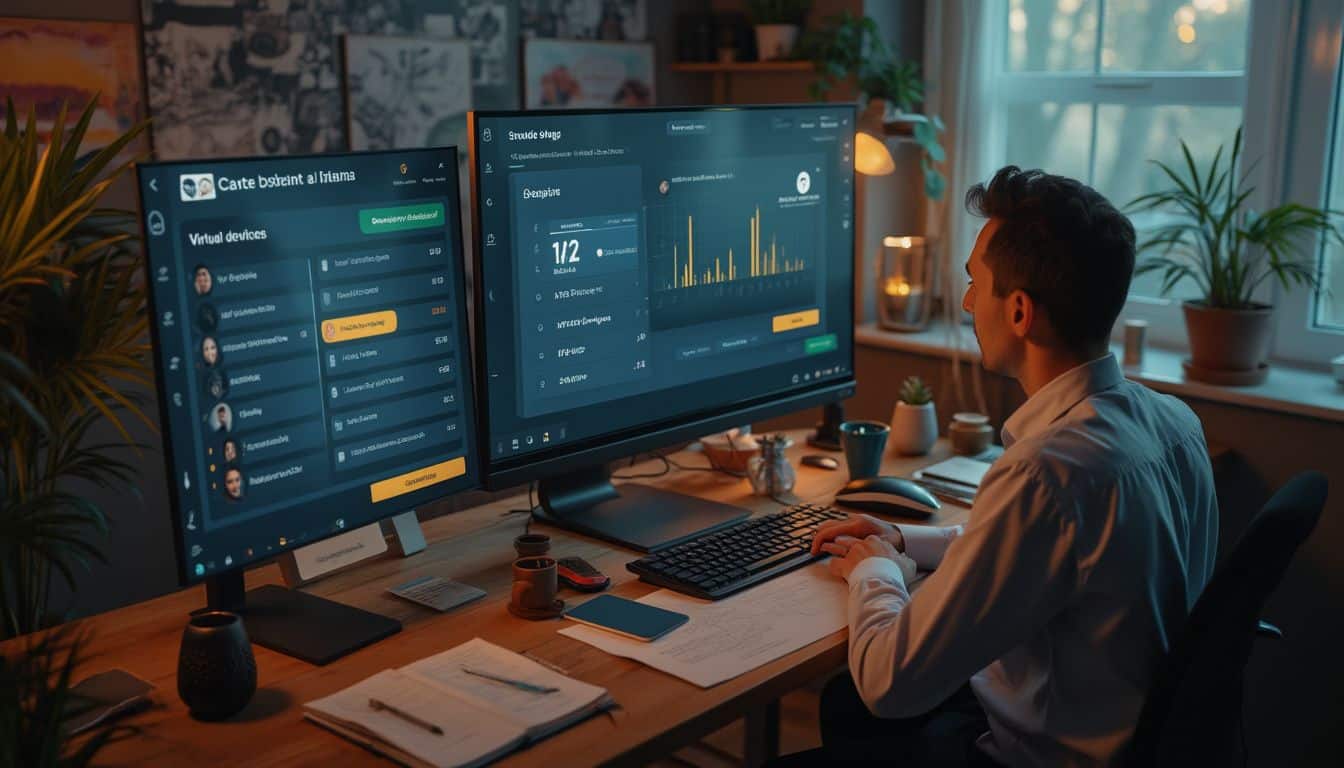

Choose a Virtual payment terminal can be a challenge for freelance. That you are in the e-commerce, content creation, or any other independent activity, it is crucial to find a solution that meets your needs. Options such as Stripe, Payoneer, Verifone, Google Wallet and GoCardless each offer specific advantages and disadvantages in terms of Fresh, integration and features. I will help you navigate among these alternatives to find the one that suits you best.
Virtual payment terminal: definition and benefits
What is a virtual payment terminal?
A virtual payment terminal, or TPV, is a payment solution online allowing companies to process credit card transactions without the need for a physical terminal. Unlike conventional terminals, the TPV operates via a web interface or mobile application, thus providing greater flexibility for traders.
By using a virtual payment terminal, companies can accept payments in a secure manner. Card data is entered on a secure online platform, often integrated with management systems or e-commerce sites. This facilitates distance transactions, especially for online sales, distance services or nomadic businesses.
Benefits of a virtual payment terminal
Virtual payment terminals offer many advantages for companies of all sizes. Some of the main benefits include:
- Flexibility: TPVs can process payments at any time and anywhere, as long as you have access to the Internet. This is particularly useful for mobile companies or traders participating in events.
- Cost reduction: The absence of a physical terminal means less equipment and maintenance costs. In addition, some services offer competitive rates for transactions.
- Easy integration: TPVs can often be integrated with e-commerce management platforms such as WooTrade or Customer Relationship Management Systems (CRM), thereby simplifying payment management.
- Increased security: Virtual payment terminals use advanced security protocols to protect bank card data, thereby reducing the risk of fraud.
- Accessibility: TPVs are accessible to small businesses and independents, offering a professional payment solution without the high costs associated with traditional terminals.
In summary, the use of a virtual payment terminal can simplify and secure the payment process for many companies, while providing greater flexibility and accessibility.
The importance of virtual TPE for freelancers
The Virtual electronic payment terminals (ETPs) have become indispensable tools for freelancers. By facilitating online financial transactions, they enable independents to manage their payments more effectively and meet the expectations of their clients.
Flexibility and time saving
One of the main advantages of virtual TPEs is their flexibility. Unlike traditional TPEs, which require physical hardware and wired connection, virtual TPEs can be used anywhere and at any time, when there is an Internet connection. This is particularly beneficial for freelancers who often work on the move or from different places.
In addition, virtual TPEs save significant time. By automating payment processes, they reduce the need to manually process each transaction. This allows freelancers to focus more on their core business, rather than on tedious administrative tasks.
Improved customer experience
Virtual TPEs also offer best customer experience. By allowing fast and secure online payments, they meet the expectations of modern customers, who are looking for convenient and reliable payment solutions. Customers can thus carry out their transactions with confidence, without fear for the security of their banking information.
In addition, virtual TPEs can be integrated into various e-commerce platforms, thus facilitating the entire payment process. This allows freelancers to offer a seamless and consistent user experience, thereby enhancing customer satisfaction and loyalty.
List of alternatives to virtual TPEs
- Stripe : Easy integration with e-commerce platforms, transparent fees.
- Payoneer Available in many countries, possibility of withdrawal on local bank account.
- Verifone : Proposes recurring payments and multiple currencies.
- Google Wallet : Free option for money shipments and receptions.
- GoCardless : Secure payment interfaces adapted to the needs of freelancers.
Selection criteria for a virtual payment terminal
Choosing the right virtual payment terminal is essential for any company that wants to offer a seamless and secure payment experience to its customers. The following are the main criteria to be considered.
Transaction fees
Transaction fees are often one of the most important criteria for businesses, especially those with a large volume of transactions. These costs can vary considerably from supplier to supplier.
StripeFor example, offers a transaction fee of 1.75% to 2.50%. This is a very competitive option compared to other solutions like Payoneer, which charges 3% for credit card transactions and 1.50 $ for local bank transfers.
It is also important to consider additional costs that may apply, such as currency conversion costs or management fees. For example, Verifone apply 2.9% of the transaction amount plus 30 cents for the United States, which can accumulate quickly if your transaction volume is high.
- Stripe: 1.75% to 2.50% per transaction
- Payoneer3 % for credit card transactions, 1.50 $ for local bank transfers
- Verifone: 2.9% + 30 ¢ per transaction
- GoCardless1 % + 0.20 € by transaction in the European area
Comparing these fees is essential to determine which supplier will allow you to maximize your benefits while providing quality service to your customers.
Essential Features
In addition to the fees, the features offered by the virtual payment terminal are crucial to ensure that it will meet your company's specific needs. The features to look for include:
Integration with platforms : A good payment terminal must integrate easily with the platforms you use. For example, Stripe and GoCardless are compatible with e-commerce platforms such as WooCommerce, making it easy to use for online shops.
Support for recurring payments : For companies that offer recurring subscriptions or services, it is crucial to choose a solution that supports recurring payments. Verifone offers this functionality, which can be a major asset for such companies.
International compatibility : If your business operates internationally, you will need a payment terminal that supports multiple currencies and international payments. Payoneer is an interesting option because it allows to withdraw payments on a local bank account or with a debit card in many countries.
Transparency of costs : It is important that the fees be clear and transparent. For example, Stripe is known for its transparency in fees, which allows companies to better manage their costs.
In summary, taking into account transaction fees and essential features, you will be able to choose the virtual payment terminal that best suits your business and customers.
For a practical and economical solution, discover SumUp: advantages and disadvantages of mobile terminals, ideal for freelancers looking for a simple and efficient terminal.
Comparison of the main virtual TPEs for freelancers
Virtual electronic payment terminals have become an essential tool for freelancers wishing to accept payments in a simple and efficient way. Here is a comparison of the three main virtual TPEs available on the market: SumUp, Zettle and Square. This guide will help you determine which one is best suited to your specific needs.
SumUp
SumUp is a popular mobile payment solution among freelancers due to its competitive transaction fees and ease of use.
- Transaction costs 1.75 per cent per transaction
- Benefits : Intuitive mobile application, no monthly fee, accepts various cards
- Disadvantages : Limited customer support, sometimes delays in transfers
SumUp also offers detailed billing options and reports, making it a complete solution to manage your payments. Its mobile app is very intuitive, allowing you to track your sales in real time.
Zettle
Zettle, formerly known as iZettle, is another popular freelance option. It is distinguished by its ability to easily integrate various trade management tools.
- Transaction costs 1.75 per cent per transaction
- Benefits : Integration with management tools, detailed sales reports, solid technical support
- Disadvantages : Cost of initial hardware, fee for certain advanced features
With Zettle you can also create a product catalog, which simplifies your sales management. Technical support is recognized for its responsiveness, a valuable help in case of problems.
Square
Square is a versatile solution that offers a full range of services, ranging from in-person payments to online payments.
- Transaction costs : 2.6% + 0.10 $ per transaction
- Benefits : Corporate management tools, no monthly fee, 24/7 customer service
- Disadvantages : Slightly higher transaction costs, some advanced features pay
Square stands out for its many integrated tools, such as inventory management and employee management, which can be particularly useful for freelancers with complex needs. In addition, its customer service is available 24/7, a significant asset.
In conclusion, the choice of virtual TPE will depend on your specific needs as a freelancer. SumUp is ideal for those looking for a simple and economical solution, Zettle for those who need advanced management features, and Square for those looking for an all-in-one solution with complete customer support.