


Understanding the financial freedom With an accessible method and good tools, everyone can gradually build their independence, even without significant heritage at the outset. By accompanying customers through current digital solutions PEA ETFs and rental real estate have found that the consistency associated with an adapted pedagogy makes all the difference. It is better to value your concrete progress, think about securing a precautionary savings and adjust the plan according to each project: the idea is that autonomy is within reach, step by step, without excessive pressure or complexity.
Investing to be free: what to remember and an immediate plan
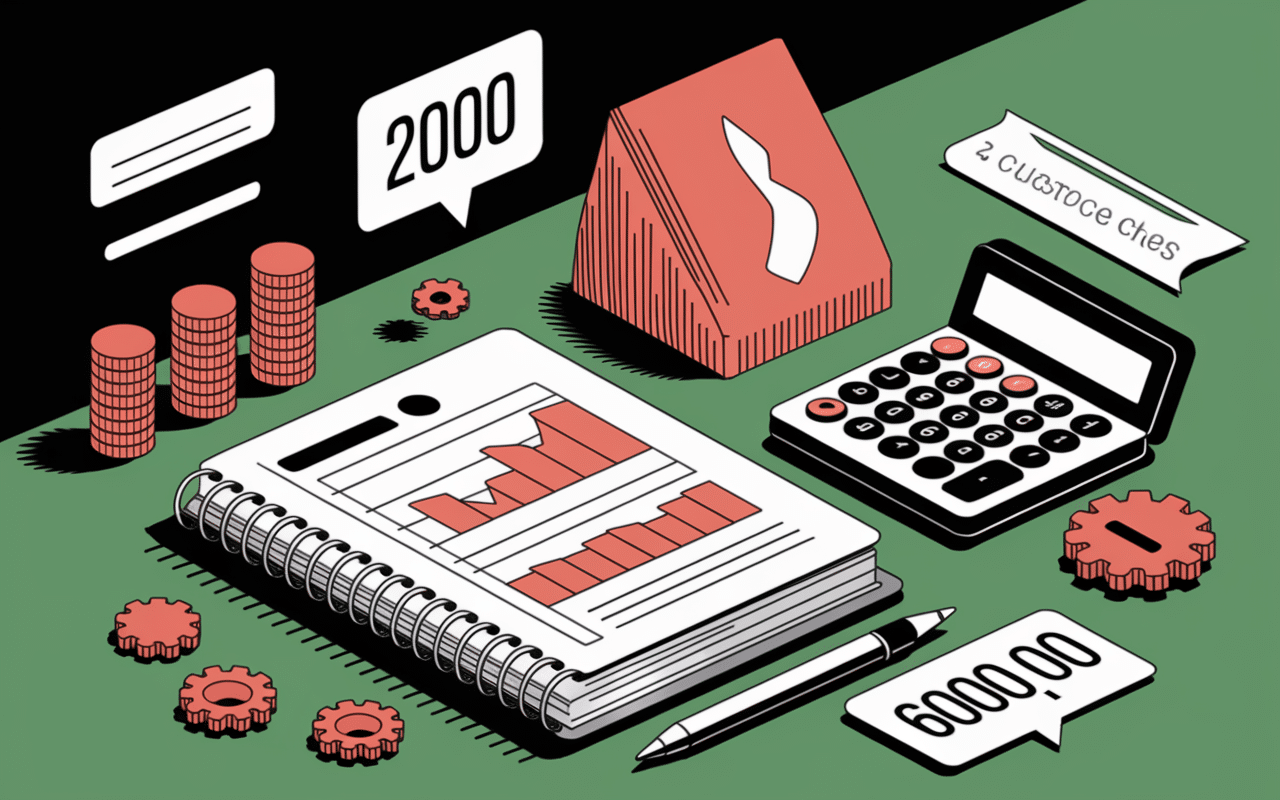
Achieving financial freedom is based on the creation of passive income that is sufficiently regular to cover its current expenses – that is, freeing itself from wage earners' constraints. The calculation is rather pragmatic: first estimate your annual budget, multiply this amount by 25; We then talk about the "magic number", resulting from the 4% rule. In France, this cape becomes accessible from 200 to 500 € monthly savings, notably through ETFs, rental real estate or PEA. Interesting note: by using a simulator, you get a projection adapted to your situation (for example, cover 2 000 € expenditure per month implies that approximately 600 000 € of capital). It's better to keep the goal in mind: investing to emancipate is building your capital and selecting the best investments for your life.
In the face of this kind of ambition, many question: is it realistic, even without a starting fortune? Some professionals consider that partial independence is regularly available in less than 10 years, provided that a step-by-step approach is followed. Admittedly, regularity over 7 or 8 years may be a great surprise! Let's see how to turn this observation into a personalized plan...
What is financial freedom?
Financial freedom is this pivotal moment when one works by choice, not by obligation. In concrete terms, your passive income (investments, rents, interest on savings...) exceeds your monthly expenses: more anxiety about the "discovery" at the end of the month. Is it so complicated? We put a figure, the famous "target capital" or "magic number", according to the simple formula: annual expenditure x25. Example: with 24 000 € The aim of the project is to: 600 000 €. This rule is based on the principle of 4 per cent: in principle, one can withdraw 4 % its assets every year without exhaustion (excluding taxation/costs).
A nod to those who follow the FIRE ("Financial Independence, Remove Early") movement, popularized in the United States: their method uses this same calculation to plan for early emancipation. In our case, it is also valid, provided that we integrate the tax features (PEA, life insurance, IFI) that can optimize or complicate the return. Again, a heritage trainer recently pointed out that each country adds its own subtleties!
The target capital to adapt to its profile
Depending on the case, this "magic number" often varies between 400 000 € and 1 000 000 €It depends on lifestyle and priorities. Living alone with modest needs lowers this threshold, while a family with two children and a desire to secure the future enhances it. A personalized simulator becomes valuable: it refines the trajectory according to your income, horizon and risk tolerance (we see more and more integrated into banking sites).
It's hard not to ask: "How to get through 20 000 € savings to such a capital?" It is often advisable not to dramatize, to move step by step, because the famous "snowball effect" of compound interests ends up playing in your favor. It's really a matter of patience, even if it doesn't seem obvious at the start (an expert board mentioned how consistency makes everything more accessible).
Good to know
I recommend that you wait and stay constant in your investments: this is the key factor for the snowball effect of compound interests to play in your long term.
Assess its investor profile
Before you start, it's best to identify your profile: your attitude to risk, the budget you can mobilise, and if the investment horizon is sufficient... Everyone has a different tolerance for volatility: sometimes this caution makes the investment successful!
First, some suggest that the rule of 50/30/20half of the budget for the most part, a third for pleasures, the rest for investment or saving. Reaching out 200 € or 300 € the national average. Of course, this discipline does not necessarily come naturally, it can take time... But this is the first true step towards greater financial autonomy.
Self-express check – are you ready?
A simple self-diagnostic brings you clarety: your tranquility in the face of fluctuations in capital? An investment horizon of 5 to 10 years Does it seem possible to you? To illustrate, Leo, a 34-year-old computer scientist, had never invested in a stock exchange before starting an automated savings of 250 € per month on an AEP; After 8 years, it accumulates more than 35 000 € By relying more on prudence.
- ✅ Define the amount you can invest without excessive stress (often it is better not to force your hand,).
- ✅ Take the time to find out what might hinder your efforts: risk apprehension, lack of time, or scepticism about the stock market.
- ✅ Imagine your reaction to a possible temporary loss (e.g. 10 % or 20 % one year; If it deprives you of sleep, focus on careful placements).
Another point: one often recommends adjusting one's plan to one's own psychology is not to compete with anyone, but to protect one's security, above all.
Choosing investments according to needs
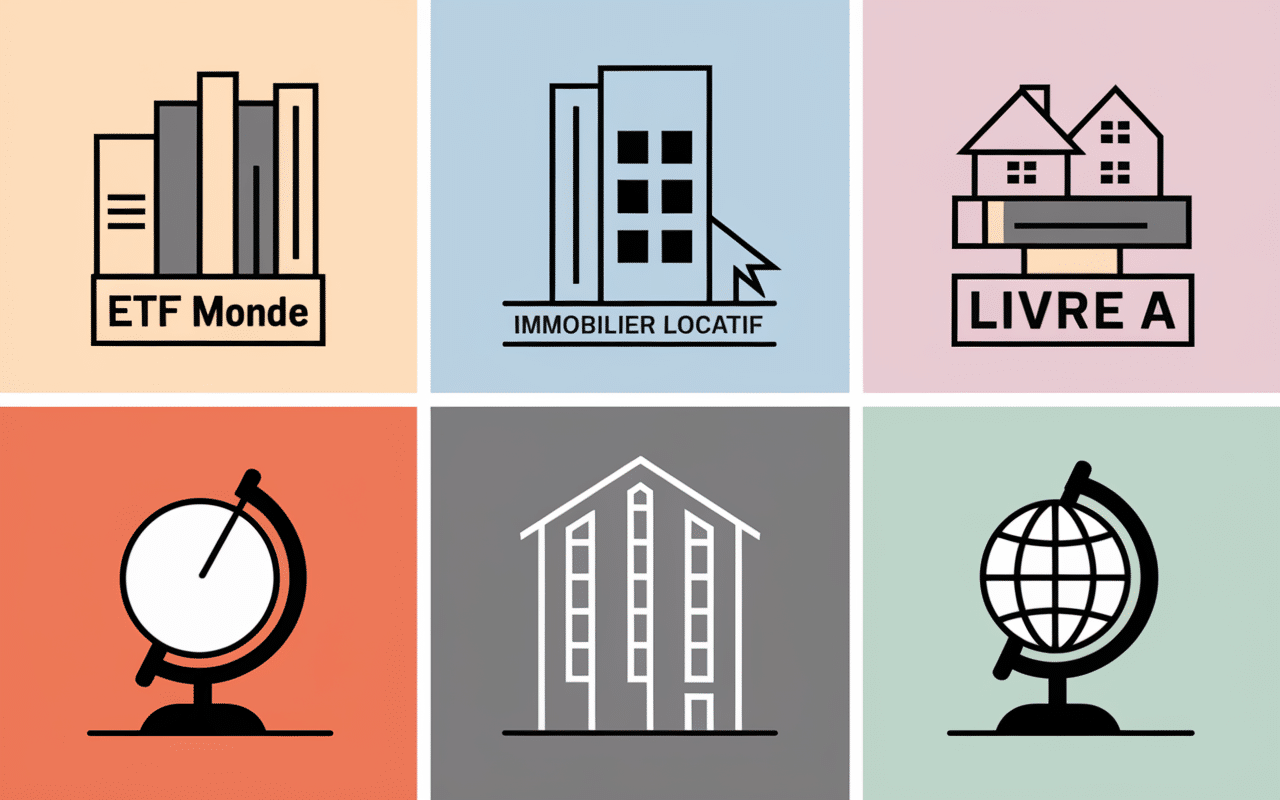
It is not necessary to be a CAC 40 specialist to start! Today, combining ETF world, PEA and real estate rental allows everyone to engage even with few means. On diversified ETFs, the average yield observed over 20 years revolves around 6-8 % per year.
Traditional banking products (book A, life insurance in euros) regularly reassure, while remaining less profitable ("about 2 % per year", sometimes four times less than some ETFs). Some experts recommend keeping one for security savings, but gradually expanding the range of its investments. Here is a small table to situate the returns and risks:
| Type of placement | Average yield | Risks |
|---|---|---|
| ETF World | 6-8 %/year | Volatility, stock risk |
| Rental property | 3-5 %/year | Tenant management, vacation |
| Book A | 3 %/year | Almost none |
| Life insurance (euro funds) | 2-2.5 %/year | Low |
The essential trio to start without big capital
To start without great resources, it is often recommended that products with advantageous taxation such as PEA (ceiling) 225 000 €, tax exemption after five years). Life insurance is also interesting beyond the age of 8. The purchase of ETF via a securities account allows for global diversification with reduced fees.
The advantage is the ease of management (buying in a few clicks, automatic monthly payments) and the possibility of adjusting according to the hazards of life. Even small payments end up weighing over time: start at 200 € per month on the MSCI World ETF, on average at 7 % per year, may lead to 50 000 € passed in about fifteen years... Some analysts suggest that this "mathematical" cap is often considered magical, but it is assiduity that produces this result.
Diversify and pilot over the long term
Diversification remains the benchmark principle to limit risks and avoid disillusionment (some have already experienced the bitter surprise of a sudden "krach"). It would be imprudent to place all his hopes in a single active category or the latest fashion trend. Calibrating its investments stabilizes the wealth in due course, especially in case of correction.
Know the traps and take advantage of time
The temptation is great to want to enjoy the "FOMO", but it would be a shame to confuse speed and precipitation. Staying in the long term, even with reasonable sums, often proves to be the most paying choice. It is regularly observed that the compound interest curve is growing rapidly, while wages are changing much slower. Sometimes a regular ETF holder sees its capital double in a decade, without yielding to market turmoil (an example: Clara, 38, who maintained her discipline and saw her investments grow).
- ✅ It is better not to invest in security savings (necessary emergency funds).
- ✅ Be aware of unregulated or too sophisticated products, especially at the beginning (crypto-currency or exotic options: caution!).
- ✅ Consider rebalancing the portfolio once a year (60% shares, 40% real estate or prudent funds depending on the stage of life).
A well calibrated wallet often surpasses the ephemeral passion! Some professionals invite to use simulators and consult reliable resources when doubts arise.
French taxation and specificities: a lever not to be underestimated
Taxation should not be seen as a constraint: it directly shapes net profit. The PEA provides a capital gains tax exemption after five years; Life insurance, after eight years, provides an appreciated discount (4 600 € per year for a single person). As for IFI (property tax), it only concerns real estate assets beyond 1.3 million €As much as to say that for most investors, it remains distant.
Main tax references and benefits
| Product | Tax advantage |
|---|---|
| PEA | Exempt capital gains after 5 years (max 225 000 €) |
| Life insurance | Reduction 4 600 €/year after 8 years |
| Securities account | Single flat-rate levy 30 % |
| Rented real estate | Pinel, LMNP, micro-land tenure as appropriate |
Another point: the opening of a PEA is regularly the first step in investing in eligible ETFs (not all, so prefer "France or Europe" and check the list each year). In addition, life insurance is available and tax-effective. The procedures are carried out online with most digital banks or brokers, at no entry fees in general.
It is worth noting that French laws offer an attractive environment for "small" investors, compared to other models. It is often recommended to keep an eye on tax developments every year: a financial trainer recently pointed out that the right simulator saves time and avoids tedious calculations.
Moving to action – opening, tracking and optimizing investments
Let us come to the concrete: opening its first securities account or PEA has never been more accessible. It is sufficient to provide for an identity document, a proof of domicile and then to make an initial transfer (of 1 to 100 € in general).
To build an effective investment strategy, discover What to invest in in 2024: guide to optimize your savings without unnecessary risk taking and identify solutions tailored to your financial goals.
To start calmly on the financial markets, discover this practical guide to understanding the basics of trading, an indispensable for beginner investors.
To maximize your chances of success, discover the keys to investing your money: 6 crucial mistakes to avoid in order to succeed in your investments.
The main steps and some free resources
In practice: select your bank (Boursorama, Fortuneo, or regular partner), download the app, open the account, and then set up an automatic monthly transfer. Online simulators (Yomoni, Nalo, or brokers) are used to estimate future capital. In just a few clicks, you visualize your medium or long-term goal (5, 10 or 20 years, depending on the case).
As an anecdote, 29-year-old Emma, freelance, started with only 100 € monthly via PEA on a world ETF; After three years, its capital increased by 4 000 €, mainly due to regularity and low cost.
- ✅ Start an online PEA or title account – the processing of the file takes an average of 48 hours.
- ✅ Target a world ETF (or Europe/France for PEA use, depending on your case).
- ✅ Remember to automate your transfers: this routine eases management and limits forgetfulness.
- ✅ Use a simulator to refine the objectives and visualize your trajectory with each evolution.
Last point to note: automatic discipline proves to be the key to success, over time.
FAQ & classic mistakes of first investors
It's really in the FAQ that many blockages dissipate: "Do I really have to bet everything on an ETF?", "What happens if I lose half the first year?", "How do I track the actual evolution of investments?" A personal finance expert recalled how often these questions are at the start...
Frequently asked questions and compass to keep in mind
After a dozen years of contact with beginner investors, some typical regrets sometimes emerge, among the feedback...
- ✅ Neglect the emergency fund: always keep 3-6 months expenditure on a booklet A is a safety net not to be underestimated.
- ✅ Changing its strategy every time markets fall: panic is often expensive, it is better to keep a consistent trajectory.
- ✅ Missing the French fiscal opportunities (PEA, life insurance, LMNP...), which are regularly ignored or underexploited.
- ✅ Subtract the glamour of exaggerated returns on the Internet ("between 30 and 35% per year!", "infallible strategy!"...) : a basic caution remains recommended.
It should be added that documenting your steps, taking time and doing a trial with a small sum before investing more are reflexes regularly mentioned by professionals in the sector.
Testimonials of inspiring journeys
Concrete examples often remain more convincing than the major theories. Julie, Parisian employee, mother of two, started with 300 € monthly on PEA and ETF world, then completed with a rental investment under the law Pinel. In seven years, its passive revenues reach about 900 €/monthThis allows it to finance family projects and reduce its working time (from five to three days per week).
Other course: Damien, framework, started with 250 € monthly in an automated way, without reconsidering its strategy at every market movement. At 42, he now has a portfolio of 120 000 € and envisages complete freedom before age 55. Nothing excludes that many French trajectories show that financial autonomy through investment remains an achievable horizon, provided that it is rigorous and patient.
Tools, simulators and resources to be handheld
To make concrete progress, a few tools are particularly valuable:
- ✅ A target capital simulator (to know how much to save each month, depending on age and income)
- ✅ Detailed checklist for the opening of securities or PEA accounts (documents to be gathered, key steps, average deadlines)
- ✅ Practical table of ETFs eligible for the PEA (recurrently updated for more relevance)
- ✅ An evolutionary FAQ with specific guides and cases (freelance, family, succession)
It is better to remember that the average price of a reference work on the subject revolves around 13,99 € in ebook (21,99 € paper, expected output current 2024). But many resources remain free – via banks, brokers and online simulators.
And if you want to explore more you titillate... Test the simulator offered on this site, it allows to visualize the evolution of your financial autonomy in the reality of your efforts. Who knows, it's sometimes the little click that was missing to actually take action!