

You wonder if there is a completely free bank or if the reality behind the offers « Free of charge » Still hiding strict conditions? This issue affects more and more French people who compare online banks and neobanks to optimize their costs and avoid pitfalls. This content details every mechanism and every useful shade to choose without bad surprise, based on real cases and up-to-date industry expertise.
The precise definition of free banking
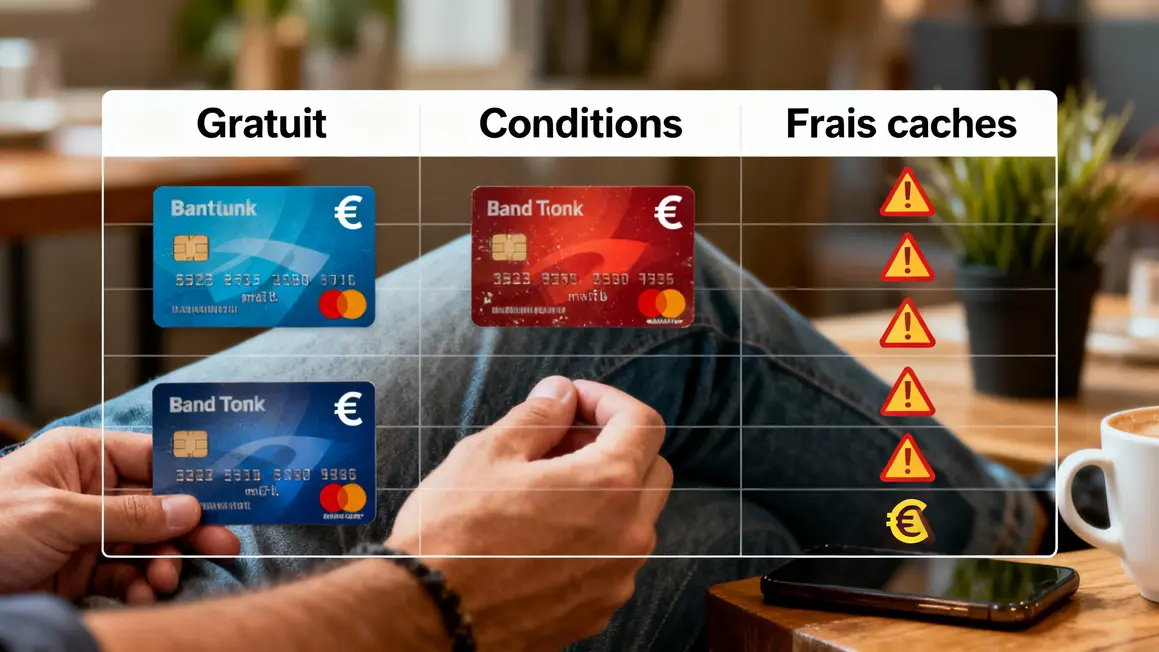
Banks that promise free of charge are generally limited to excluding certain current charges: account keeping costs, Credit card fees. But be careful: the offer does not exempt from all charges. Most impose simple conditions (payment, withdrawal, monthly deposit). If they are not complied with, fixed charges will appear quickly. Check each clause to avoid hidden costs.
Online institutions and neobanks offer a lighter structure: removal of physical agencies, total automation and mobile services. This optimization of costs allows them to offer certain basic services free of charge, but the economic model is based on user fees or premium paid options. Access to free cards often requires account movements to maintain the advantage.
- Free cards: almost always subject to payment/month
- Additional services: insurance, deferred card, etc.
- No income conditions on certain accounts, but sometimes threshold of use
The transformations of the market: where is the free market in 2026?
Since 2020, the digital shift has been massive: more than half of bank customers in Europe use an online bank to avoid fees. Leaders such as Boursorama Banque, Fortuneo, Revolut or N26 have relied on simplicity and aggressive pricing to attract young and connected customers. In France, several million new accounts have been opened on these platforms. Traditional establishments seek to align by reducing their tariffs or by launching discounted offers.
Competition has stimulated innovation and personalization: fast registration, attractive bonuses, advanced mobile interface. But the free system always applies under conditions, and the pressure on costs remains high: inactivity or failure to comply with the minimum number of transactions quickly results in automatic billing.
This shift towards « all digital » also expanded the range of services: international payments without sovrtax, travel insurance or flexible ceiling. To enjoy the free, you have to scrutinize every clause and monitor market and tariff developments.
Compare 2026: which free banks are approaching the « No actual charge » ?
The most suitable option depends on your use. Here is a summary of the main offers in 2026:
| Bank | Bank Card | Free conditions | Foreign expenses | Minimum deposit | Opening premium |
|---|---|---|---|---|---|
| Boursorama Bank Welcome | Visa | 1 payment/month compulsory | Free payments / 1 withdrawal free then 1.69% | 50 € | Up to 80 € |
| Boursorama Bank Ultim | Visa Classic | 1 payment/month if not 9 € | Free payments / 3 free withdrawals then 1.69% | 50 € | Up to 80 € |
| Fortuneo Fosfo | Mastercard | No income condition | Free in euro and non-euro area | 300 € | 80 € |
| Revolut Standard | Custom | No access limit | Free payments / 200 € monthly withdrawal plus 2% | 10 € | 10 € |
| Hello bank! One | Visa | 1 operation/month required | Free all countries | No deposit required | 260 € + additional offers |
Practical advice: Monitor the number of movements required: a simple « inactivity » A few months turns a free card into a fee.
What really makes the difference: hidden conditions and frequent traps
- Minimum use: payment or withdrawal required each month.
- Ceilings abroad: withdrawals outside the euro area often limited or invoiced after a threshold.
- Exchange rateOn some international payments, the rate applied can increase the real cost.
- Departure deposit: immobilization of an amount from the opening. This criterion weighs on small budgets.
- Inactivity costs: penalties from a few months without active transaction.
All these points need to be checked to ensure a suitable offer. From personal experience, a neobank that seemed to me to be the most competitive began to charge in the third month of inactivity, making the initial advantage useless. The customer reviews also highlight this type of problem which appears only for use.
Before you decide, discover the essential steps and criteria for an effective comparison by consulting our guide on choose your bank online.
To maximize your savings, also discover how online finance: how to optimize your welcome bonuses at the casino in 2026 can complement your banking strategies.
To avoid bad surprises, discover our tips for choosing a free bank without hidden fees.
Free bank: for whom? Adequacy to different profiles
Free banks appeal to those seeking autonomy and mobility: mobile users, students, frequent travellers. They are adapted if you actively manage your accounts and transactions. On the other hand, the lack of flexibility on ceilings or withdrawals, and the absence of physical agencies, limit access to profiles seeking personalized advice or complex services (management of assets, multi-user professional accounts).
- Perfect for moderate budgets, students, users « 100% mobile »
- Less responsive to complex heritage or professional needs
- Travel profile: attention to thresholds on withdrawals outside the euro area
- Not recommended if you prefer human contact in agency
Benefits and limitations compared with traditional banks
| Criteria | Free banks | Conventional banks |
|---|---|---|
| Management costs | Free under conditions | Payment (2-12) €/month) |
| Availability | 100% mobile and web | Physical agencies + web |
| Premium services | Subscription or separate options | Often included according to profile |
| Ceilings / flexibility | Required activity, tight ceilings | Adapted according to income and history |
How to choose the best free bank according to your real needs
- Compare fees on foreign currency payments and withdrawals
- Check the monthly withdrawal and activity ceiling
- Observe the quality of the mobile application: management, security, blocking
- Analyze conditions to keep free: frequency of operations, cost of inactivity
- List your uses (travel, payments, transfer, savings...) and eliminate inappropriate options
To choose well, do not rely solely on marketing promises: read the GTCs, consult the updated reviews, and bet on flexibility rather than the opening bonus. This pragmatic approach protects you from costs « hidden » and helps you align your bank with your real habits.
In summary, no bank is completely free without conditions: there are always thresholds for use, fees for inactivity or specific tariffs that may apply depending on the profile or movements of the account. To take advantage of offers, it is necessary to monitor hidden criteria, compare tariff sheets and rely on field experience rather than slogans. Did you find a trap or a trick that saved you a fee? Share your experience in comments to enrich this comparison! If this article has allowed you to avoid a bad surprise, pass it on to your relatives and networks to strengthen collective vigilance. What points do you want to go further or add to this ranking? Tell us your suggestions, every return counts to enlighten the true nature of free banks.Author: Fabien Durand
Independent expert in banking comparison, market tracking and user experience. (Updated 06/2024)
Main source: Observatoire des tarifs banques, études France-Bank, fiches tarifs des principals neobanks et banques en ligne.