


Need to choose a new bank adapted to your needs and avoid the pitfalls of banking marketing? With online comparators, it is now possible to compare offers, conditions and prices in a few minutes, provided you master the right criteria and connect each option to its real needs. This guide shows you how to exploit the potential of comparatives to make an informed banking choice and anticipate all hidden costs.
Understanding the different types of banks
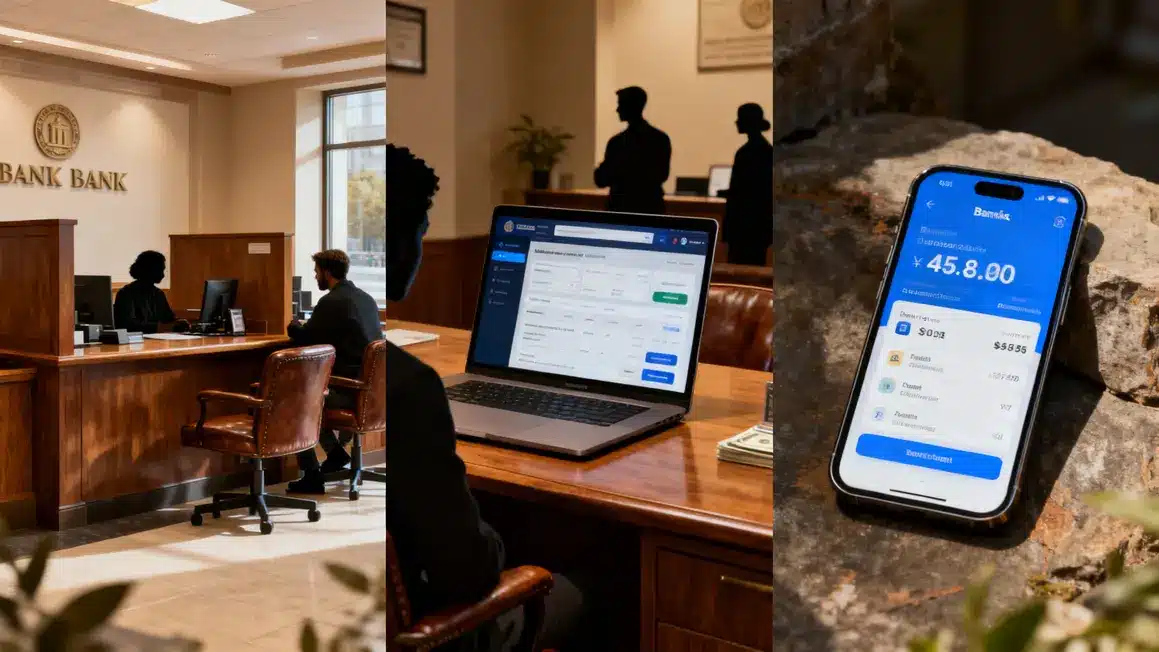
The choice of a bank depends first on a clear understanding of the players: traditional banks, online banks and neobanks. Each has specific advantages, different services and pricing levels that can upset your budget if it is not delayed.
Traditional physical banks
These establishments such as Crédit Agricole, BNP Paribas or Société Générale are based on a dense network of agencies and offer human support. Clients benefit from a personalized service for heritage management, credits or in case of emergency. But this proximity and coverage affect rates: following an agency file, managing credit or obtaining specialized advice often results in higher monthly fees than elsewhere, justified by the diversity of accessible services and the structure to be maintained.
Banques en ligne
Actors such as Boursorama, Fortuneo or Hello bank! have popularized 100% digital banking management, with very low or no management fees, subject to regular use. Access to modern digital tools, simplified account opening and attractive bonuses are strong arguments. The reverse: without agencies, complex file resolution or cash deposits are less convenient, which may limit interest to your needs.
New banks
Ultra-mobile models incarnated by N26, Revolut or Orange Bank, these accounts are fully piloted via smartphone. Their main asset: instantaneity, price transparency (especially international) and ease of opening, useful when mobility takes precedence over traditional needs. However, the absence of services such as cashing cheques or managing real estate credits and dependence on sometimes limited customer support in French remain points of vigilance.
| Type of bank | Highlights | Limitations | Examples |
|---|---|---|---|
| Traditional banks | Physical network, personalized tracking, premium services | High costs, lack of tariff competitiveness | BNP Paribas, Crédit Agricole, Société Générale |
| Banques en ligne | Low rates, attractive bonuses, intuitive online management | No agency, limited management of complex problems | Boursorama, Fortuneo, Hello bank! |
| New banks | Optimized mobile tools, international payments | Limited supply, lack of complex product management | N26, Revolut, Orange Bank |
Whatever your profile, it is crucial to guide your choice according to these differences to avoid bad surprises during daily use.
Associate your profile with the type of bank that fits you
An online comparison only makes sense if you clearly identify your priorities. Expectations vary: a student focus on low costs and mobile management, a family will focus on a comprehensive offer and accessible customer service, Passengers will seek to limit costs abroad, whilean investor will require a range of advanced heritage credits and services.
- Young people and students: reduced fees, mobile management, youth offers. Examples: Fortuneo, Boursorama, Crédit Agricole.
- FamiliesMulti-account management, savings, agency access. Examples: Monabanq, Crédit Agricole.
- Passengers: low international costs, mobile payment. Examples: Revolut, N26.
- Investors/professionalsPersonalized credits, heritage services. Examples: BNP Paribas, Société Générale.
| Profile | Recommended bank | Main characteristics |
|---|---|---|
| Student / Young active | Fortuneo, Boursorama, Crédit Agricole | Reduced costs, mobile management, youth-friendly offers |
| Family | Monabanq, Agricultural Credit | Multi-accounts, savings options, agency services |
| Traveller | Revolut, N26 | Minimal foreign costs, payment and simplified international management |
| Investor | BNP Paribas, Société Générale | Heritage services, advanced credit, tailor-made expertise |
The essential criteria for comparing banks in 2026
The use of a comparator requires that you specifically target the criteria that will really make a difference to your finances and experience:
- Management fees and associated costs: attention to free conditional on online accounts. Always check the access conditions (frequency of use, revenue domicile, activity thresholds).
- Welcome offers: Attractiveness of premiums can mask bonds (minimum income, regular payments, monthly use of the card).
- Services included and relevantYou can choose banks whose products match your needs: savings, loans, mobility, insurance included for travellers.
- Customer service and accessibilityThe quality of assistance makes the difference (telephone, e-mail, schedules, languages, etc.) in order to properly manage unforeseen or non-standard needs.
- Financial reliability of the institutionThe soundness of the bank (especially for recent neobanks) must be a key issue if security is a priority.
Steps to making an effective online banking comparison
- Clarify your needs: type of employment (wage, self-employed, etc.), payment habits, travel, heritage needs.
- Use reliable comparatorsPlatforms like Panorabanks, Les Furets, Selectra, but also simulators offered on specialized sites.
- Analyze each proposalReview in detail the cost, conditions, ceilings, costs abroad, insurance options and accessibility of digital tools.
- Read customer reviews: specialized forums, social networks and Google reviews bring concrete feedback on recent user experience.
- Cross multiple sources: vary the comparative tools and compare the results to limit promotional biases and identify real long-term benefits.
Study welcome offers and gain purchasing power
Opening bonuses are often an attractive lever, but require careful reading: high initial payments, housekeeping of income, active use of the account condition the granting of the bonus. For example, at Monabanq or Fortuneo, the premium can reach 280 €, but supply and use constraints apply. It is important to ensure that the welcome offer integrates into your banking routine and avoid any changes motivated only by a temporary premium.
Common traps to avoid when changing banks
- Hidden costsCheck free terms, inactivity fees, minimum payment thresholds.
- Ceilings too strictSome profiles require higher margins, especially when travelling or for large purchases.
- Limited or optional servicesSome features require a premium offer, which increases costs over time.
- General conditionsPlease read the tariff schedules carefully and do not hesitate to test your current usage in simulation to anticipate actual costs.
Best practices to test your new bank
- Test period: Spend a few weeks testing all the promised features, in real-life situations.
- Ergonomics and alerts: manipulate the mobile/web app for basic operations, check the responsiveness of notifications and security alerts.
- Foreign uses: check actual charges on payments/deductions outside the euro area, even for modest amounts.
- Customer service: contact assistance for a simulated question or incident, appreciate the responsiveness and relevance of the answers.
- Simplicity of terminationCheck for access to account closures or administrative changes, and if more than one holder or savings product is involved.
FAQ Frequently Asked Questions and Clear Answers
- Which bank to choose for a young adult at low cost? Fortuneo, Monabanq, Boursorama often offer free offers, under conditions of regular use.
- Is the free card also worth abroad? No: even a free card can generate fees on payments or withdrawals outside euro. Always read the International Tariff Sheet.
- What are the reasons for refusing to open? Income, past incidents, indebtedness: if you are denied, a neobank is sometimes more accessible.
- How to avoid charges on inactive account? Plan a monthly payment or withdrawal: this is often the strict minimum required.
- Does an online bank still provide real estate loans? No, some reserve this service to their main customers and condition the agreement on strict criteria.
- How to set a suitable card ceiling? Adjust it according to your typical expenses: many banks allow temporary changes via their app.
- Do you have to house your income to take advantage of the bonuses? Yes, in most cases. If this point blocks, prefer unconditional accounts or neobanks.
Adopt a comparative banking Structured, it is taking control of its financial choices: selection on concrete criteria, verification by actual use, and anticipation of limits before changing. Take the time to analyze your profiles, test and cross offers: this is the key to a successful change without bad surprise.
Have you ever tested multiple banks via an online comparison? What conditions or options have really changed your mind? Share your feedback and tips in comments to help other readers avoid the most common pitfalls.
Before entering into a contract, check whether free bank: reality or illusion really fits your expectations and financial needs.
To evaluate bank offers, see this Floa Bank review: Is this really the #1 on rates? and compare with other available options.
To identify the best banking offer, explore our detailed guide on Online banking: 8 key points to compare and choose the one that fits your use.
Think about passing this article on to your people: it will undoubtedly facilitate their next banking choice!
Any questions about an offer, a comparator or a specific condition? Indicate them as a comment, or visit the bank news and guide pages on 01bank.com to complete your selection. Take charge of your finances: many regular resources and updates await you to help you compare effectively.
Sources: UFC-Que Choisir, Banque de France, Les Échos (not exhaustive list).
Since 2015, Fabien Durand, an expert in banking markets and digital solutions, has been assisting individuals in their online banking selection and verification of access and usage conditions.