
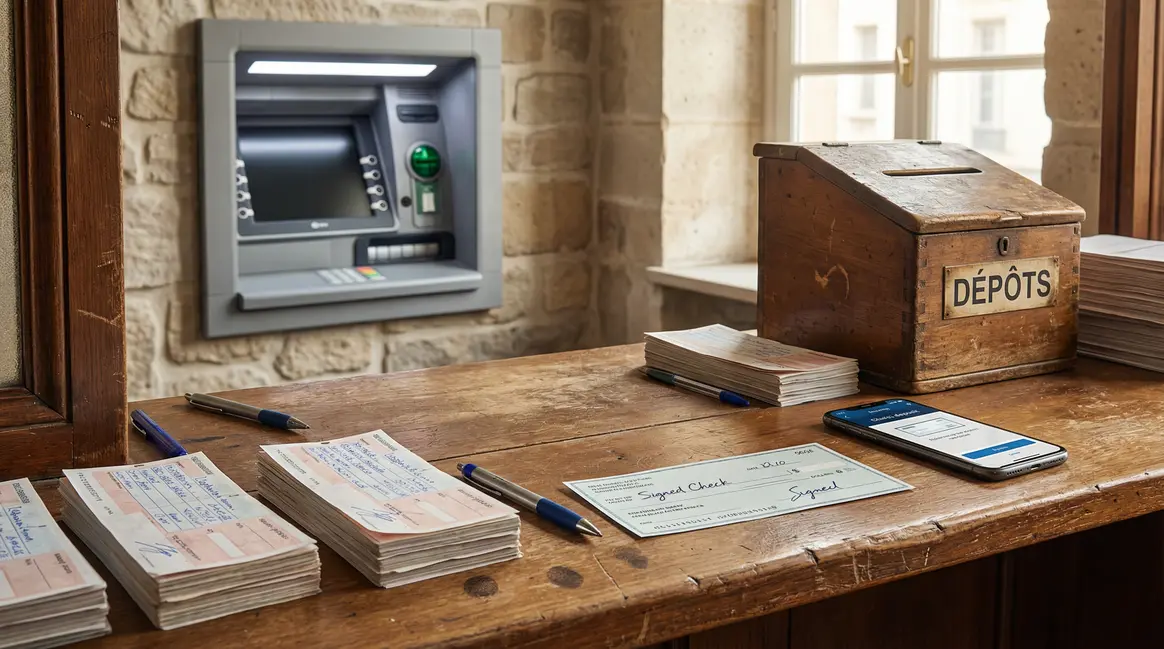

The day-to-day management of your finances sometimes requires the deposit of a cheque, even if the use of a cheque decreases in favour of digital alternatives. Whether you are a customer of a traditional bank or a neobank, the cheque deposit remains a common transaction that can reserve a few surprises if it is not controlled. Here you will find all the steps to follow, the methods available and the decisive points to avoid unnecessary errors or delays.
Prepare your cheque for safe deposit
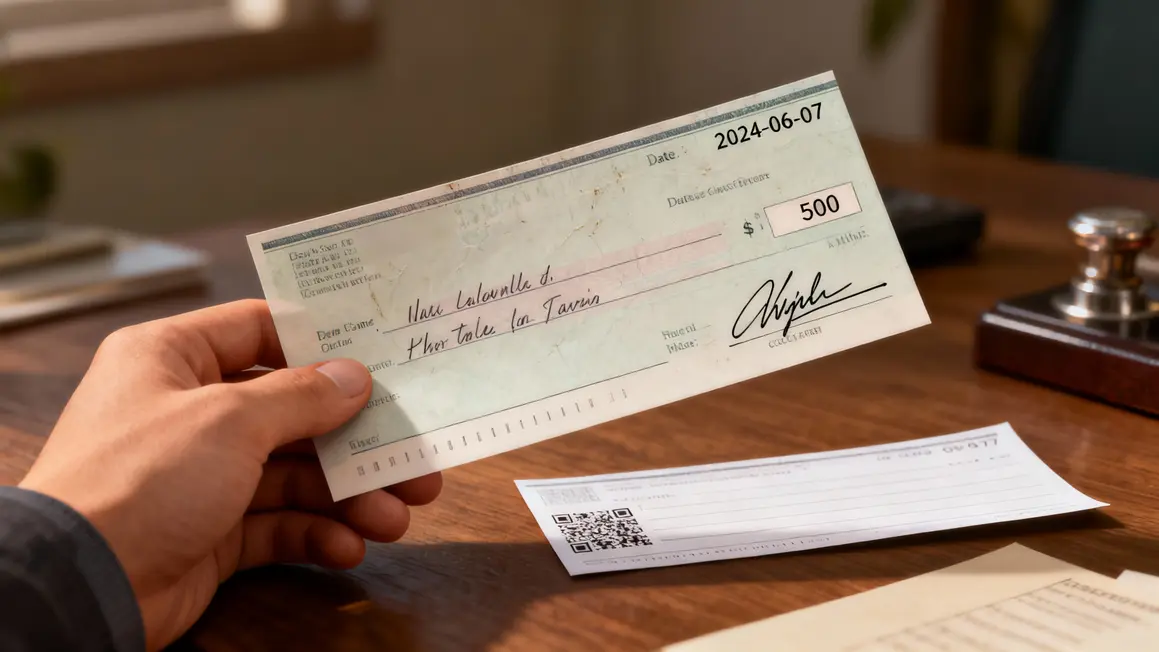
Before depositing your cheque, systematically check each information to ensure cash flow:
- Consistent amount between numbers and letters (no rature or correction).
- Valid date: a cheque is cashable for 1 year and 8 days.
- Order drawn up identical to the account holder.
- Signature of the verifiable issuer.
Endorsement on the back of the cheque Your signature is mandatory, and some banks also require the account number or IBAN to speed up processing. Registration « endorsed by [your name] » may be useful in certain specific cases, particularly when deposits are made on third-party accounts.
The voucher remains essential: it must contain your details and a detailed list of cheques deposited. Fill it out carefully, sign it, and systematically keep a copy or the strain after deposit (paper or scan according to the method), this shows if a dispute should arise.
The different methods of depositing a cheque according to your bank
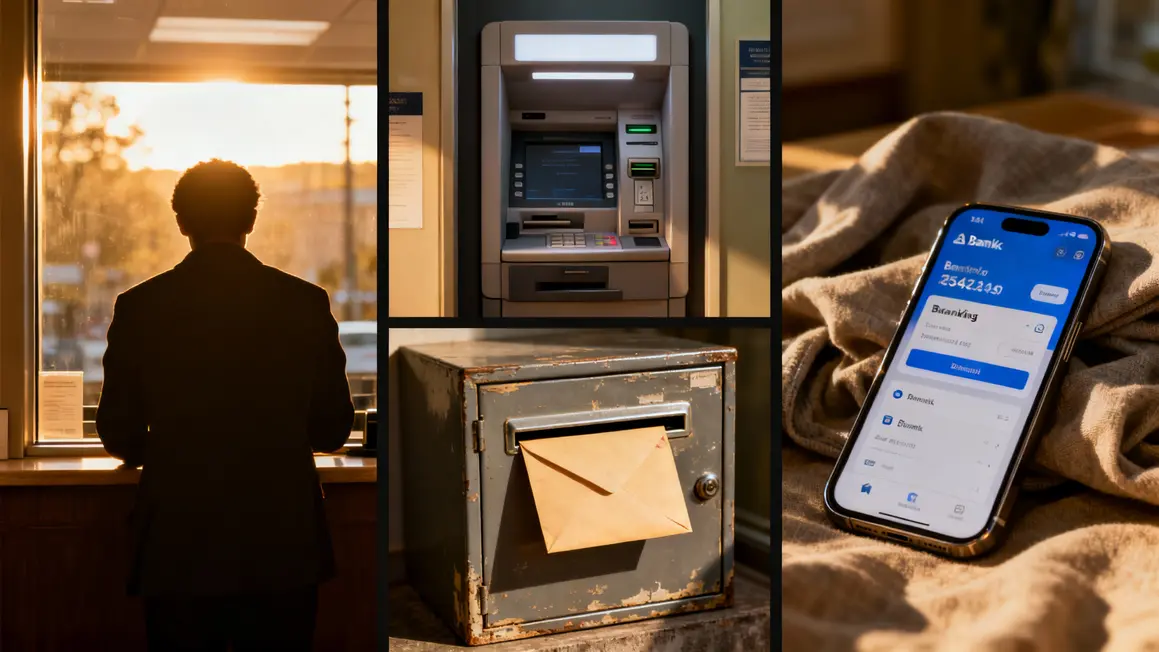
- Agency shop
- Assisted deposit, immediate proof.
- Hours forced and sometimes waiting.
- ATM (GAB)
- 24 hour stand-alone depot.
- Provide the envelope provided or prefer the integrated scanner ABMs.
- Check the compatibility of the automatics with cashing cheques; Some agencies charge the account number on the back (e.g. Caisse d'Epargne).
- Urn or deposit box
- Quick deposit, manual processing therefore additional delay.
- Priority should be given to agencies that ensure the traceability of rebates.
- Filing by mail
- Send the cheque and voucher to your bank address (acknowledgment of receipt or recommended follow-up).
- Keep a copy or proof of dispatch.
- Deposit by mobile application
- Scan the check (recto-verso) via the dedicated app. Available on some online banks or neobanks like Hello Bank! or Qonto.
- Quick solution, sometimes limited by ceilings or the quality of the scan required.
Each bank proposes specific steps: BNP Paribas favours advanced digitisation, the Caisse d'Epargne requires the account to be mentioned. Neobanks digitize the process but do not offer physical deposit. Check the constraints before depositing abroad or to a third party account.
Processing times and cashing cheques
The credit on your account is never instant: the waiting time varies according to the method and the bank. Here are the deadlines to anticipate:
| Type of cheque | Average payment time |
|---|---|
| French cheque | 1 to 3 working days |
| Bank cheque | 1-2 working days |
| Foreign cheque | 2-3 weeks |
The process includes a technical check and then interbank clearing to ensure the cheque is provided. Note that public holidays and weekends lengthen deadlines, as do deposits on accounts located in rural agencies or less connected.
- A non-compliant cheque (signatures, amount, validity) is rejected.
- Cheques falsified or signed by an unauthorized third party are refused.
Common errors to avoid when depositing a cheque
- Forget the signature on the back: cause number one rejection.
- Malfill the voucher: risk of non-credit or loss of traceability.
- Late or non-legal filing (more than 1 year and 8 days).
- Improper insertion of the check into a non-compliant automaton or envelope.
Always check each field before filing, and keep a photo, receipt, copy.
Solutions in case of problem with a cheque deposit
- Contact your bank's customer service with all supporting documents (copy of the voucher, acknowledgement of receipt, cheque information).
- Enable transaction notification on the mobile app to track the credit of the cheque.
- In case of dispute or mistreatment, ask for an incident number and then send a registered mail if necessary.
- If the cheque is rejected for insufficient provision or abnormal signature, contact the issuer to find a solution or obtain a new cheque.
Anticipation and traceability are the best reflexes to limit litigation.
Modern alternatives to traditional cheque deposit
Instant bank transfer is now highly recommended to replace the cheque, especially between individuals or for urgent payments. This process works 24/7 and reduces the risk of error or loss.
Before depositing your cheque, make sure it is properly completed by following this simple and quick guide to fill a Crédit Agricole cheque.
For smooth banking management, also find out how activate your credit card without PIN code: methods and limits to avoid common inconvenience.
Applications such as Paylib or Lydia offer quick transfers at no cost sometimes, while online banks offer digital notification and validation systems for all deposits (scan, electronic signature). However, keep the original cheque if bank demand until the end of the cash-out process.
In some contexts (community, non-digitized sectors), the cheque remains useful. Keep in mind that the trend is towards the gradual disappearance of this means of payment, except in special cases.
Frequently asked questions about cheque deposit
- Can we deposit a check to a third party's account? Possible with endorsement and respect for the conditions of the bank. Check with the agency before deposit.
- What if the check is lost before deposit? Immediately notify the issuer and request opposition. Inform the bank to limit the risk of fraud.
- Drop several checks at once? Yes, via a single voucher listing each cheque and amount. Check the bank's boundaries on multiple deposits.
- What evidence should be kept? Printed justification, copy of the stamp, photo or scan (especially for automatic or mail deposits).
Fabien Durand, bank specialist author and digital offer analyst.
Article published on 2024-06-07 and reviewed in accordance with EEAT standards. Regular updates according to changes in banking practices.
The main reason for the deposit of cheques is the rigorous verification of documents, the choice of the appropriate method and the retention of proof of deposit. Test modern alternatives if your bank allows, this can simplify your current management.
What challenges do you face in depositing your cheques? Share your tips, feedback and questions in the comments to help the community!
If this article has been helpful to you, share it to advise other users on the approach to be followed daily.
A preference for instant transfer or classic agency delivery? Your opinion interests us about the changes usually that this banking evolution causes.
Sources cited: service-public.fr, UFC-Que Choisir, official BNP Paribas documentation, Hello Bank!, Qonto.