


Renewable credit cards are now attracting many users in search of budget flexibility and alternative payment options. But how do they work on a daily basis? This guide details the key steps for practical use, points of attention to fees, risks, and tips for choosing and managing this particular banking product.
What is a renewable credit card?

The renewable credit card is not limited to a means of payment. It offers a money reserve available for userelated to a credit « revolver ». This credit is re-established with each refund made – the amount used decreases the reserve, which takes effect when you repay.
Each transaction with a revolving credit card, whether a purchase or withdrawal, triggers a mechanism: you can pay cash (without charge) or (with interest). This choice is made with each payment, in-store or online. This system is designed to offer a flexible solution to an unforeseen expense or urgent need, but can quickly become expensive if misused.
The legal framework requires transparency and protection: « credit card » must appear on the tool and each contract requires the assessment of solvency, the detailed credit card and the alternative to depreciable credit as soon as the reserve exceeds 1 000 €.
To be remembered: the card facilitates access to fast cash, but rates are often high compared to conventional credit. Before subscribing or using, carefully assess your ability to absorb costs and repayment dynamics.
Practical operation
Subscription is made to a bank, credit institution or sometimes a commercial sign. This is when the credit limit is set (500 € over 5,000 €, sometimes more depending on the profile). The contract details the TAEG, the costs and the method of reimbursement.
Online payment, in-store payment or withdrawal from the distributor: the operation is identical to that of a credit card, with additional control over the choice between conventional payment or credit. It is the latter who activates the reserve and commits you to repay according to the monthly payment.
Practical example: you buy a computer at 600 € with a map with a reserve of 2,000 €. The balance then rises to 1,400 €. If you repay 200 €, your reserve goes back to 1,600 €. Regular monitoring via the client application or secure space is essential to keep your spending and anticipate your deadlines.
Advantages and disadvantages
Renewable credit is distinguished by its flexibility, but this flexibility is accompanied by significant limitations. Overview:
| Benefits | Disadvantages |
|---|---|
| Immediate access to a reserve | High AEG (12 to 21%) |
| Modulation of refunds | Risk of overindebtedness |
| Management of unforeseen expenses | Additional costs |
| Wide network use | Often long repayment periods |
- Flexibility: possibility of financing an unforeseen event without immediate justification.
- One-time security: avoid overdrafts, offer a temporary safety net.
- Risks: over-indebtedness, accumulation of costs, complex management if budgetary discipline is not sound.
Costs and costs
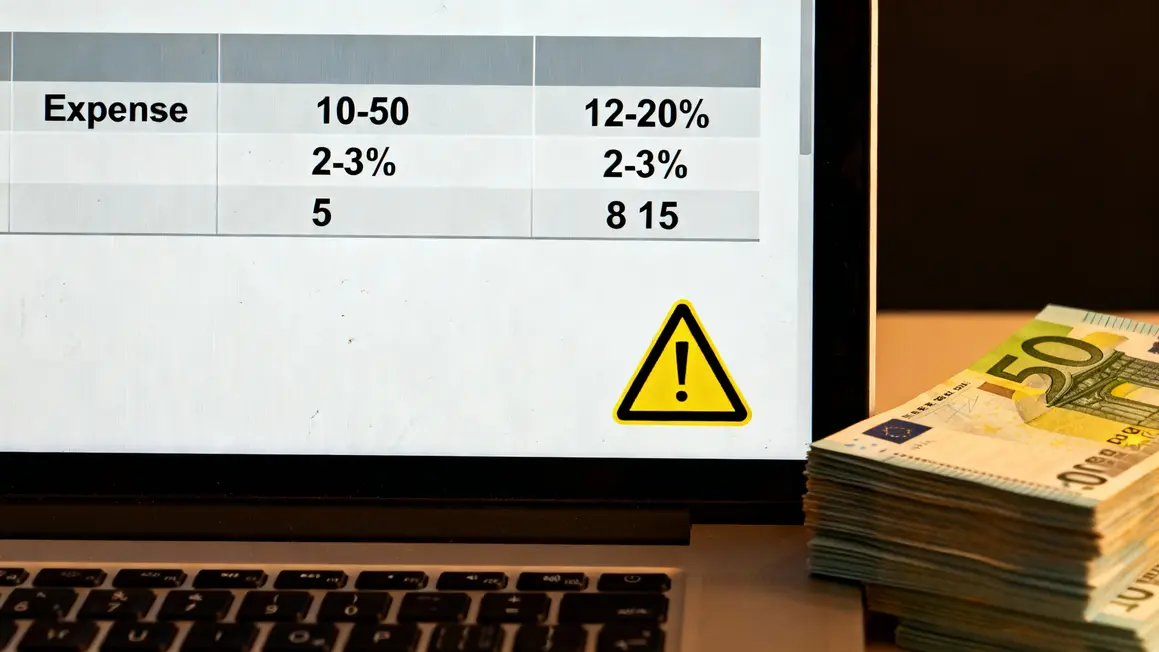
The price of a revolving credit card is on several lines:
- Annual contribution: 10 to 50 €, taken even without use.
- TAEG: the total interest rate, often between 12 and 20 %, applied to the sum used.
- Withdrawals and transfers: usually 2-3 %, minimum 5 € by operation.
- Penalties: fees in case of late payment or incident of payment, from 8 to 15 € on average.
| Type of fee | Estimated amount | Conditions |
|---|---|---|
| Annual contribution | 10 to 50 € | Removed once a year |
| TAEG | 12 to 20 per cent | The amount debited |
| Cash withdrawal | 2-3%, min. 5 € | Each operation |
| Deferred penalties | 8-15 € | In case of default |
Anticipating fees and preferring quick refunds allows to limit the overall bill.
Tips for a serene management
- Read the contract carefully: Identify the minimum amount, the APR and possible penalties.
- Monitor expenditures: regularly check your available balance, refunds and monthly payments on the app or customer space.
- Plan your refunds: opting for a higher monthly payment significantly reduces the cost of interest.
- Limit use: reserve the card to one-off needs (panne, urgent purchase), avoid using it for current purchases.
- Recognize its capabilities: Adjust your use to your resources, ask a bank advisor, or consider pooling credit if difficulties arise.
What alternatives to revolving credit?
| Solution | Cost | Flexibility | Conditions |
|---|---|---|---|
| No evidence required for use | High (TAEG 15-22%) | Very flexible | Adjustable monthly payment |
| Personal loans | 3-8 % on average | Less flexible | Fixed amount and duration |
| Merchant payment facilities | Low, sometimes free | Flexibility: short duration | Limit of use, specific conditions per sign |
A personal loan may prove more advantageous in the long term to finance a structured project. Split payment facilities are useful for smoothing small expenses without conventional credit.
Legal framework and limits
The law imposes clear rules: pre-contractual education sheet, credit check, monthly payments with maximum duration (36 or 60 months depending on the amount committed), alternative offer for large reserves, transparent follow-up by monthly statement. Arrangements such as the over-indebtedness commission can be mobilised in the event of prolonged financial difficulties.
Before using a revolving credit card, it is essential to assess your financial capacity through the calculation of the debt ratio: method and thresholds to control your finances.
Before you sign up for a revolving credit card, it is essential to understand the differences between debit or credit card: how to choose according to your usage and needs.
How to choose a map
- Ceiling and flexibility: Adjust the amount to your actual needs.
- TAEG: Prefer cards with controlled rates, especially for quick refunds.
- Associated costs: Compare contributions, transaction costs and access to additional useful services.
- Insurance and services: consider the actual utility of each option to avoid unnecessary costs.
- Comparison tools: use simulators to project your costs, study contract tables to identify restrictive clauses.
Practical examples of use
- Vacations paid in several times: Book and pay your tickets with the card, repay according to your possibilities without drawing on your savings.
- Unanticipated expenditure: Outage of appliances, urgent repair, work. Use of the reserve to smooth the cost over several months, again after verification of the upcoming monthly expense.
- Financial stress management: avoid overdraft by mobilising the reserve (provided that you repay quickly to limit interest).
Risks and precautions
The frequent use of a revolving credit card increases the risk of over-indebtedness, especially if you only repay the minimum monthly amount. The rates applied penalize any extension of refunds. Follow your transactions precisely. Favour early repayments as soon as possible and seek assistance if necessary to avoid accumulation of interest.
In case of recurring problems – monthly payments exceeding your capacity, balance used each month to close the budget – do not stay isolated: turn to your bank, or to the official solutions proposed by the Banque de France.
The revolving credit card can be an effective tool if it is part of controlled budget management and one-time use. Caution, fee tracking and the choice of an alternative solution when the cost becomes too heavy are the best guarantees to maintain your financial stability.
Summary of key points: The revolving credit card facilitates unforeseen expenses through a flexible cash reserve, but involves significant costs, rigorous management and vigilance on the risk of over-indebtedness. Always compare the offers according to your profile and consider the clearer alternatives if needed.
- Have you ever used a revolving credit card? What advice would you recommend to limit the cost or secure daily management? Share your experience in comment!
- If this content has been helpful to you, send it to an individual or broadcast it on your networks to help those who are reluctant to choose their card or financing solution.
- Would you be interested in credit management or bank charges? Propose topics for further discussion in this article.
Sources: Consumer Code, Banque de France, UFC Que Choisir.
Fabien Durand, editor specialized in personal finance and banking services. Article updated on 18 June 2024 for 01bank.com.