
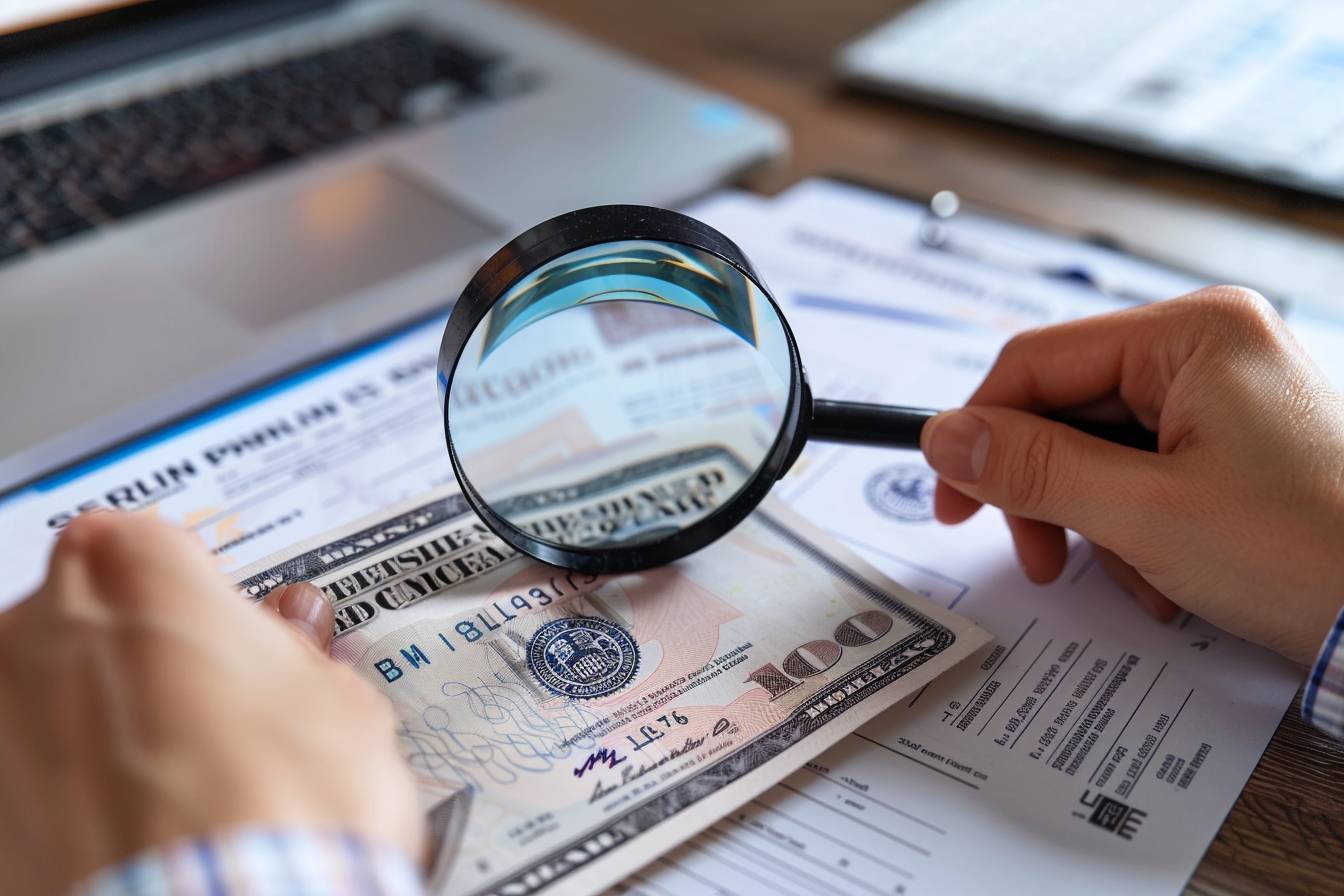

It is quite normal to consider that a cheque is good and cashable as soon as it is received because it looks official. However, it is highly recommended to be careful with this method of payment, because today the issuance of fraudulent bank cheques is one of the most popular scams. In order to protect oneself and avoid receiving one, it is important that anyone who does so should be able to verify its authenticity. How do you do it? Here is a small point of the steps to be taken when it comes to verifying the authenticity of a cheque.
Start with visual clues
Bank cheques are usually printed on thick paper. You should see the name and logo of the bank on the cheque, as well as the routing and account numbers. If the cheque does not include this information, if it seems wrong due to the quality of the paper or if it is misprinted, it may be a sign that the cheque is a fake. From that point on, you have to check with the issuer by asking questions: check the last name, first name, account number and any other information that might help you eliminate your doubts. However, to ensure the authenticity of a cheque, you have to pay attention to a large number of details, so do not rely solely on visual cues.
Check the watermark of the check
When a buyer presents you with a bank check, especially for the purchase of a car, you must first check the presence of the watermark. Indeed, since 2009, the mention « bank check » is shown in relief on all bank cheques. This entry can be seen on the back of the cheque and its presence is an important first indicator that certifies that the cheque you received is authentic. It offers a level of security equivalent to that of an ID or bank account. Don't hesitate to get closer to a bank to find out more about this device that has long proved its worth and helped to avoid a large number of frauds.
Call the bank
If you are not sure of the validity of a cheque, just call the bank that provides it. Thanks to a phone call, you can find out everything about the cheque you received in a short time. The bank representative will ask you to provide the account number at the bottom of the cheque, the name of the person who signed the cheque and the amount.
Some banks in France do not provide online money verification services to provide some security to the account holder's private information. If the bank refuses your request, you can go to a local bank agency or send letters asking to cash the cheque. In the event that the cheque is not valid and cashable, the cashier is opposed to receiving the funds in connection with your application. Again, the bank employee will not be able to provide further details on the cheque or account balance. He will simply cash the cheque or return it to you.
Visit the bank
A fairly simple way to judge the authenticity of a cheque when it is issued in your presence is to observe the cashier of the bank, prepare it and transmit it to your issuer. Of course, this requires some planning so that your issuer knows that you intend to go with him to the bank for the withdrawal of your cheque. However, do not hesitate to ask anyone who wishes to pay for your services or make a donation by cheque to accompany you with cash. Are you a dealer? If you are unable to go to the property that provided the checkbook to your client, consider asking him to make a bank transfer to your credit card.
Check the details of your bank check
To judge the authenticity of a bank check, you must pay particular attention to certain information mentioned therein. In addition, you must find:
- The name of the bank and the issuer,
- The details of the company that issued the check,
- Place of payment with the mention » payable in France « ,
- The buyer's coordinates,
- The total amount receivable in letters and figures, etc.
Moreover, the format, possible marks on the bank check (marks, scratches, etc.) or the use of different fonts. So you have to be pretty critical when it comes to checking the authenticity of this method of payment.
Drafting opinion
Cheques are financial instruments issued by the banks themselves in order to allow their customer to have money on them without moving with hundreds of euro banknotes or a bank card. However, although considered to be an authentic means of transferring funds, the cheques at several moments gave the scammers the opportunity to steal a large amount of money from many people. To deal with this problem, it is important that each person be able to recognize fake cheques. This applies equally to physical banks as to online banks.
All in all, whether in the course of a transaction to buy or sell a good or service, the cheque is a means of payment that is increasingly being used and requested. However, it should be used with caution, because, unlike the credit card, it is a convention that for a long time allowed scammers to steal large amounts of euros. And, although this does not seem impossible, as a beneficiary, you can easily verify the authenticity of the cheques issued to you during a transaction in a very short time. You just have to follow the few points mentioned above.