

Better distinguish a debit card credit card can greatly facilitate the management of your budget, and travel, without the hassle of expense or debt. This guide sheds light on these two options, depending on your situation as well as your pace of life, to guide you towards the option that is really tailored to your daily needs or your desire for flexibility.
Credit or debit card: which choice in 2026?
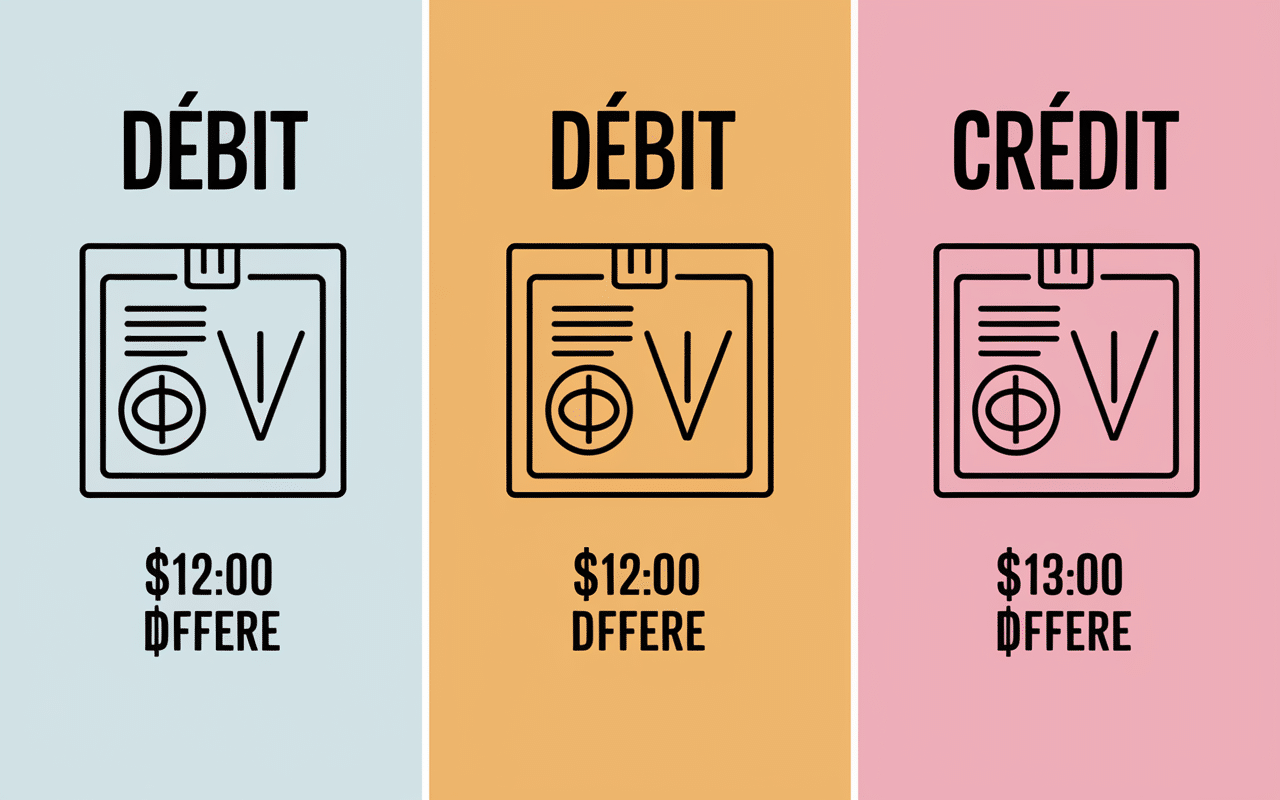
You hesitate between a card of debit and credit card ? For the majority of households or young active people, the debit card provides immediate tracking of expenses: each payment is withdrawn immediately from your account, which limits surprises. On the other hand, a credit card provides more flexibility for large purchases or rentals, since payment is delayed, but it requires some vigilance over debt. Since 2016, the word "DEBIT" or "CREDIT" (imposed by European regulations) is clearly displayed on your card to remove any confusion. Based on the experience of several bank advisors, it is preferable to opt for a debit card (immediate or delayed) to settle your current purchases and those related to travel, unless you need a dedicated receipt for large expenses or sureties: here, the credit card acts as a joker.
This difference can be seen on the top right side of your credit card. A detail that sometimes reassures before a key payment.
▶️ Compare your profile: synthetic table | FAQ | interactive simulator
What distinguishes a debit card from a credit card
Decoding your payment card is really not complicated. Since 2016, the mention « DEBIT » or « CREDIT » displays in all letters on the front to avoid any misunderstanding, especially when travelling or facing certain strict traders. This choice has nothing to do with anecdotal: it affects your rights when booking, the real-time visibility of your budget, and even the associated guarantees (some families say they discovered the subject after an incident abroad... No one is safe from a surprise!).
In France, most of the Visa and Mastercard cards used each day are debit cards, although consumer credit is still widespread in large online spending or in some department stores. It happens regularly that a member of your entourage asks about the approach of a trip: "Your card will go well abroad?"
Identify "DEBIT" or "CREDIT": the regulatory signal to be monitored
As early as July 2016, each card must display its type in a visible way. This marker facilitates the process of renting a vehicle or avoiding unexpected costs outside the borders. Some useful landmarks:
- ✅ With a "DEBIT" card, the debit relates to your current account, whether immediate or delayed. This keeps an eye on the balance at any time.
- ✅ The "CREDIT" card is based on the deferred payment from a reserve (interest or not, depending on the contract). It is valuable for sureties or reservations.
Revolut and Wise cards clearly indicate "DEBIT". However, some hotels or rental agencies, especially outside France, refuse this type of card to block bonds (according to the testimony of experienced travellers).
Immediate or deferred debit / credit: what changes in real life?
The management of your card really influences the monitoring of your finances. No need to master the banking technique: with the immediate debit, each expense will appear and withdraw from your balance, usually the same evening. Deferred debit (around 28th of the month) concentrates all purchases, debited at one time.
This grouping can be surprising if little attention is paid to it: some speak of a "phantom pay" that severs without warning! In addition, a credit card offers a relative margin of manoeuvre, to be used carefully: 7 to 21% on revolving credit are not a detail. A bank trainer recently pointed out that proper use implies never letting the deferred payment turn into unreimbursed credit.
Immediate debit, deferred, credit: what use on a daily basis?
When making a purchase, the speed with which the amount is debited plays a role. This is particularly true for users wishing to avoid unexpected differences in the account or manage their cash flow flexibly.
Debit card: immediate, delayed, and systematic authorization
With an immediate debit card, your balance is kept up to date with each transaction, which reassures many users anxious to stay in balance (some parents testify to the efficiency of managing pocket money). In addition, cards with systematic authorization such as Max or N26 check each account status transaction, locking the expense in case of insufficient balance impossible to expose to an overdraft. For delayed debit, the accumulation of purchases before the single levy at the end of the month allows real flexibility, but it remains recommended to monitor its budget to avoid a snowball effect.
An anecdote regularly cited: Wise's subscription costs 7 €, and each expense is followed live by an asset, including a trip abroad or a business trip. Many active young people boast the tranquillity of immediate debit, while some families prefer small-ceiling cards as a secondary tool.
Credit card: increased freedom, essential supervision
With a credit card, you have a specific reserve (some neobanks allow up to 100 000 €/month!), to be repaid afterwards. Rentals, major purchases, or split payments are facilitated. However, if the balance is not settled quickly, interest may rise (up to 15% on the remaining amount), and it is not uncommon for a user to discover a zero balance because of an oblivion between deferred debit and revolving credit this occurs in some cases when buying abroad or in-store cards. So the question is worth asking: do I really need this credit or is it risky for my situation?
Compare: assets, fees, ceilings and security
To find it, here is a synthetic picture: it leads us to practical criteria and vigilance points for optimized financial management, whether you prefer digital tools or traditional simplicity.
| Card type | Immediate flow | Deferred debit | Crédit |
|---|---|---|---|
| Operation | Direct debit at each payment | Grouped debit at end of month | Deduction from credit reserve |
| Price (year) | 60–120 € (0–7 € in some neobanks) |
60–120 € | 80–300 €+ (AMEX Platinum: 55 €/month) |
| Foreign expenses | Under 1% or free (Revolut, Wise) | Under 1% or sometimes free (variable depending on bank) | More variable: often 2–3%facilitated deposit |
| Limits | From 2,000 to 20,000 € (Revolut: 100 000 €/month) |
Identical to immediate flow | Until 100 000 €/month (some neobanks) |
| Assurances | Included in Gold/Premium offers | Yes | Yes / speed deposit rental |
| Risks | Excess balance, refusal to pay | Less control, surprise disbursements | Interest if unpaid, risk of over-indebtedness |
For simple family use, the debit card offers the balance between ease and control (regularly less than 120€/year, and much less at Wise or Revlout). In order to travel and pay for bonds, a credit card becomes indispensable but the cost increases for a premium formula (up to 300 €).
Last point to mention: some banks offer up to 250 € bonus to change the card or select a premium option for a given period. This can make the difference if you want to test new formulas without committing yourself to the duration.
Choose wisely according to profile and usage
The ideal card depends on your lifestyle, age, travel frequency and your desire to control your money. The main reflex: choose the formula adapted to your uses, not the one imposed on the opening of the account! Several banking experts stress this: "The important thing is that the card serves your needs, not the other way around."
Real examples: families, students, travellers, premium
Planning a holiday abroad with his children? Choose an international debit card (Wise: 7 € or Revolut Standard capped to 100 000 €/month) : payment everywhere, security over expenses. A student will prefer a card with systematic permission, usually free of charge. A small testimony that comes back regularly to the advisors: those who tested the Revolut card almost never encountered any concern for their current expenses.
But to rent a car during a road trip in the United States, a real credit card (AMEX or Visa Premier) is a must: renters do not accept the mention « DEBIT » for the deposit, and it may remain blocked until 45 days. According to some professionals in the sector, it is recommended to call the renter before departure in order to avoid any blocking on arrival.
Practical highlights before choosing a map
Before validating a card application, remember some key elements:
For a flexible alternative tailored to your needs, discover the specificities of a Prepaid credit card: benefits, limits and comparison in 2026.
To explore solutions tailored to your needs, discover the Banque Populaire bank cards: offers, prices and tips for 2026.
- ✅ Looking for control or flexibility? For a tight budget or if you want to check each payment, immediate debit or systematic authorization are advised.
- ✅ Travel often? Wise or Revolit really allow to limit costs and offer high ceilings, appreciated by many globetrotters (a mobility expert recalled their interest in expatriates).
- ✅ Consequential expenses or bail to deposit? A credit card ensures security to book and avoid refusals abroad.
If you feel lost in the face of the many offers: use an online simulator, consult the specialized forums, or compare user reviews (typical example: Finance Hero displays ★★★★★ with more than 164 testimonies for its map recommendations).
FAQ and practical resources: your questions, our answers
The world of bank cards raises many questions! Specific responses to requests regularly identified during client appointments or training include:
How do debit and credit cards really stand out?
The debit card collects directly from your current account (immediately or after a delay), while the credit card offers an advance or a dedicated reserve to repay. At first glance, they are similar to the caisse, but their management, as well as the level of security, diverge as soon as there is an incident or stay abroad.
How do I check if my card is debit or credit?
Observe the front of your card (the back of some models): the mention "DEBIT" or "CREDIT" has now been imposed since 2016 – which greatly simplifies procedures abroad. Some guests say that this has prevented them from getting stuck at the hotel.
Which card to travel calmly or rent a vehicle?
For most stays and daily payments, a "DEBIT" card (Wise, Revolit) is sufficient. But for car rental or some hotels, the "CREDIT" card is usually indispensable outside France. It is often recommended to check with providers: it is better to anticipate some unexpected refusals.
Are Revolut and Wise cards as advantageous as we say?
In most cases, yes, especially for international purchases: reduced costs (7 € for Wise), no hidden costs for most foreign payments, and significant ceilings (100 000 €/month at Revolit standard). However, be aware of specific precautions when renting or to benefit from premium insurance. Several user returns specify that it is better to inquire before performing a major operation.
Is there a tool to assist in choosing?
Yes, of course! Many banks offer suitable simulators or ceiling calculation tools at their sites. Some forums, such as Finance Heroes or expat groups, allow you to pose your situation to get a personalized return, sometimes in a few days. An advisor will be able to examine in more detail depending on budget, payment patterns or planned travel.
A final advice relayed by several users: testing different cards on a year, avoiding the hidden costs at opening or closing, allows you to get a real feedback and find the right balance between security, comfort and savings.
🟢 Need a personalized advice? Test our interactive simulator or request a tailor-made analysis. To refine your choice, join the forum or consult our guides.