


Understanding Units of account In life insurance, there's nothing about electrifying: it's an accessible option, thought for those who want to breathe life into their savings while remaining fully involved in their decisions. Thanks to these materials, it becomes possible to distribute its investments beyond the classic fund in euros, with various alternatives: shares, real estate or thematic funds, for example.
The essential thing to keep in mind is to understand the functioning of these supports, which they can bring about, but also the hazards they involve, in order to build a strategy consistent with its objectives and risk tolerance.
As an asset management trainer points out, high-quality support and clear information promote a serene move towards smart autonomy in the management of its finances (many share this fact after a few months of testing).
Summary of key points
- ✅ Units of account offer diversification beyond the conventional euro fund.
- ✅ They involve taking risks linked to market volatility.
- ✅ Clear guidance and information are essential for sound management.
Life insurance units of account – the principle explained in 60 seconds
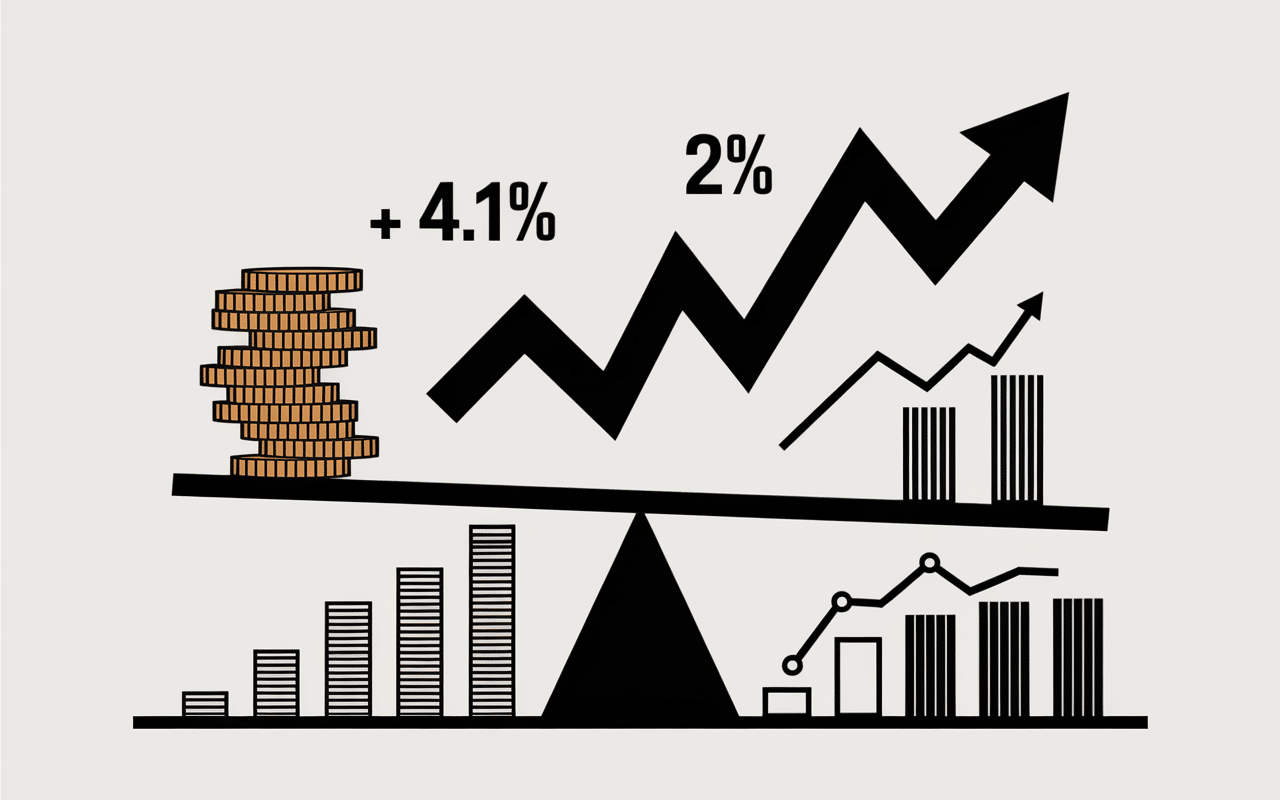
Units of account (UC) are central to contemporary life insurance contracts: they offer the opportunity to invest in dynamic media such as equity, real estate, thematic funds, or ETFs, to obtain a potentially higher return than the fund in euros. It is important to keep in mind that their value depends on fluctuations in capital markets.
Choosing the UC amounts frankly to accepting a share of uncertainty against the hope of better performance. Some noted that UCs' performance in life insurance may have exceeded +4.1% per year (2019-2024), while the euro funds capped around 2 %. This rhythm implies a management adapted to each profile and investment horizon. According to a more audacious advisor, caution or diversification can be considered according to expectations.
Last point to note: these UCs are designed to boost long-term savings, provided they are intelligently distributed and accepted their volatility. Moreover, the "panaching" of the supports is often the number one council of specialists in the sector. Is this really relevant to your project? That's what we're going to detail right now.
What is a unit of account? Multisupport mechanics in practice
In fact, within a multisupport contract, each unit of account is comparable to a flexible investment brick: it can embody shares of SICAV, FCP, SCPI, trackers (ETF), ISR funds... In short, it is much more versatile than just a financial product – some customers testify after a few years of practice.
In concrete terms, each UC reflects the value of a set of real assets. Its value rises or falls according to the health of the markets. Imagine placing 10 000 € on UCs: if the stone gains value, your SCPI climbs. On the other hand, a decline in the market can erode performance. Moreover, in 2024, these are more than 66.2 Md€ which have been invested in UC in France: many experts believe that the trend remains strong and promising.
Some relevant benchmarks to remember:
- The variety of UCs remains impressive: stock exchange, real estate, thematic funds, bonds... There are multiple profiles to answer.
- There is no guarantee of capital, but there is a real leverage to effectively diversify its assets.
- The share of UCs in French life insurance now exceeds 38 % This represents a significant development in the sector.
In short, the unit of account attracts those who want to leave the frozen and monotonous investment. This is regularly what motivates new subscribers after a few years in the euro fund.
Euro funds vs units of account: what difference for you?
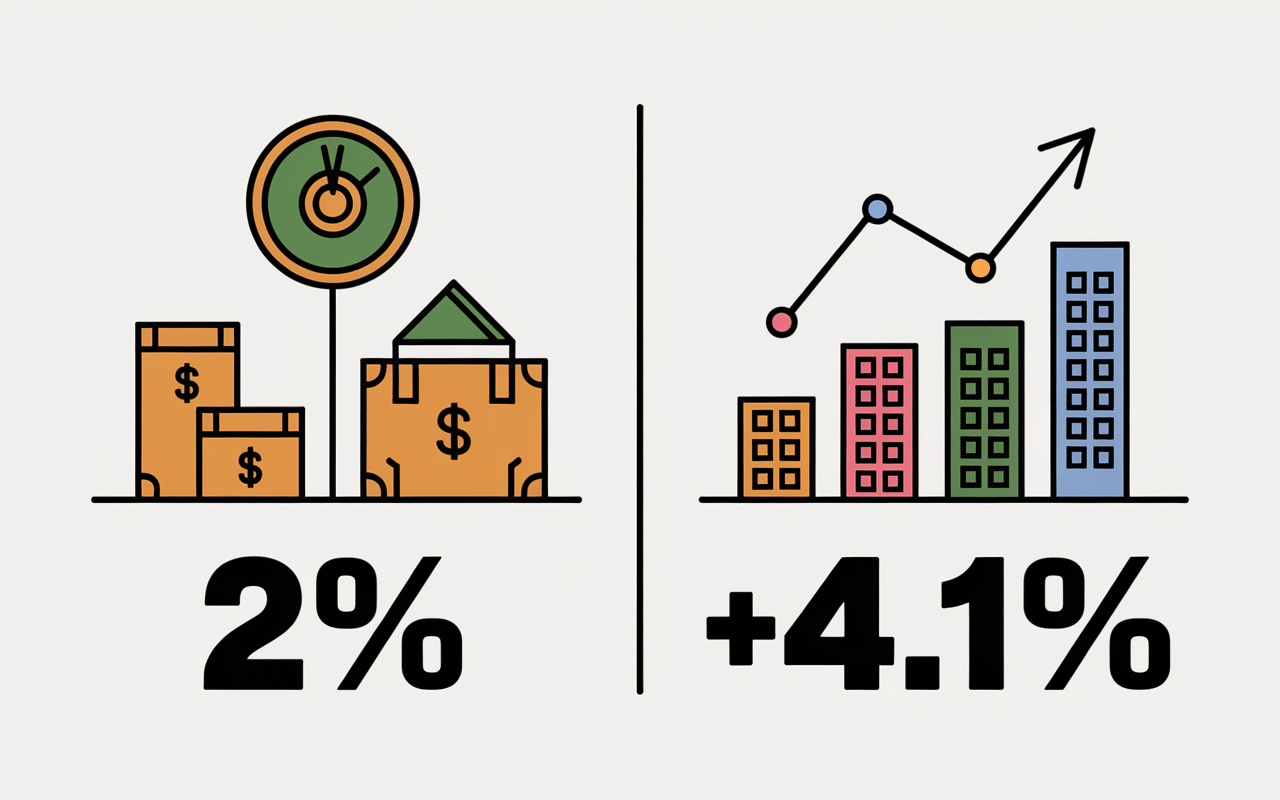
Should we focus on stability or on performance? This dilemma is at the heart of the choice between Euro and UC funds. Some experts recommend weighing the benefits of each approach before any decision is taken.
| Euro funds | Units of account |
|---|---|
| Capital guarantee | No guarantee, risk of partial loss |
| Average performance 2019-2024: 2–2.5%/year | UC mean performance: +4.1%/year (up to +6,5% in 2023) |
| Possibility of withdrawal at any time | Withdrawal under conditionsvalues may fluctuate when redeeming |
| Passive management (no action required) | Requires arbitration, monitoring or piloted management |
Another point to take into account: the euro fund inspires confidence thanks to its security, while the unit of account seduces by its potential to increase savings, subject to accepting hazards. Most experts suggest a wise blend. For example, a typical portfolio in 2025 for individuals would consist of 40 % euro funds, 35 % SCPI, 15 % ISR flex funds and 10 % Amundi, for average performance of the order of 4,3 % (source: Better rates, real cases).
Sometimes an investor hesitates: « Is it risky... Or too tempting? » This is why personalized management makes sense.
Free, controlled or advised management – how to orientate according to your profile?
Whether we start or not, the mode of UC management must really correspond to his experience AND his time available. An example often cited by advisors: Mathieu, 42-year-old executive, thought of managing his support alone... Then, after a third episode of high volatility, he finally adopted piloted management! This type of change is often observed after several market shocks.
Free management: for informed investors
Free management leaves allocation, arbitration and supervision in your hands. It is particularly suitable for those who are passionate about regular analyses and adjustments. But it would be prudent to anticipate the time to devote and tolerance to fluctuations sometimes marked even the regulars are sometimes surprised by volatility.
It should be noted that taking management alone is also to assume its own errors of arbitration... Some professionals recall that it is impossible to predict everything, even with good experience (it is not always obvious, it must be said!).
Managed or advised: for more tranquility
The steering (or mandate) allows you to delegate: specialists take care of arbitrations taking into account your profile and market trends. Main advantage: a calibrated strategy (prudent, balanced, dynamic), while allowing you the possibility to adjust according to personal circumstances (real estate project, studies, retirement...).
- Piloted management is to be preferred for novices or those who lack time.
- A compromise exists with the recommended management: you benefit from advice but keep your hands on decisions, as some satisfied users show.
According to a BetterRates study, clients opting for piloted management have a high level of satisfaction. 4,7/5 on Trustpilot, proof that the comfort provided is relatively real.
Trends 2026: to be monitored
ISR funds (socially responsible investment) and thematic UCs (ecological transition, tech, health, etc.) are now included in half of the pilot projects proposed in France. It is often recommended that these "impact-based" approaches be integrated to give meaning to its savings. According to a manager, this is a way to enrich his strategy beyond performance alone.
Risks, Costs and Taxation of Units of Account: What You really Need to Know
Unable to escape risk with any dynamic placement: this is part of the UC. However, proper control of costs and allocation of investments helps to maintain balance. In this respect, the average annual cost of UC funds is close to 1,62 %, according to France Insureurs (2024).
Risks: volatility, capital loss... but never total
The amounts placed on UC can rise or fall, sometimes clearly during financial crises, a specialist mentioned the need for "courage" over the long term to smooth these variations. In some years, performance flies up to +6,5 %, but in difficult passages, it can be zero, without the totality of capital disappearing.
- UC volatility is common: shares, SCPI, ISR funds sometimes fluctuate from ±10 %/year.
- It is generally recommended that the 8–12 years, to absorb potential market shocks.
- Some security options exist in the contract (automatic transfers, floor guarantee, etc.), useful to delay periods of decline.
A legal mention AMF insists: « the investment in UC involves a risk of capital loss, no guarantee is provided on the saved amount ». It is a reality to keep in mind, and many advisers prefer to call it back without detour.
Costs: Necessary vigilance
UC management costs fluctuate regularly between 0.87% and 1.62% According to the contract. Other costs may sometimes be added (entry or arbitration, in general under 0,5 %). It is worth comparing before choosing: over 20 years, the impact can become significant!
Considering the advice of some brokers, it is best to demand the details of the costs and analyze several offersmost insurers also offer dedicated simulators to simplify this comparison.
Tax impact: benefits after eight years
UC withdrawals (repurchases) follow the common taxation of multi-support life insurance. Past 8 yearsThere is an annual reduction of 4 600 € (person alone) or 9 200 € (couple), then a flat-rate levy of 7,5 % interest share. In practice, this makes it possible to arbitrate smoothly, without fear of too sudden taxation.
Some experts point to the maintenance of estate benefits, identical between UC and Euro funds. This can reassure those who prepare family transmission (and it is a real safety for children, grandchildren or guardians).
To better understand the mechanisms and benefits of units of account, see our comprehensive guide on Life insurance explained to invalids: operation and benefits.
To effectively diversify your units of account,Amundi MSCI World UCITS ETF, understand a pillar of global diversification, is an essential option thanks to its international exhibition.
To better understand the performance and benefits of units of account, explore AFER SFER: characteristics, performance and investment guide.
Good to know
I recommend that you check management fees regularly and compare offers before you sign up for a unit-of-account contract, as this can have a significant impact on your long-term performance.
Practical tips for successful allocation: the art of panaching
The key does not lie in a "all UC," nor in a 100% secure allocation: the stake is a fine distribution according to your profile and your goals. Many have noticed relatives exposed too much to one medium, by excessive fatigue or enthusiasm... and feedback from experience is eloquent.
How to choose the right fund/UC balance?
A pragmatic approach can be proposed: start by assessing your risk-taking skills (will you be prepared to see your portfolio shrink from 5 % a year?), then clarify your projects to 5, 10 or 15 years. The field advisers most regularly recommend:
- For prudent profiles, aim 70% euro funds, 30% UC (SCPI, ISR funds, obligations...).
- In balanced mode, sharing 50/50 between Euro and UC funds, including ETF or more flexible funds.
- Dynamics opt for 30 % euro funds, 70 % UC (actions, themes, real estate, tech, etc.).
Consider revising your allowance every 2–3 years or during major changes (purchase of real estate, birth of a child, retirement), as do most professional wealth managers.
Simulate allocation and anticipate more effectively
Many simulators, available free of charge from major insurers or specialist sites, allow us to explore several scenarios over ten years, for example, with 10 000 € and a hypothesis of +4.1% net/year, the objective can approach 15 000 € if everything goes well, or stay stable in case of continuous decline. Having real-time numbers really helps to adjust its strategy (an advisor mentioned the case of a converted client after a simple custom simulation).
Tools to accompany you at each step
Online tracking makes all the difference: customer spaces to arbitrate, dynamic simulators, FAQ, case studies to download. Many insurers offer to diagnose your risk profile or send "rebalancing" alerts or appropriate advice. It is not so rare that the devices align with the rhythms of life as well as with the major stages (and decision-making becomes much more comfortable).
Dedicated FAQ: Your questions about life insurance units of account
What is a unit of account?
It is an integrated support to the life insurance contract, linked to financial assets (shares, SCPI, ETF, ISR funds...) whose value depends on the markets. The total guarantee of capital is abandoned, but the hope of return remains higher than the euro fund.
Can we lose its capital in UC?
This risk exists partly: the value of UCs evolves over time. By distributing the supports and maintaining a long horizon (more than 8 yearsThis is why the majority of experts stress the notion of "panaching" and patience.
Are UCs more profitable?
In the long term, the Fund's performance often exceeds that in euro: an average of around +4.1% net/year (2019–2024). Nevertheless, nothing is engraved in the marble: volatility and market context require anticipation, patience is necessary.
Which management to choose to save time?
Managed or advised provide regular monitoring and arbitration, while adjusting the strategy to your profile and objectives. To delegate without exposing itself to exaggerated risks, this is regularly the most relevant choice according to many managers.
What are UC fees?
Management fees generally vary between 0.87% and 1.62% annual; arbitration costs may exist for changing media. It is systematically recommended to compare certain offers with more transparent online fees.
What about taxation?
Euro funds and UC are covered by the same tax system 8 years (reductions and lump sums), with serious advantages for family transmissions.
Are there suitable simulators or guides?
Of course: allocation simulators, practical guides, extensive FAQs and contract awards are offered by Meilleurtaux, AG2R La Mondiale, CNP Assurances... Among the returns, it is noted that even rapid training helps clarify his choices. Where doubt remains, individualised support remains the option to engage or diversify life insurance into UC with confidence.