
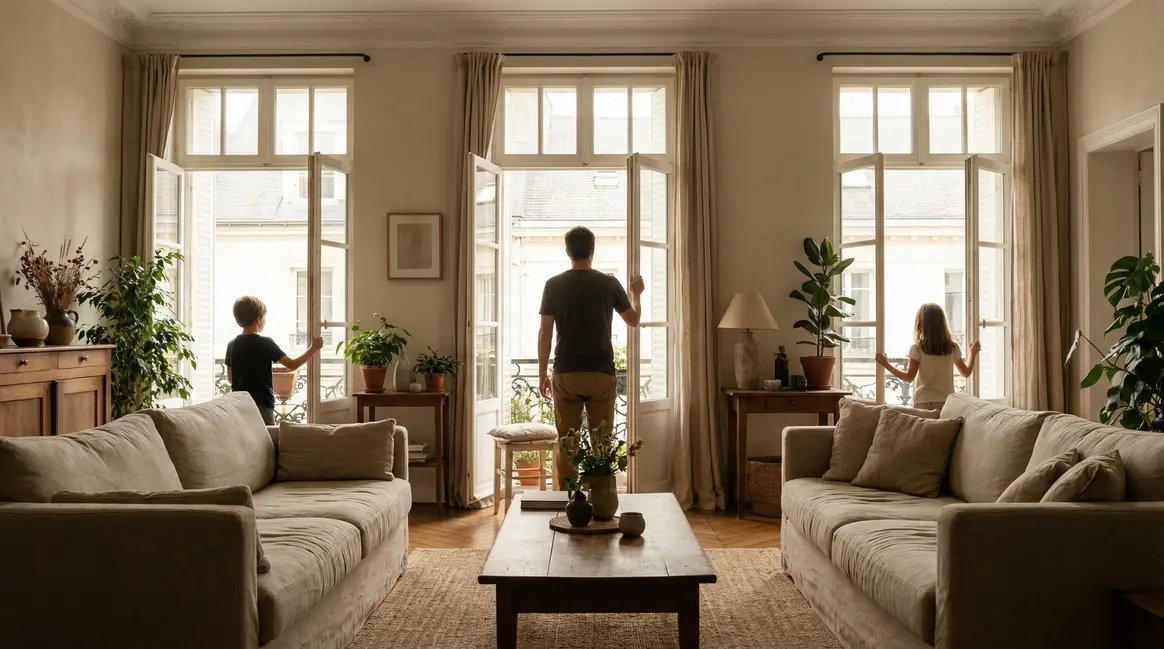

Many households underestimate the frequency and importance of ventilation. The question « Why do you ventilate and ventilate your home? » raises major health, economic and quality issues in everyday life. This content details the five basic reasons to integrate into your routine, using practical recommendations and field examples to guide you towards a healthier and more enjoyable indoor environment.
- Reduction of pollutants and health risks
Within a dwelling, indoor air houses VOCs released from paints, furniture and household products, but also from radon and mould spores, all harmful to health. Their concentration may exceed that measured on the outside, according to the Observatory for Indoor Air Quality (OQAI). Regular ventilation, combined with monitoring of moisture, removes these pollutants and significantly reduces the symptoms of people exposed: irritation, headache, allergies. The feedback from families forced to treat an infested piece illustrates how vital the targeted ventilation and maintenance of ventilation systems are to avoid unsanitary and chronic diseases. - Allergy prevention and improved respiratory health
Studies conducted by INSERM show that children and seniors are particularly vulnerable to the concentration of indoor pollutants, with a proportionally higher volume of inhaled air. Asthma attacks and seasonal allergies are frequently aggravated by the presence of moulds or mites that only air circulation and HEPA filters can effectively combat. Taking the habit of aerating each room in the morning or after work creates an environment less conducive to inflammation of the airways. - Effective moisture regulation and mould prevention
Poorly controlled moisture naturally promotes the development of persistent moulds and stains, generating a heavy atmosphere. Air renewal, especially in wet and poorly ventilated rooms, is the first lever to limit this phenomenon. Domestic returns confirm that good ventilation management, sometimes simply by simultaneously opening several windows (cross ventilation), prevents furniture and walls from deteriorating. This point is essential in recent, often very tight, dwellings where condensation appears rapidly. - Optimizing thermal comfort and reducing energy expenditure
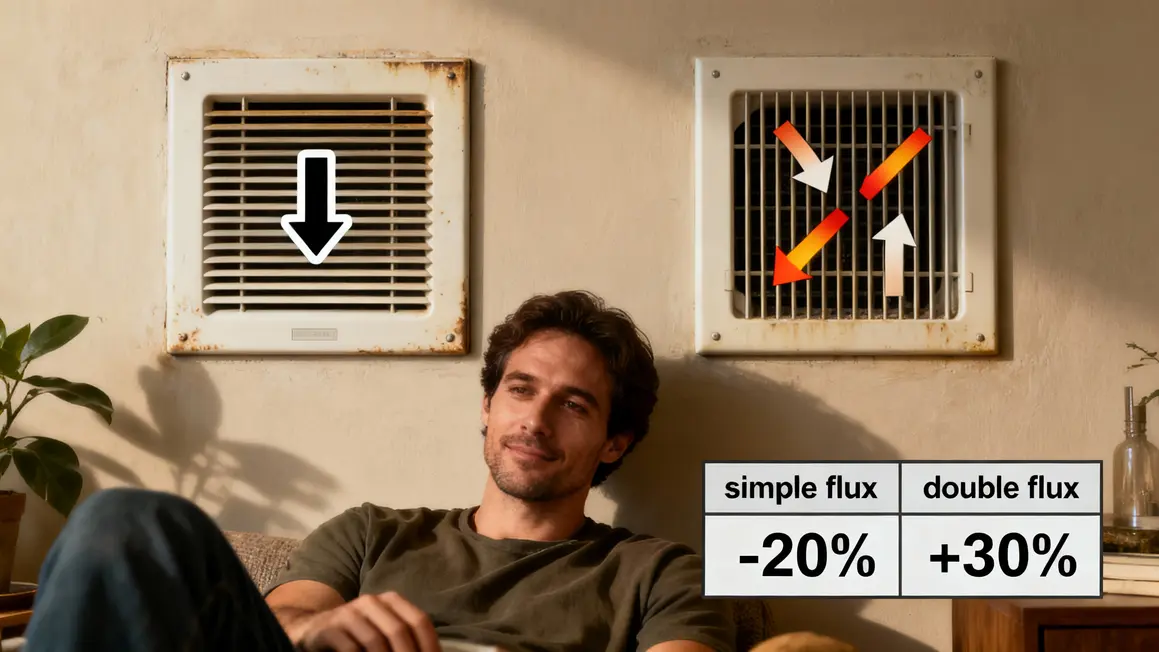
Ventilation and ventilation influence the level of comfort felt in all seasons. Installation of systems such as Double flow VMC (see comparative table below) allows to maintain a homogeneous temperature while reducing heat losses by thermal recovery. A wise use of these processes, with regular interviews, offers real control of energy bills, especially in winter. For example, the Stoßlüften, a technique of opening windows in large size over a short period of time, evacuates vitiated air without cooling the surfaces, contrary to prolonged ventilation. - Specific protection of sensitive profiles
The health recommendations call for increased vigilance for children, the elderly and all those with respiratory diseases. During periods of high pollution or pollen peaks, the use of suitable filters and air purifiers is required in certain living rooms. Testimonials from families experiencing allergic episodes or worsening symptoms in an elderly parent show that air renewal quality, regular verification of CMV filters and avoidance of VOC-emitting materials are actions that count each season.
Comparison of VMC systems: simple flow vs double flow
| Reliability | Single flow VMC | Double flow VMC |
|---|---|---|
| Operation | Continuous extraction of vitiated air | Heat recovery + air renewal |
| Benefits | Economic installation and maintenance | Energy savings, high thermal comfort |
| Disadvantages | Winter heat loss | Initial investment, demanding maintenance |
| Ideal for | Old or small dwellings | Recent buildings well isolated |
Ventilation techniques to maximize indoor air quality
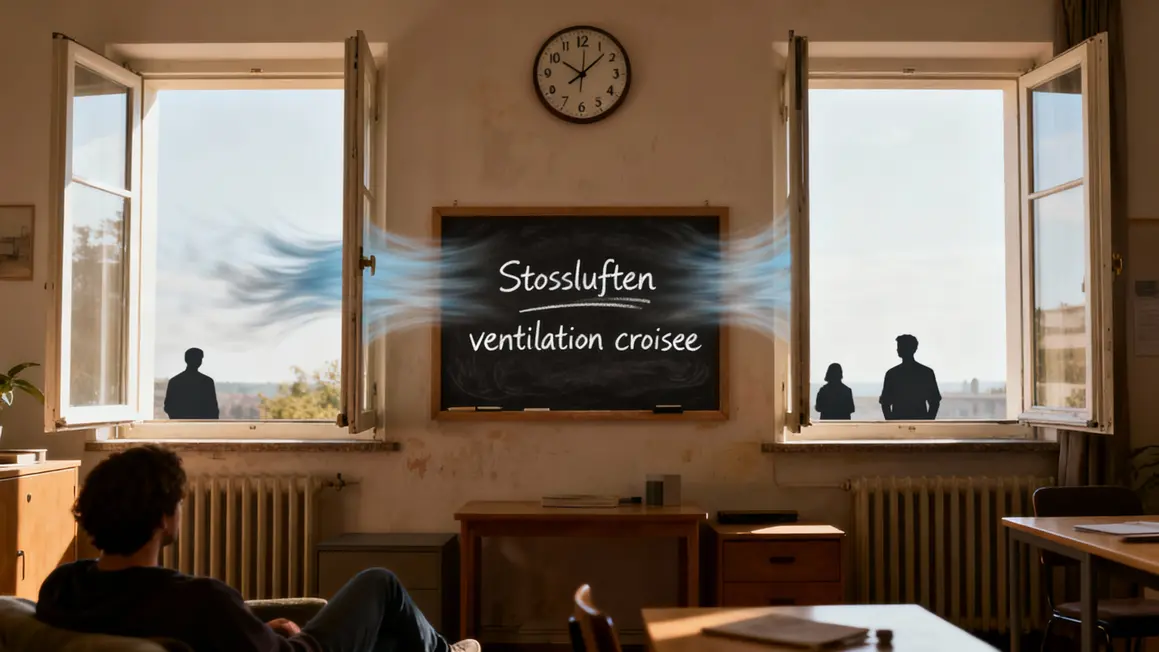
- Stoßlüften (shock aeration) : Open all windows between 5 and 10 minutes, twice a day, for rapid renewal and reduced thermal loss.
- Cross breakdown : exploit the opposite openings to create a natural air current, ideal during times when outdoor air is not polluted.
- Adjustment by season : prefer morning or evening ventilation in summer, limit the duration in winter to maintain thermal comfort.
| Technical | Duration | Optimal timing | Benefits |
|---|---|---|---|
| Stoßlüften | 5-10 min | Morning and after wet activities | Rapid renewal, low thermal loss |
| Cross breakdown | 15 min | Fresh periods | Optimal air flow |
Precautions and mistakes not to be made
- Do not obstruct venting mouths, even in poorly used rooms; filters and grids must be cleaned regularly to ensure their effectiveness.
- Avoid airing too long, especially in winter: focus on short and intense openings.
- Use a hood when cooking and ventilate after using household products or candles to remove internal emissions.
- Monitor humidity with a hygrometer to maintain a level between 40 and 60%.
- Maintain VMC systems (change of filters every 3–6 months depending on the manufacturer's recommendation).
All these practices and devices are part of a concrete approach to improving the quality of life and energy performance. Every change, even minor, brings lasting results and measures the impact on the occupants' daily lives.
Are you one of the households that tested different methods of ventilation and ventilation? What solutions have really changed your daily comfort? Share your feedback as a comment to enrich the experiences of the 01bank.com community!
Do you think sharing these health, energy and comfort issues is useful? Spread this article around you to better equip your loved ones in the face of the small invisible risks of everyday life.
What other themes on home and lifestyle optimization do you want to explore at 01bank.com? Tell us in comment: Every experience feeds the reflection on healthier habitats.
To improve air quality while optimizing your energy spending, discover the differences between Single or dual flow VMC: how to choose the solution for your home.
To maximize the effectiveness of ventilation, it is essential to know the sunshine of your home, including Northeast exposure: until what time does the sun illuminate your home?.
(Sources: INSERM, OQAI, Ademe, Ministry of Health)
Fabien Durand, editorial manager, graduated in building engineering and trained in indoor air hygiene.