

Better understand in detail how the property tax on one garage : once it is recognized as built property, adjacent to a separate dwelling or on a separate land, the tax remains the same for the owner, whether the garage is rented or even vacant. Mastering the rules of calculation, possible exemptions and the challenge procedure provides a solid basis for optimizing your investment and avoiding common errors that affect returns (Some investors report having had bad surprises when they first purchased).
Property tax on garage – clear answer in 30 seconds
The rule sometimes surprises: each garage considered to be well built, whether attached to a dwelling or situated elsewhere, falls within the scope of the property tax. The owner remains systematically liable, even in the event of rental or vacancy. The calculation is based on the local cadastral value, with a reduction of 50% This gives an average tax of 180 to 375€ per year Depending on the city. Furthermore, there are cases of exemption: New constructions, the franchise is worth 2 years ; for certain renovations, the exemption may be 5 years. It is fairly regular that these subtleties are sometimes ignored by the new owners.
Garage, box, parking: what tax differences?
Expert advice regularly converges on this point: taxation varies little between closed garage, box, or single covered parking space. What is authentic is the notion of « Well built » cadastral; Therefore, taxation applies. Open, uncovered parking can in some specific cases escape the property tax, but this remains rare. To be remembered: whether it is a self-contained good or a dependency on housing, the principle of subjection remains the same. Does the size of the garage count for taxation? In practice, no: construction and use, no minimum surface area. A tax trainer mentioned the importance of declaring real use in order to avoid errors on this point.
Owner or tenant: who pays the property tax?
It is often recommended to check on the notice of taxation: the property tax on the garage only weighs on the owner on 1 January of the year, even when renting. The lessor may not charge the lessee for it unless it is very special, for professional use. Whether the garage accompanies a dwelling or is rented separately, the principle does not change. This nuance sometimes leads to errors in the declarations or in the calculations of yield of a rental garage... a financial detail which, according to some managers, may make investment less profitable than anticipated. (It is sometimes not obvious to find yourself in these subtleties.)
Summary of key points
- ✅ Property tax applies to any garage recognized as built, leased or vacant property
- ✅ A 50% discount applies to the cadastral value for calculation
- ✅ The owner on 1 January is still liable, not the tenant
Calculation of property tax on a garage
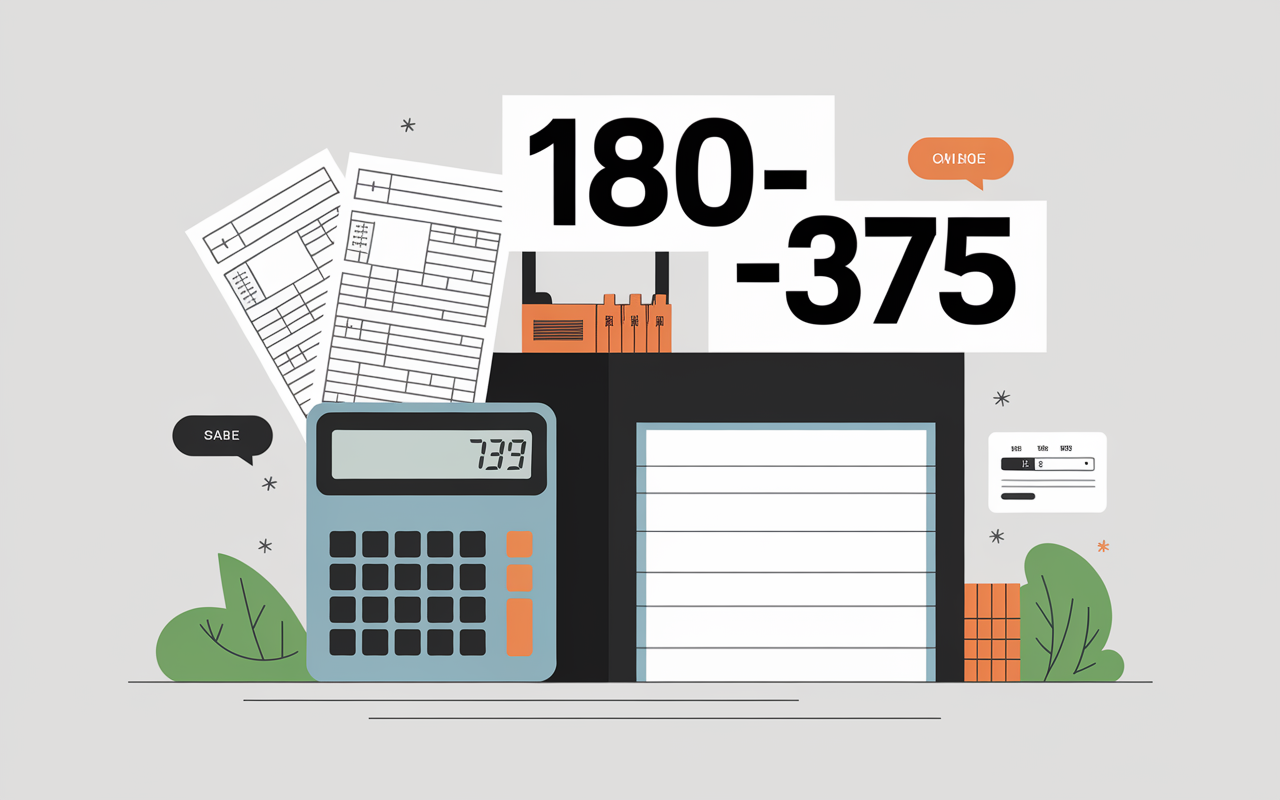
It is observed that the calculation is based on the cadastral rental value of the garage, fixed by administration according to surface, condition and use. This value is reduced by 50%, then adjust according to the local rate voted by the municipality, department and EPCI. In the middle town, the base is often close to 900€, with a final tax of 180€/year ; in the tense area, this rises to 1 500€, or about 375€/year. The payment deadline falls to 15 October Every year. Some professionals believe that variations in rates explain the large difference between municipalities.
Practical example of calculation
Imagine a garage with a cadastral value at 1 000€. After discount, the base falls to 500€. With a local rate of 35%the amount due is 175€. Some key points to note:
- The reduction on the cadastral value reached systematically 50%
- The amount of tax generally varies between 180€/year and 375€/year according to the municipality
- Payment must be made no later than 15 October
- Some online simulators, such as those of impots.gouv.fr or partner guides, provide a quick estimate
Frequently asked, "Is TEOM included?" In practice, no: it remains linked to the accommodation, never to the separate garage.
Adjacent, independent, remote garage – impact on taxation
A garage adjacent to the main dwelling or situated on the same plot is regularly treated as an outbuilding. A separate garage, or registered at a separate address, is subject to autonomous taxation, but remains subject to taxation. The distance, sometimes estimated at less than one kilometre, sometimes affects eligibility for the supplementary housing tax, but does not affect the property tax itself. It can be assumed that each case deserves verification with local taxes.
Comparison table : garage attached vs separate
| Situation | Property tax |
|---|---|
| Housing | Taxation as dependency, integrated calculation |
| Garage at a different address | Separate taxation, own declaration |
| Rented garage (distance) | Imposed, without possibility of transfer to tenant |
The question of cumulation often comes up: "Can we avoid double taxation for a garage within 800 metres?" In other words, the property tax remains due, but it is advisable to check the possible housing tax in order not to overpay. Some local experts recall that the confusion between these taxes is common.
Good to know
I recommend that you systematically check the housing tax for a nearby garage in order to avoid unnecessary double taxation, even if the property tax remains due.
Exemptions and special cases for garages
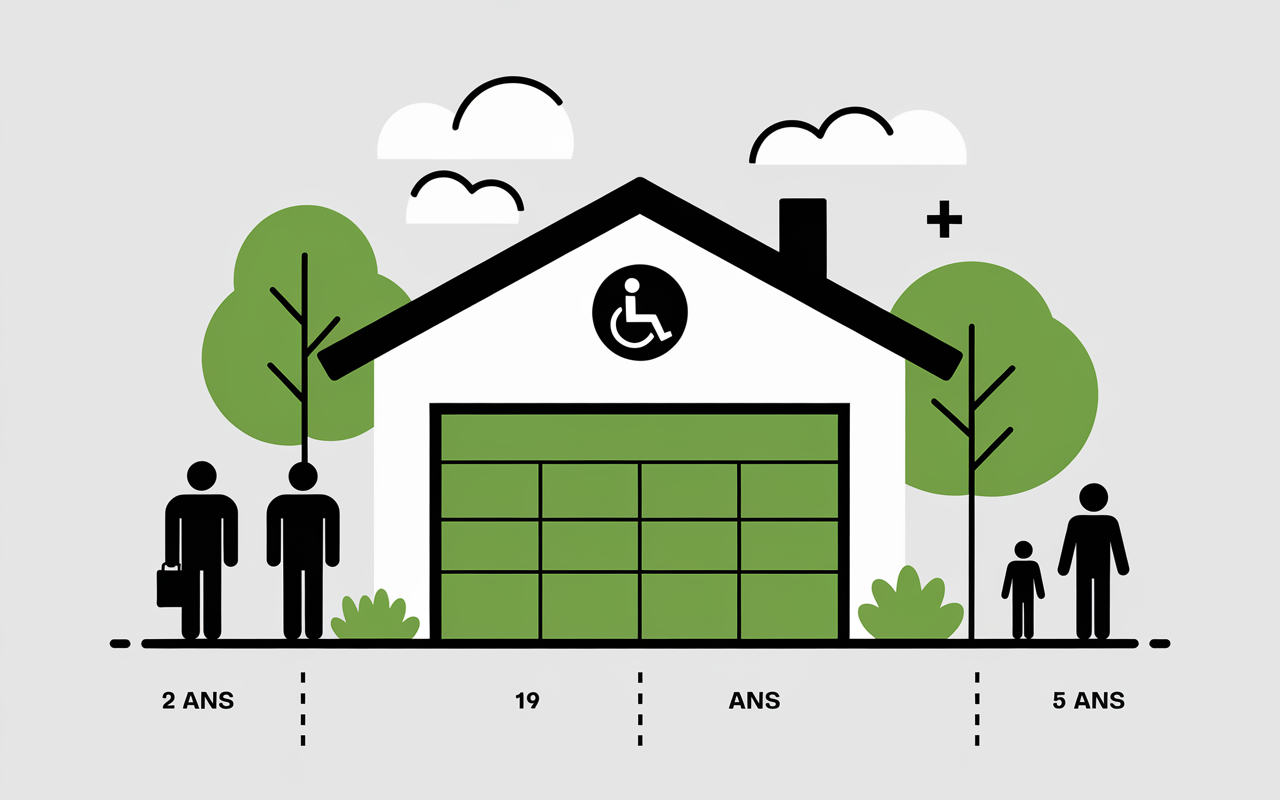
It may be worth considering temporary exemptions: for owners, they include new buildings (2-year deductible), or major energy renovations (up to 5 years of exemption, according to local decisions). Other profiles such as elderly, disabled, or low-income may be eligible for discounts or deductibles. An anecdote comes back frequently: an owner has benefited from franchise after turning his garage into an isolated space for a person with reduced mobility.
Conditions for exemption
Some points to check with your municipality:
- New construction: 2 years deductible Tax
- Energy renovations: 5-year exemption (between 50% and 100% according to local deliberation)
- Owner's profile: income, age or disability conditions eligible for reduction
We sometimes find that the list of exceptions appears to be broad... However, they are highly supervised and require a specific declaration to the tax department. One tax officer pointed out that many requests were denied due to lack of a complete file.
Verification and challenge of the Notice of Taxation
The tax notice sent each year may contain surface, use or even double reporting errors. It is best to check the cadastral elements and then contact the local tax centre in case of doubt. Institutional sites and partner guides offer standard letters to support a challenge. The procedure remains accessible provided that the deadline often coincides with the deadline for payment. Some owners report winning after a simple correction of the area by email.
FAQ and practical resources
Accessible content, including on BailFacile, offers a complete FAQ and guides for each particular case. Useful resources include:
- Dedicated simulator for property tax garage/parking
- Reactive FAQ, practical summaries, PDF guides to download
- Expert notes (4.6/5 Trustpilot, 67,000 contracts published)
Sometimes an owner discovers a tax « professional garage » after reporting commercial use in error. Sometimes a call or a well-turned email is enough to resolve the misunderstanding. A tax adviser mentioned this type of misadventure during an information session.
To be deducted from the property tax of a garage
A built garage remains mandatory; the tax established on the cadastral value, after deduction of 50%. The owner pays, never the tenant. Exemptions exist for new buildings (2 years), renovations (5 years), depending on local context. A plurality of tools (simulators, guides, FAQ) facilitates verification and challenge when necessary. Some opt to download a guide before declaring, so avoid a sometimes costly calculation error.