


The forecast decrease in Book rate A in February 2026 pushes many savers to question: what will be the real return on their secure savings? What alternatives are possible, without losing security or liquidity? Understanding the reasons for this change, its impact on the main regulated booklets, and ways to optimize according to your profile is relatively useful to better preserve your purchasing power.
Lower Booklet A in February 2026 – rate, date and booklet concerned
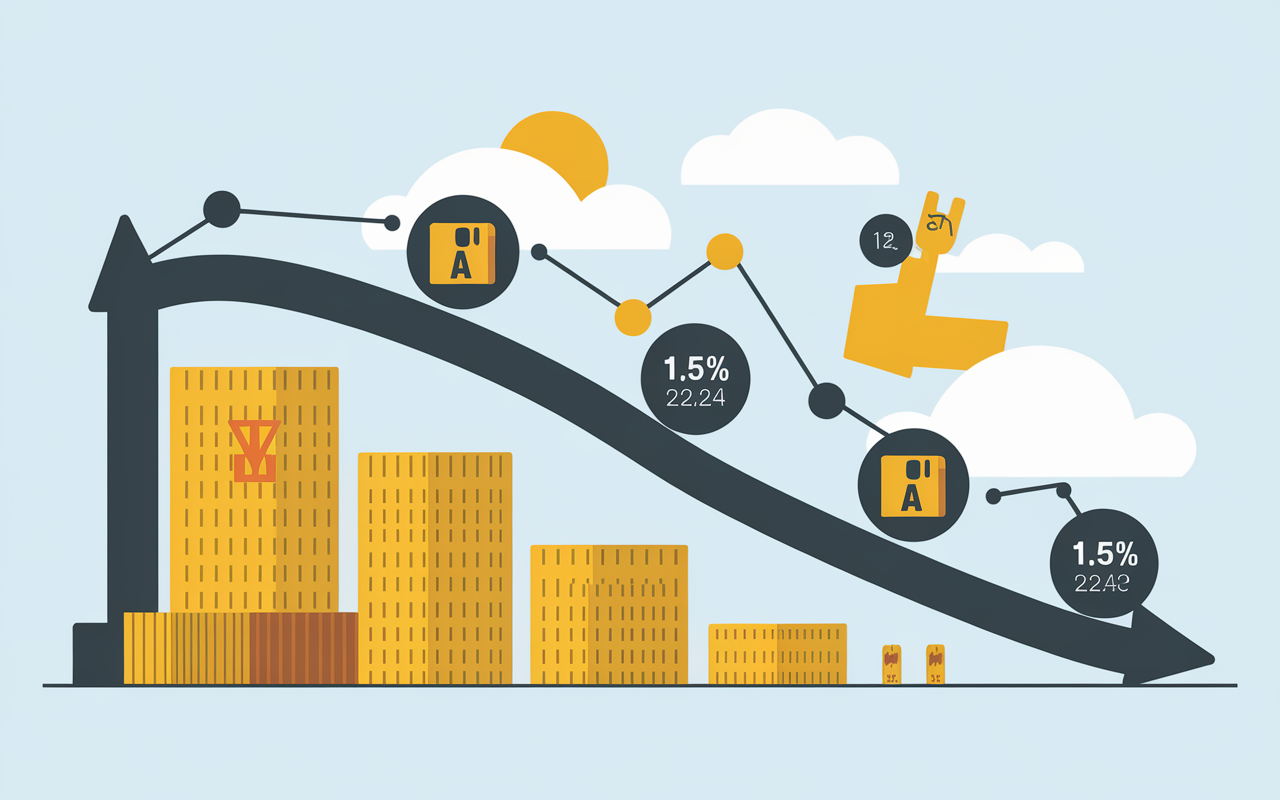
From 1 February 2026, the rate of Book A will officially increase to 1,5 %, compared with 1.7% previously. This decision also concerns the LDDS (Livret de Développement Durable et Solidaire) and the CEL (Account Saving Housing), the revision of which follows an identical logic. The ministerial decree validates the proposal of the Banque de France and the application is national, for all French banks.
This rate will remain in effect until 31 July 2026, except for government intervention. The revision is carried out every six months: on 1 February and 1 August, the regulated rates are adjusted according to different economic indicators (inflation, €STR).
To find it easily, a few key figures:
- Book rate A : 1.5% from 1 February 2026
- LDDS rates 1.5% on the same date
- SARA rate : 2.5 % with an inflation bonus
- CEL rate : 1 %
Out of curiosity: "What interest will the decline cost?" For a ceiling of 22,950 €Book A now returns 344.25 € per year – is 45.90 € less than in 2025. This difference seems modest for the majority of incumbents, but on a large portfolio, it is better to do the calculations.
Box before/after: key regulated performance figures
| Product | Feb. 2025 | Feb. 2026 | Annual yield (at ceiling) |
|---|---|---|---|
| Book A | 1,7 % | 1,5 % | 344,25 € |
| LDDS | 1,7 % | 1,5 % | 180 € |
| SARA | 3 % | 2,5 % | 250 € |
| CEL | 1,25 % | 1 % | 100 € |
Institutional sources such as Public Service and ABE Info Service recall strict regulation, capital guarantee and immediate liquidity. It is impossible to see his money disappear, but we still see a slight drop in earnings from 2026.
How the rate of Book A is calculated
Some find the calculation method of Book A rather opaque. However, it remains accessible: the Bank of France is studying inflation over the last six months and the interbank rate €STR. The average obtained is rounded to the nearest 0.10 per cent by the government in question.
In December 2025, the estimated inflation was between 1.25 and 1.35%, and the rate was €STR 1.93%. In practice, the average could have led to a slightly higher rate, but the regulations allow a 1.5% round for the following semester.
Some points to note:
- The rate is automatically updated every 6 months.
- The ministerial decree may derogate from the calculation to avoid too rapid variations.
- The regulation ensures transparency, even if the State retains control of the final decision.
An asset management trainer recently indicated: in 2025, the technical formula suggested 1.65%, but the department rounded to 1.7% to preserve purchasing power. It is therefore noted that rounding can sometimes benefit savers.
The main steps in setting the rate
The Bank of France collects inflation and rate figures €STR for the past semester, and submit its calculation to the department. The proposal is valid or adapted according to rounding. This process applies to both Book A and other primary regulated booklets (LDDS, CEL).
There is an additional benefit to SARA: +0.5 percentage point over inflation for modest profiles, 2.5% in 2026, while inflation is estimated at 1.3%.
Everything seems sufficiently transparent, although the process may seem technical. Who never wondered what "€STR", "slippery inflation" or "government rounding"?
Impact on your performance and purchasing power
What really matters is the amount of interest you will receive. A lower rate actually reduces the annual gain, especially if your booklet is on the ceiling. In concrete terms, an investment of 1,000 € on Booklet A in 2026 offer 15 € per year (compared to 17) € in 2025. For the ceiling, the yield is 344.25 €.
Remuneration remains relatively low: if Book A is used as a security pocket or as a reserve, liquidity is preserved and capital remains assured, but yield falls slowly in the face of inflation.
Simulation of earnings: 1,000 €, 5,000 € or 22,950 €
Three simple examples over a year, at 1.5%:
- With 1,000 € interest is set at 15 €
- Per 5,000 € the gain is 75 €
- At the ceiling of 22,950 €, the yield climbs to 344,25 €
It can be assumed that Book A becomes less interesting for large amounts some bankers testify that their customers opt for life insurance in addition. However, the majority of households retain their booklets because of their commitment to safety and immediate availability. Opening a new ELP is not as simple as changing it on a head start. This is not always obvious for those who favour financial stability.
Comparison Booklet A, SARA, LDDS, CEL
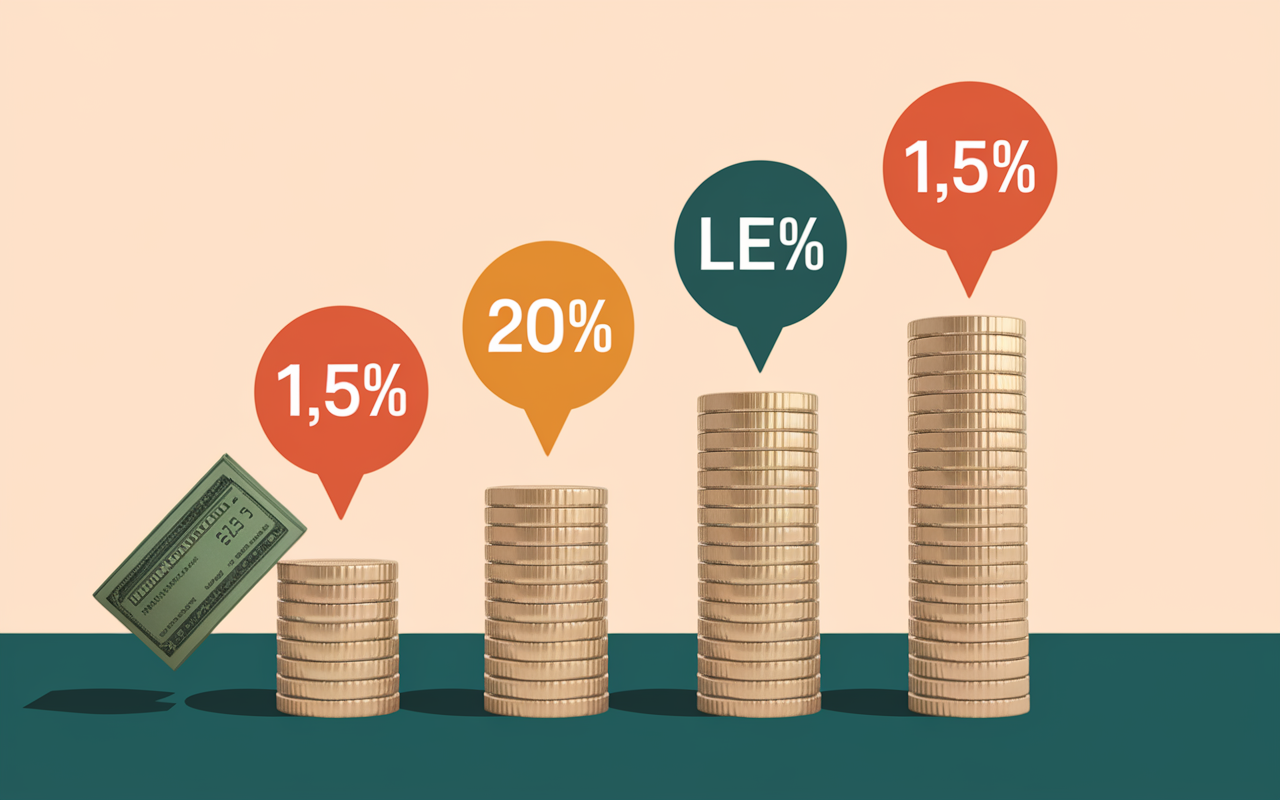
Compare Booklet A and other regulated products requires a zoom in on rate, ceiling and accessibility. SARA has a higher yield (2,5 %) but remains reserved for modest revenues, the LDDS is up to 1.5%, and the LEC is capped at 1%. The real difference lies in profitability and opening conditions.
Summary table of rates, ceilings and conditions (2026)
| Product | Rates: | Ceiling | Annual performance | Conditions |
|---|---|---|---|---|
| Book A | 1,5 % | 22 950 € | 344,25 € | Open to all |
| LDDS | 1,5 % | 12 000 € | 180 € | Open to all |
| SARA | 2,5 % | 10 000 € | 250 € | Low income |
| CEL | 1 % | 15 300 € | 153 € | Open to all |
Another point to note: SARA benefits from an inflation bonus. If you meet the access criteria, it is best to prefer this option, without fear for your capital.
Is that really different? "The LDDS is just a Book A?" In theory, taxation and the rate are equivalent. But the ceiling and purpose of the LDDS (sustainable financing) provide a nuance that agency advisors sometimes refer to during interviews.
What to do after the drop? Alternatives and precautionary advice
The decline in yield leads to questions: should we move our savings, open a SARA or turn to life insurance? Booklet A keeps its total liquidity, guaranteed capital and accessibility. For "precautionary" savings, it remains unique in France. If you are eligible for SARA, it is regularly recommended that you start with SARA. Sometimes an individual hesitates, but for longer horizons, life insurance or euro funds remain popular: a net collection of +44 Md€ late 2025 attests to this.
Regulated and secure options to be preferred
Depending on your profile, several leads:
- SARA : accessible by income level, higher yield and inflation bonus
- Life insurance (euro funds) : yield oscillating between 2.1 and 2,5 % in 2026, secured capital
- PEL : profitable over the long term, provided that the duration of the commitment is accepted
- Promotional bank book : Welcome offers (sometimes 150 to 200 € at Meilleurtaux, Trustpilot 4,6/5) can be worth the detour
This is also why it is not urgent to leave Book A if the goal is liquidity or security. But to better optimize, keep an eye on SARA or life insurance. If the subject seems complex, some online advisors or simulators make the comparison more digested. A professional from the bank regularly summarizes: "There is no single strategy, everything depends on your needs and objectives."
Quick FAQ on Booklet A and alternatives in 2026
Because the questions are recurrent, here is a condensation of clear answers, without financial jargon.
What rate for Book A as of February 1, 2026?
The rate is set at 1.5%. Immediate application from 1 February until the next revision on 1 August.
What drives this decline?
The decrease is explained by the decline in inflation and interbank rates (€STR), Inflation remains around 1.30% in 2026. The department applies the regulatory formula and then proceeds with rounding.
Since when does the new rate apply?
Since 1 February 2026, to all existing or newly opened Booklet A.
Does the LDDS also suffer a decline?
Yes, same rate of 1.5% and identical semi-annual revision.
Does Book A keep its interest?
For security, liquidity, or precautionary savings, absolutely. For performance, this varies according to expectations and alternatives.
What difference between Book A and SARA?
SARA has a higher rate (2,5 %), but remains reserved for modest incomes (conditions to be checked). This is the priority option if you are entitled to it.
Can we bet on an increase in the rate in 2026?
Nothing precludes an increase if inflation rises. It can be assumed that future semesters will have to be monitored for potential change.
What gains on the ceiling?
At the ceiling of 22 950 €, the annual remuneration achieved 344,25 €.
How is the rate of Book A calculated?
By an average between inflation and the rate €STR, rounded to within 0.10 %. The decision shall be taken by the Ministry, following a proposal by the Banque de France.
Is it relevant to move your savings?
If security and liquidity are a priority, it is best to stay on Book A. To optimize risk-free, keep an eye on SARA or life insurance in euro funds.
Official resource
Public service, Book rate A 2026 | ABE Info Service
Interactive simulation: calculate your return by amount
Feel free to test the official simulator or banking tools to adapt your choices live. Official accompaniment or a bank newsletter also makes it easy to follow the news (shows the ad hoc offers and the Best Rate Trustpilot note: 4.6/5).
Educational box
Guaranteed capital, immediate availability and state regulation: Book A remains a trusted support. It is best to adjust your strategy according to the amount held and future projects. Keep in mind: prudence remains the basis.