
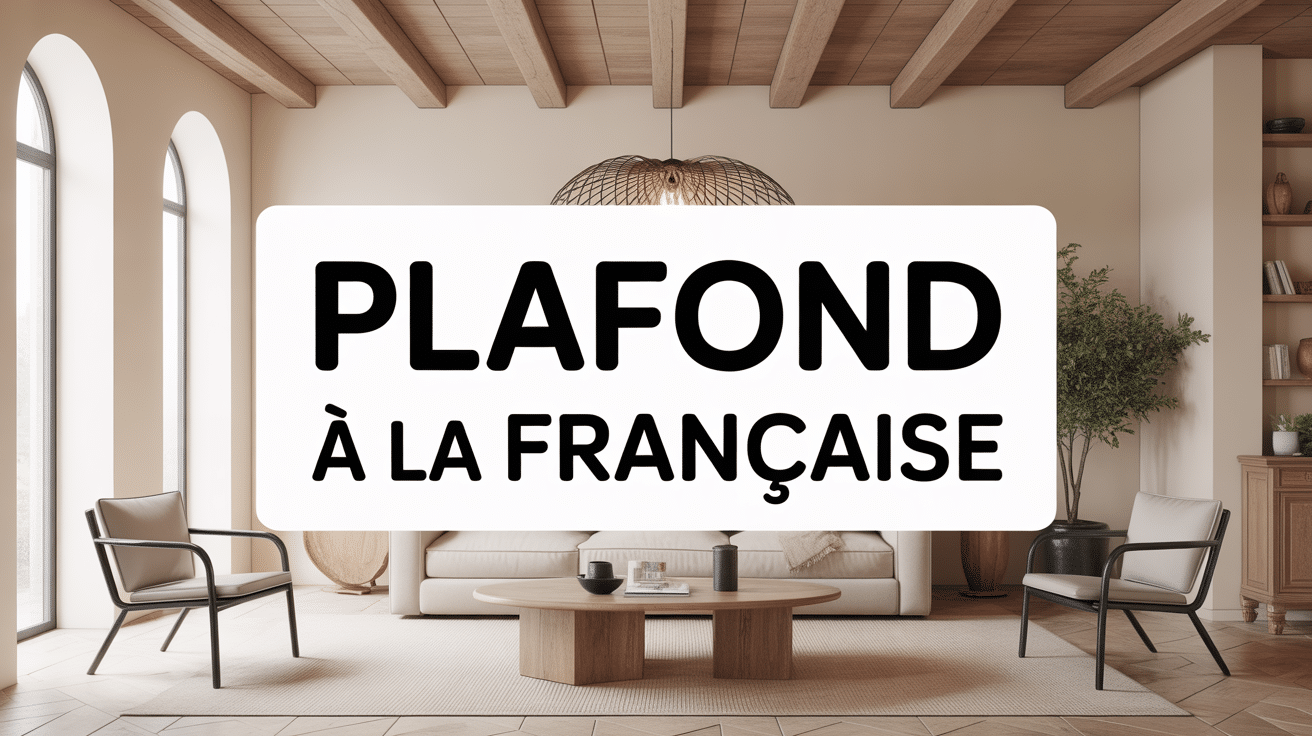

Far from being reserved for old buildings, the French ceiling combines authentic character and decorative strength, ready to sublimate any interior. That we favour the solid wood traditional or lighter versions for modern life, understanding this structure allows you to value your property with style, while adjusting the work according to the desires, budget or configuration of the place.
French ceiling in brief: definition, style and advantages
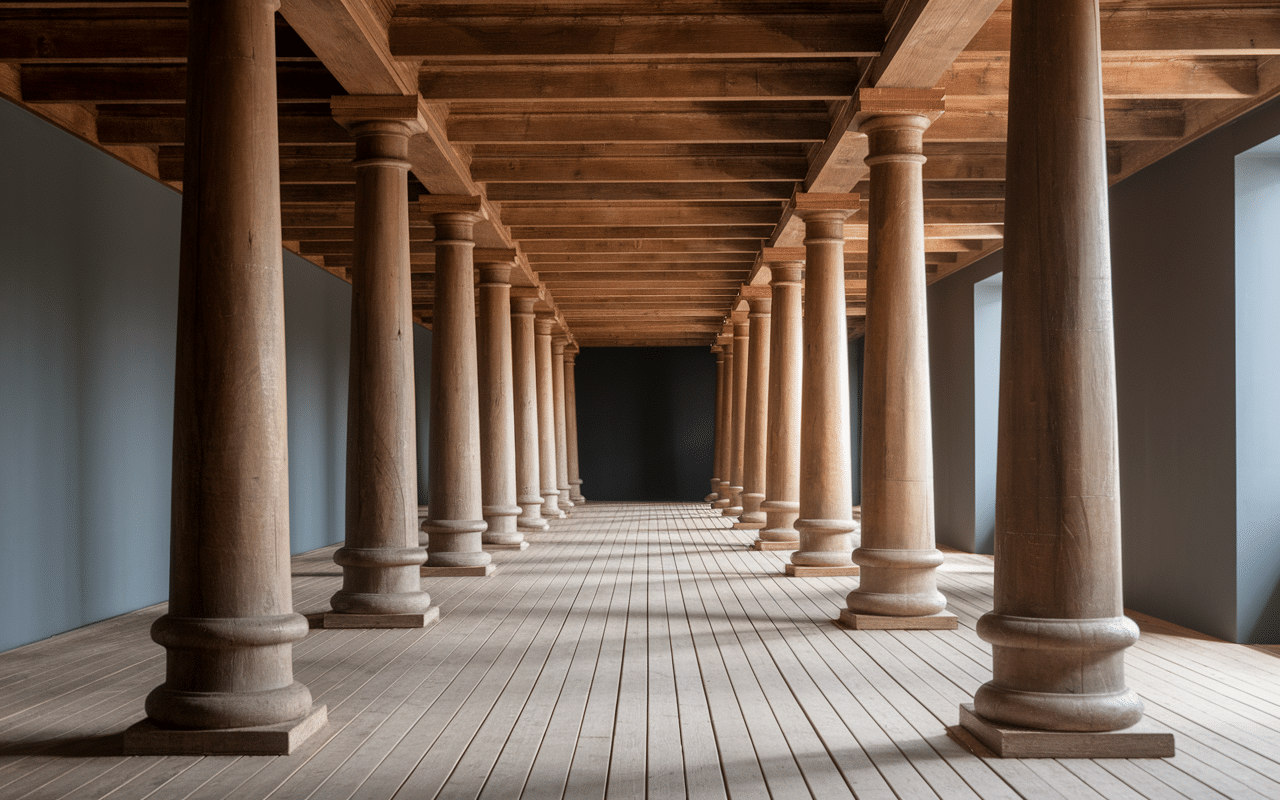
To understand within moments what defines a French ceiling is already opening up to a world of possibilities, both for decoration and for heritage reclamation. His distinctive feature? Apparent beams, often made of solid wood and arranged regularly, giving both a strong decorative note and a lot of authenticity. It is an aesthetically attractive and clever arrangement – it isolates, structure and gives relief to your rooms. A Renaissance heritage, this ceiling crosses the eras and is now integrated into both character restorations and resolutely contemporary housing.
If he seduces for his history and the soul supplement he brings, the French ceiling is no longer content with the tradition: it evolves over time, with modernized versions (blanched beams, light versions, wooden associations and composite materials) that meet all the preferences and constraints of height. On the budget side, everyone can find their own account: solid wood starts around 80 € / m2, while alternatives in pine or synthetic materials oscillate between 15 and 30 € / m2 depending on the finish. For some owners, even a simple detail of style triggers an impromptu renovation (an architect recently mentioned that a couple had cracked on a model of beams painted during a deco lounge visit). To customize without weighing down space then remains the number one quest... but everyone picks his inspiration there, according to his home and his priorities.
Summary of key points
- ✅ The French ceiling combines exposed beams in solid wood with a strong decorative authenticity.
- ✅ It is modernized with light variants and composite materials that offer more flexibility.
- ✅ The budget ranges from 15 to 80 €/m2 depending on the material chosen, solid wood or alternatives.
What is a French ceiling? Origin, history and variants
Cannot cross a French ceiling without feeling a certain heritage presence... Yet its definition and history continue to intrigue. Traditionally, there are large wooden beams (so-called "masters"), aligned in parallel and supporting (brighter-sectioned) beams placed perpendicularly. This arrangement forms a regular grid, visible directly from the room.
As early as the 15th century, this method of construction was established thanks to its aesthetics, especially in many private hotels and public buildings. The preferred woods at the time were selected for their strength (relatively often oak, sometimes chestnut, even pine or fir depending on the regions, this is still attested by some dendrochronological analyses today). Over time, this style has been adapted to other territories: the "ceiling to the Provencal" for example incorporates inclined beams, and the "ceiling to the Breton" reveals marked regional touches. There are even, at times, debates between heritage lovers about the relevance of a technique in a particular geographical area!
To illustrate the major variations:
- French ceiling : large, parallel, side walls and visible from the room.
- Ceiling to the Provencal : solives arranged in oblique or biased, with a more rustic and living visual effect.
The heritage archives and many artisans recall that each ceiling takes on a unique look depending on the period, the location or even the hand of the artisan. An expert said recently – "There are finally never two identical ceilings, even in the same street!" (An anecdote that regularly entertains during visits to old houses).
Good to know
I recommend that you carefully observe the regional characteristics before opting for a French ceiling style, as each variant reflects a history and methods specific to its territory.
Materials, structure and technical choices: from real wood to modern alternatives
Behind the style, the technique: while the elegance of French ceilings comes first from materials (solid wood, often oak or chestnut), today, other options allow to access this style without exploding the budget or effort to adapt the structure.
The choice between full beams and false beams regularly leads to hesitations. The former embody authenticity and solidity (count from 80 €/m2 for an artisanal pose); the seconds seduce for their lightness and their much softer cost (15 €/m2 for hollow pine beam; 30 €/m2 about for the synthetic type polyurethane). It is the latter that simplify the renovation or interior decoration without risk of overloading the structure – with, sometimes, a surprising trompe-l'oeil effect (an owner confided to have deceived all his guests during a recent aperitif... the trickery was discovered only by means of a redevelopment!)
Keep in mind when making your technical choice:
- Massive beams : they sublimate the structure, but weigh the whole (oversee the accepted load).
- Polystyrene or polyurethane : easy integration, even in a false ceiling, and feather weight.
- Wide range of finishes : painted, bleached, lasured, or even imitation "old wood" for chic country fans.
A piece of advice slid one day by a craftsman: mixing true bearer solvage and false decoration beams sometimes makes even the most experienced eye hesitate (this is also one of the secrets of some renovations with budget content, he notes smiling).
Install or renovate a French ceiling: constraints, tricks and modern adaptability
The idea of installing a French ceiling in a recent room or with a "normal" height is regularly considered. In reality, this style is adaptable provided that the influence of beams on volume and light is anticipated; several specialists recall this point because the alternating olive beams can give an impression of lowering the spaces (a decorator tells that some customers feared this feeling, before opting for light versions... and finally being conquered by the clarity obtained!).
To avoid the massive or "low ceiling" effect, there are various strategies:
- Fine beams or false beams : useful for keeping the height and not containing space.
- Light or bleached beams These shades reveal light, especially in association with light walls.
- Custom spacing of the soles This makes it possible to rhythmise the piece, while modulating the relief impression as needed.
In practice, using a professional ensures compliance with safety rules (structural, fire). But realizing yourself a decorative pose is also very accessible, especially with false beams. What matters? To attach great importance to the preparation of the support (cleanness, regularity) and to the visualisation of the final result (it happens that beams too wide or too numerous disappoint when discovering the finished project). Some enthusiasts also like the "old-modern" association: a traditional ceiling combined with ultra-contemporaneous LEDs or luminaires, capable of creating a unique atmosphere (there are more and more examples on social networks elsewhere...).
Good to know
I advise you, if you opt for a decorative laying in false beams, to prepare the support well and visualize the rendering before installation to avoid any disappointment.
Technique, price, maintenance: anticipate, choose, preserve its ceiling
When one embarks on a French-style ceiling project, financial investment and maintenance are two topics that return systematically. On average, we must count 80 € / m2 for solid wood laid, and between 15 and 30 € / m2 for false beams, depending on the materials and level of finish. Clients sometimes hesitate for a long time because of this budget item, but some professionals point out that valuing the property can be worthwhile.
Maintenance depends on the material chosen: for raw beams, as for painted or composite beams, frequent dust removal is the base, to which is added an anti-insect treatment, or a lasure every two to five years for natural wood. The synthetic alternatives, on the other hand, are content with quick cleaning (a simple cloth is usually enough); It is also for this reason that this option is increasingly encountered during "express" renovations. Some testify that having opted for synthetic in a kitchen or wet room made the cleaning chore almost non-existent.
To preserve the beauty of your ceiling every day, it is best:
- Treat natural wood immediately after installation (anti-xylophagous products, water repellents).
- Take the habit of removing dust housed between beams (a long feather or a suitable brush are recommended).
- Promote washable finishes for parts exposed to moisture or temperature variations.
Finally, it should be stressed that any changes affecting the structural structure must comply with legislation and, in heritage areas, be declared to the authorities. A renovation advisor mentioned that an ill-informed case could have delayed a project for several weeks: informing local specialists remains a wise precaution.
A well-oriented French ceiling can also maximize natural light, a criterion influenced by Northeast exposure: until what time the sun lights up your home.
Styles, inspirations and evolutions: the French ceiling today
Who knew these several hundred-year-old beams would remain so trendy? Currently, the French ceiling seduces architects and decorators, who adapt it to all desires: clear lasures for a Scandinavian touch, contrast between dark wood and white walls for an industrial atmosphere, or even installation of integrated LEDs to highlight each beam at night. A decorator confided that a simple play of light on the solos had in some cases sufficed to transform a room without changing anything else!
Some inspirations from recent achievements:
- Spectacular before/after: transformation of dark rooms into light bathed places thanks to bleached beams or the opening of the perspective.
- Unpublished components : the alliance of ancient beams with resolutely modern elements such as waxed concrete or design furniture.
- Small space arrangements : to rhythmize the room with false beams without compromising the sensation of openness or lightness.
Last point to note, a trick reported by a professional: before you start, let yourself be inspired by online galleries, simulators or examples offered by artisans. A virtual tour or a few visuals is sometimes enough to make your project happen or to choose the combination that will make all the difference (it's not always obvious to imagine the result without a little visual boost!).
French ceiling FAQ: Your questions in real-life situations
Here is what I am asked for most regularly during the project or visit:
What difference between French and Provencal ceiling?
In the French version, there is an alternation between the main beams and the secondary beams, all well aligned and quite imposing. At the Provençal, the rendering seems more natural: pine is usually used, the soles stand in bias and the beams can vary in size, for a "country" impression and less structured. A restorer of ancient houses suggested that they are sometimes confused, but that regional craftsmen always find themselves there!
How much does it cost to install a French ceiling?
The fork begins around 80 €/m2 for solid wood laid by an artisan. Fake pine beams solutions are available from 15 €/m2, the surrounding synthetic 30 €/m2, excluding pose or decoration costs. Some project their budget upwards to include treatments, finishes and some custom lighting options, according to their expert advice.
Can a French ceiling be installed in a modern interior?
Of course! Thanks to the false beams, the clear hues and the more open arrangements, it is possible to play intelligently on the perception of height or light. The modular spacing of the beams allows to customize the result without ever giving the impression of a ceiling too low. It is often observed that this alternation between tradition and modernity attracts an increasing audience.
Are there any ceiling height constraints?
It is better to have a height greater than 2.50 m if you want to lay real beams of large section. Below, it is appropriate to opt for lighter solutions: false ceilings, less thick decorative beams, or light finishes. Some professionals often share this advice in advance at construction sites in order to avoid bad surprises.
How to choose between real and fake beams?
It depends on the project and expectations. Real beams offer precious authenticity, but they require more technicality (and more budget). The false alternatives in light pine or synthetic materials are particularly suitable for quick renovations, small spaces or rooms where structural constraints exist. It is regularly observed that the balance leans for synthetic when the ease of maintenance becomes a major argument.
Need a quote or ideas tailored to your situation? Contact a trusted craftsman or test a Price simulator to refine the contours of your project.