
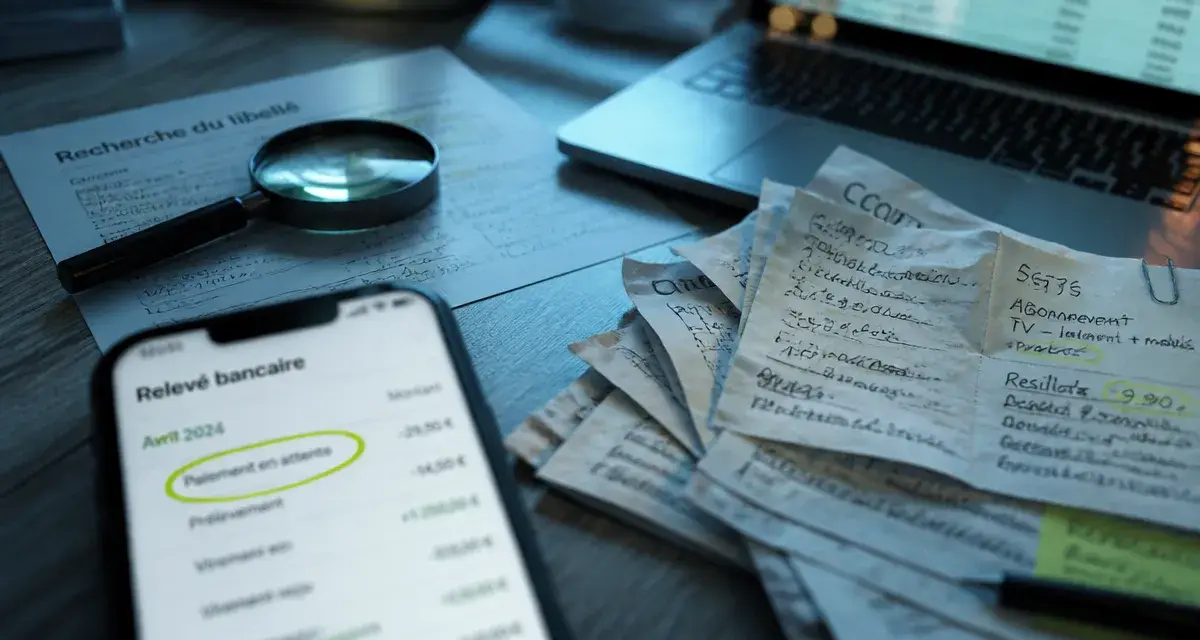

Discovering a mysterious line on his bank statement often triggers a feeling of anxiety. Whether it's a derisory amount or a large sum, the lack of understanding of cryptic language leaves the worst fear. However, an unrecognized payment is not always synonymous with fraud. There are many rational explanations between processing lags, trade names different from known signs and forgotten subscriptions.
Decoding the wording to identify the recipient
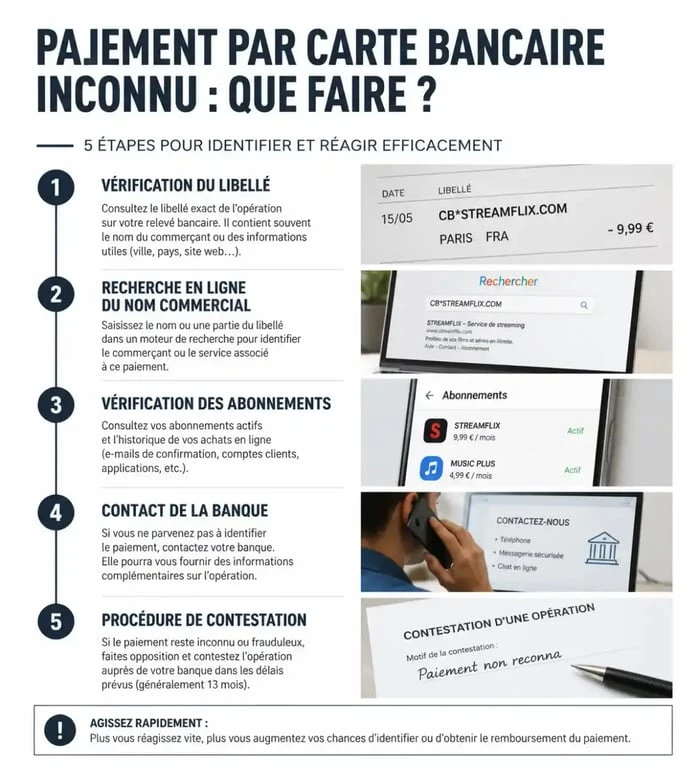
The first step is to analyze the debit line on your bank application. Wording is the key, although it sometimes seems written in a foreign language. It usually consists of the name of the merchant, the city where the transaction was registered and sometimes an internal reference code.
Search for trade name
It is common for a store or e-commerce site to use a name different from its public sign. A local bakery may appear under the name of its family holding company. To remove the doubt, copy and paste the exact name on your statement into a search engine. Add keywords like « Payment » or « flow rate » to check if other Internet users shared their questions about the same wording.
Check the date and location of the operation
Pay attention to time lag: a transaction made on a Saturday may only appear on your account the following Wednesday. Some payments are registered at the company's head office. If you see « London » or « Luxembourg » While you have not left your home, this often corresponds to the seat of a streaming service like Netflix or a delivery platform as Uber Eats.
Frequent causes of unrecognised flow
Before considering fraud, review the classic scenarios that explain the majority of bank customers' queries. Often, confusion comes from forgotten automatism.
To understand the persistence of certain flows, go back to the root your contractual commitment. A payment that arises from nowhere is often the final branch of a free trial accepted months ago. Whether it's anti-virus software, premium access to a genealogy site or an insurance option linked to a purchase, these services anchor into your habits via tacit renewals. Identifying this origin stops the flow and understands how your data was recorded in the merchant ecosystem.
Subscriptions « hidden » are common: a free cosmetic sample or a downloaded white paper can hide an automatic monthly membership. Bonds and pre-authorizations are another classic cause. If you have rented a car or stayed at the hotel, the hotel can block a temporary amount, which sometimes appears as a waiting rate. Finally, spouse or child purchases via a shared Amazon or Apple account often result in micro-transactions related to mobile games or storage options.
The search procedure via banking tools
If the search on the Internet does not give anything, your online customer space contains more accurate information. Banks are now enriching transaction data to improve readability.
Use enriched history
Many banks offer a detailed view. By clicking on the transaction, you can see the logo of the sign, a category of expenditure and sometimes a geographical map indicating the exact place of purchase. If you have a joint account, check if the transaction was not carried out by the second cardholder.
Data retention times
It is useful to know how far you can go back in your research. The mobile app usually keeps history over 3 to 6 months with a high level of detail, including logos and categories. The Web client space allows you to view transactions over 2 to 5 years with full wording. Finally, archived PDF records remain available for 10 years, providing official proof of each transaction.
Responding to proven fraud
If payment remains a total mystery after verification, the hypothesis of fraud becomes serious. Reactivity is your best ally to limit damage.
Opposition and security
The first reflex is to block your card. Most banking applications allow « lock » the map in one click. If this option does not exist, call immediately the opposition centre open 24 hours a day. This will prevent any new fraudulent debit if your bank details are circulated on the web or have been intercepted via a phishing attempt.
Initiate challenge proceedings
The law protects consumers from unauthorized transactions. You have a period of 13 months to challenge fraudulent debit within the European Economic Area. To initiate the application, fill out a dispute form with your bank, accompanied by a complaint, often available online via the service Perceval for credit card fraud.
The bank is obliged to refund you immediately the disputed amount, as well as the related incident costs, unless it can prove serious negligence on your part, such as the voluntary sharing of your secret code.
Preventing future unknown payments
In order not to conduct a tedious investigation, some good daily management practices make a difference. Technology offers robust solutions to keep complete control over your financial flows.
Enable push notifications to receive an alert on your smartphone every time a sum leaves your account, allowing you to detect an anomaly in real time. Prefer virtual cards for your Internet purchases: with a single-use number, any subsequent collection attempt becomes impossible. Finally, use online services to list debit warrants and subscriptions linked to your card to sort between essential and superfluous.
By staying vigilant and using the transparency tools available, you transform your bank statement from a source of stress into a simple budget steering tool. Never wait more than a few days to clarify a suspicious line: the faster the action is, the higher the chances of fund recovery.