
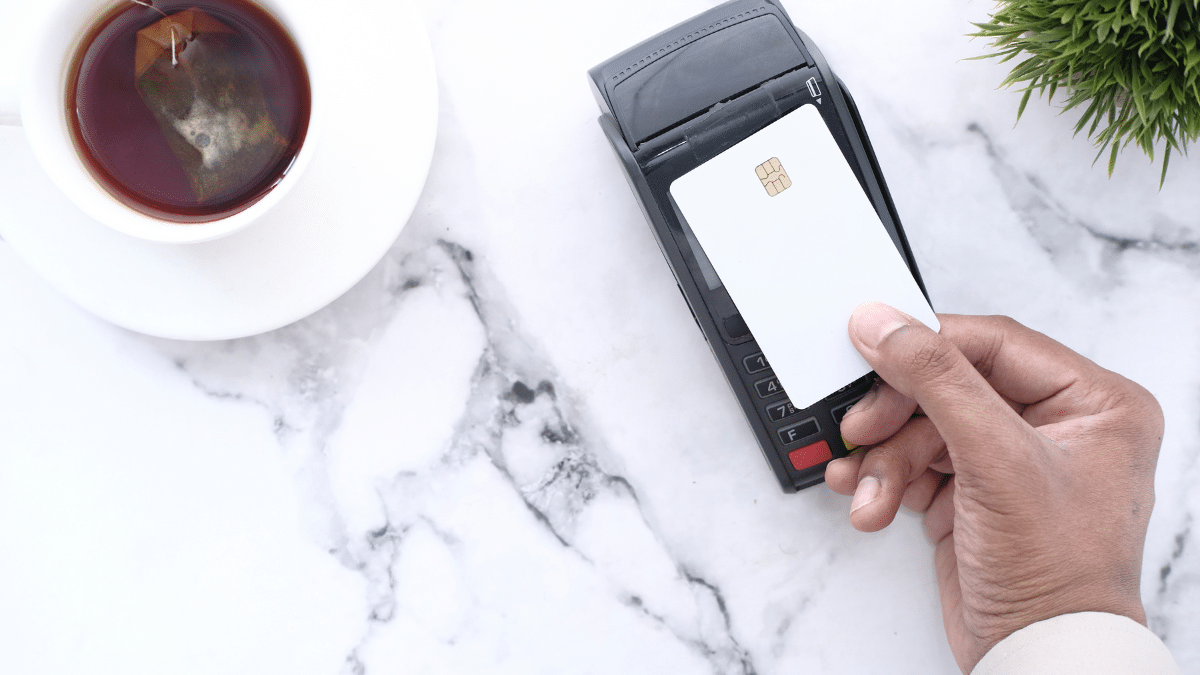

Perhaps you'd like to know exactly how a bank card print works? Gradually, I accompany you through this increasingly central process to guarantee the solvency your clients before any operation.
By using this approach it becomes possible to check the presence of funds, while avoiding a debit right away.
In each phase, you set up a reservation robust on your products or services, and offer your users a more serene payment environment.
Ready or ready? Let us look together at the practical tricks to take charge of this technique, now well rooted in the universe of digital transactions — Or almost everywhere, we should say.
Summary of key points
- ✅ Bank footprint checks credit without immediate debit
- ✅ It offers security for the trader and the customer
- ✅ Its use is common in hotels, renting and e-commerce
What is a credit card print?
Definition and usefulness
We're talking about« bank footprint » to designate the pre-authorisation which makes it possible to verify a customer's solvency by temporarily setting aside a specific amount on his bank account.
There is no immediate withdrawal here: this protocol simply ensures that funds are present at a given moment, sometimes.
The bank footprint is now part of daily life in many sectors: hotels, car rentals, booking platforms, and others.
For traders, it has become almost mechanical: they make sure to be paid before even providing the service or good.
To learn more, 01bank.com occasionally publishes articles explaining these uses in detail.
Practical examples
To give you a more concrete idea: when booking a hotel, the amount of the stay can be stopped, which allows the establishment to be covered if the cancellation occurs at the last minute; in the car rental, the deposit taken via print allows to manage any damage — If everything is perfect, the sum is released, otherwise it remains used as a guarantee.
Even in e-commerce, the bank footprint confirms, first of all, that the settlement will follow suit.
As one may doubt, this mechanism remains a bulwark against unpaid payments, particularly in Quebec, where this type of guarantee is common for some providers.
How does a bank card print work?
The bank card print quickly imposed itself in reflex to secure commercial operations.
The seller controls the creditworthiness of the customer, without debiting at this precise moment.
This is an amount set aside for a fixed period.
Let's take a closer look at the unfolding — In reality, it is much less complex than one might think.
Footprint steps
Attention is paid to the fact that the mechanism is simple, provided each transition is respected.
Here, security, but also peace of mind, are part of the — both for the professional and the client.
Request
It all starts with the request print: the seller requests the card details and checks that the desired amount exists on the account.
The funds are Blocked, without being debited.
This preventive step limits inconvenience to the final stage, it is often noticed as soon as several transactions are handled in a row.
Good to know
I recommend that you always clearly inform your customers about the duration and modalities of the print, this avoids misunderstandings during transactions.
Reservation
Once the fingerprint is effective, the reservation good or service holds the road.
If the transaction succeeds, the amount is then deducted; In the event of withdrawal, the print will be deactivated and the sum will be available again.
Sometimes you only take the part really « used », the rest of which are automatically refunded.
This organization varies according to the sector: accommodation, e-commerce or rental, each domain adapts a bit its own rules.
Finally, this split process allows secure All stages: we know that the funds are there, while avoiding immediate final commitment.
Steps to make a bank card print
Implementing a bank card print is now standard when it comes to booking or paying online.
This remains, to date, the most effective way to protect yourself from the commercial side and to reassure yourself on the user side.
Let's see how this happens, whether with a traditional bank or via a virtual card.
Inform the customer
From the start, it is a matter of announcing the color to the customer: the print does not act as a payment but as a verification.
Be clear on the length of the block — generally, depending on the bank.
Then, please specify what happens: the transaction takes place? The amount is deducted. Does she fail? He's free.
This kind communication often avoids unnecessary confusion or tension.
Collecting the necessary data
- ✅ The card number
- ✅ Date of validity
- ✅ CVV code on the back
This information should be entered in the terminal or via the online bank interface (some platforms in Belgium also offer very practical e-cards for this type of transaction).
Reminder: never archive these coordinates, issue of professional trust first and foremost.
Reserve and free the amount
Once all the data is collected and the explanation provided, it is time to launch the print request, via terminal or platform.
The amount goes into « Waiting »the good or service is temporarily frozen.
Depending on the result, the sum will be debited or released after the agreed deadline.
This scheme is also valid for the plastic card as virtualOn this subject, many customers point out that they are increasingly using the e-card for flexibility, especially for unique bookings.
Sometimes, this solution really provides an appreciable peace of mind!
To better understand modern alternatives, discover how to create a virtual credit card and simplify your secure transactions.
By applying these steps, it is difficult to dispense with the security/practicality duo offered by the bank footprint.
This is probably why the formula attracts ever more knowledgeable professionals and users.
Differences with immediate transaction
Recognize the difference between a bank print and a direct payment: a precious reflex for your budget and more.
Let's see how these two modes of operation do not play exactly in the same yard.
Pre-authorisation vs immediate debit
Pre-authorisation is the money that remains « on hold » : the merchant knows that he can be paid, but the sum does not leave the account until everything is validated.
On the other hand, with the immediate debit, the bottom balance from the transaction.
Almost as long as the transaction is not confirmed, money is not lost for the customer; However, once it's gone... it's better to agree with the merchant to cancel or pay back.
Impact on the bank account
During the pre-authorisation period, the balance available is temporarily reduced — even if the flow does not occur immediately.
This « freezing » may last several days, depending on the banks, and sometimes it is not uncommon to see his balance at half-mast while no levy has taken place formally.
On the other hand, the immediate flow affects the account immediately.
Common use
Pre-authorisation is systematically found in hotels, car rental or some online services.
For the daily (grocery, restaurants, ordinary shopping), fast debit is the rule.
The outlook is changing: many users are now opting for the virtual card, which provides an additional sense of security, especially for small operations.
If doubt persists in a transaction, nothing is worth asking the trader: « Is this a pre-authorization or immediate debit? »
Sometimes a simple exchange saves a lot of time — and serenity, as it seems.