

The lender processing is all the procedures that financial institutions implement to process your loan application. This process determines your borrowing capacity and the financing conditions that will be proposed to you. Understanding these mechanisms will allow you to better prepare your file and optimize your chances of getting the desired funding.
What is theender processing?
The lender processing refers to all stages of processing a credit claim by financial institutions. This process meets three main objectives: to assess the borrower's creditworthiness, to limit the risk of non-repayment and to determine the optimal terms of the loan.
Several types of actors are involved in this process. Traditional banks maintain often long but secure procedures. Specialized credit agencies generally offer shorter deadlines. Online platforms revolutionize the sector with fully digitalized processes.
The difference between traditional and digital processing is notable. The lender processing Traditional means physical appointments, paper documents and several weeks of delay. Conversely, digital processing uses artificial intelligence and can lead to a decision within a few hours.
The key steps of the letter processing
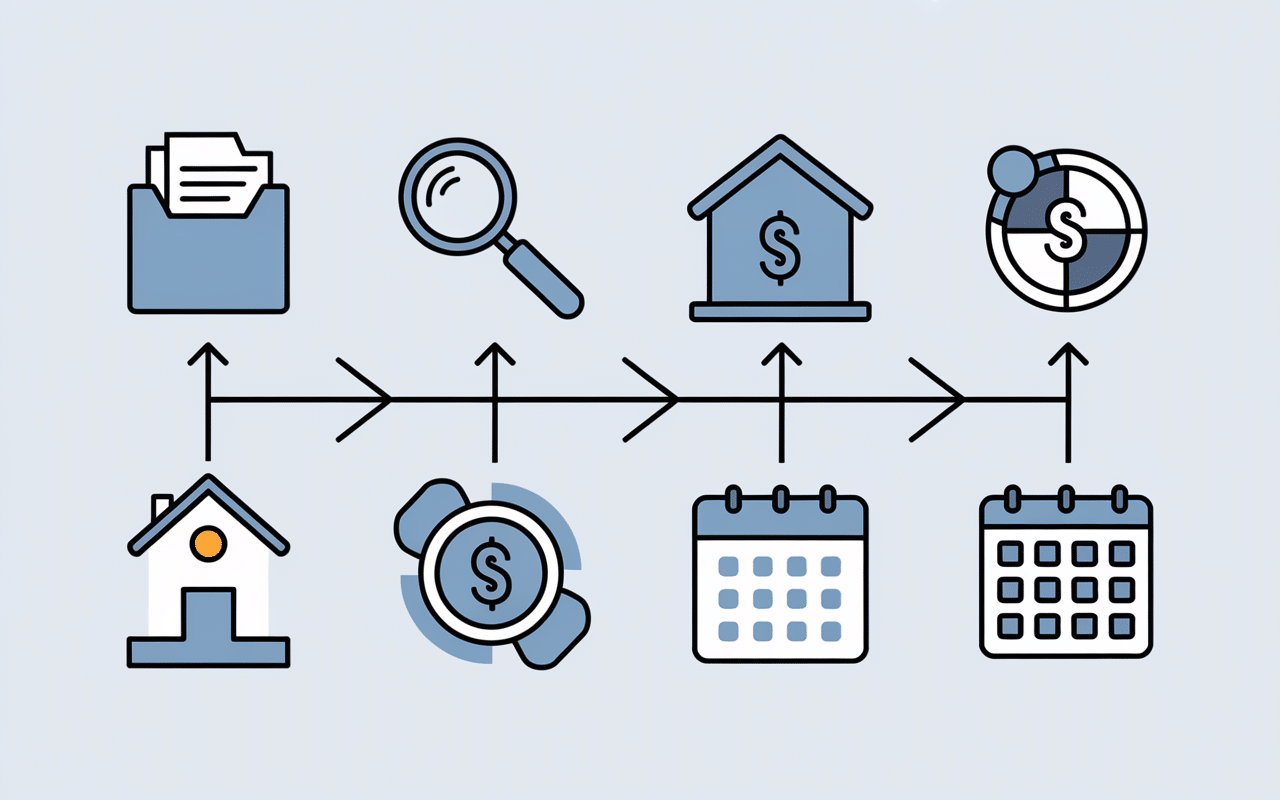
The process of lender processing follows a specific sequence that ensures a complete assessment of your application:
- Submission of application : You submit your file with the required proofs (revenues, charges, identity documents)
- Administrative audits : The establishment shall verify the conformity and authenticity of the documents supplied
- Financial analysis : Detailed credit assessment according to specific criteria
- Evaluation of guarantees : For real estate, property expertise and market value verification
- Final decision : Acceptance or refusal with rate, duration and conditions fixed
- Release of funds : Signing of contracts and making available of capital
- Reimbursement monitoring : Maturity management and support throughout the loan period
Each stage of the lender processing may vary in duration depending on the complexity of your file and the type of institution chosen. Real estate loans usually take 4 to 8 weeks, while consumer credit can be processed within 48 hours.
Assessment criteria and loan processing technologies
Financial institutions apply standardized criteria to assess your application. Net income is the first indicator, supplemented by an analysis of your fixed and variable expenses. The debt ratio should generally not exceed 35% of your net income.
Your banking history greatly influences the decision. Institutions check the absence of payment incidents, the regularity of your income and your financial behaviour over the last 12 months. The credit score, calculated by the specialized agencies, summarizes your risk profile.
| Type of loan | Specific criteria | Minimum intake |
|---|---|---|
| Real estate principal residence | Duration limited to 25 years | 10% of the purchase price |
| Real estate rental investment | Minimum rental cost | 20% of the purchase price |
| Consumer credit | Justification of the project | No input required |
Automation technologies are transforming the lender processing. Automated scoring systems instantly analyze your profile using thousands of variables. Artificial intelligence detects anomalies and assesses risks with increasing precision. The complete digitalization of documents greatly accelerates processing times.
Optimize your chances with liter processing

Preparing your file largely determines the success of your process. Make a complete file from the first contact: three last salary bulletins, tax notices, three-month statements of account and proof of assets. This anticipation avoids going back and forth and accelerates the lender processing.
For more information on the steps and benefits of a quick loan, see QL Credit: Complete Guide to this Quick Loan Solution in 2024.
To maximize your chances of obtaining appropriate funding, find out how buying real estate: the essential steps to secure your project integrates into an efficient management of your loan application.
To maximize your chances of success, discover the 6 steps to simply get a consumer credit and build a solid record.
Improving your financial profile before application increases your chances of acceptance. Regularize your bank overdrafts, balance current credits if possible and avoid business changes within 6 months of application. The timing of your application also influences the decision: avoid the term ends where banks are more selective.
Several errors frequently compromise files. Never underestimate your actual costs, as institutions have sophisticated verification tools. Avoid multiplying simultaneous requests, which could be interpreted as a sign of financial fragility. Do not dissimilarise any information, even negative, as transparency is valued in the lender processing.
Timing varies by institution and type of funding. Online banks usually process files in 5 to 10 business days. Traditional institutions require 2 to 4 weeks for real estate credit. To speed up the process, focus on the dematerialized transmission of documents and respond quickly to requests for further information.
Success in your funding process
Mastery of lender processing gives you a significant advantage in your funding efforts. By understanding the evaluation criteria and carefully preparing your file, you maximize your chances of obtaining the best loan conditions. Don't hesitate to compete among institutions, as credit policies regularly evolve according to the strategic directions of each financial institution.