


Freeing from the constraints of the EAP while serenely accessing the global performance, it became accessible with the ETF iShares MSCI World Swap PEA, designed to provide simple and educational access, while respecting regulatory security thanks to its synthetic replication. As an advisor, I want to clarify mechanisms that are sometimes considered complex. It is therefore worth having reliable benchmarks to invest with confidence and boost your investments – a need shared by most families and many professionals interviewed on the subject.
iShares MSCI World Swap PEA UCITS ETF : essential before investing
Are you targeting a solid diversification of your PEA, while benefiting from access to global markets? The ETF iShares MSCI World Swap PEA UCITS is one of the preferred options in France, thanks in particular to the simplicity of its mechanism, its attractive fee level, and eligibility for the Savings in Shares Plan. Yet the mechanics of « synthetic replication » often intrigue. Is it more relevant than alternatives?
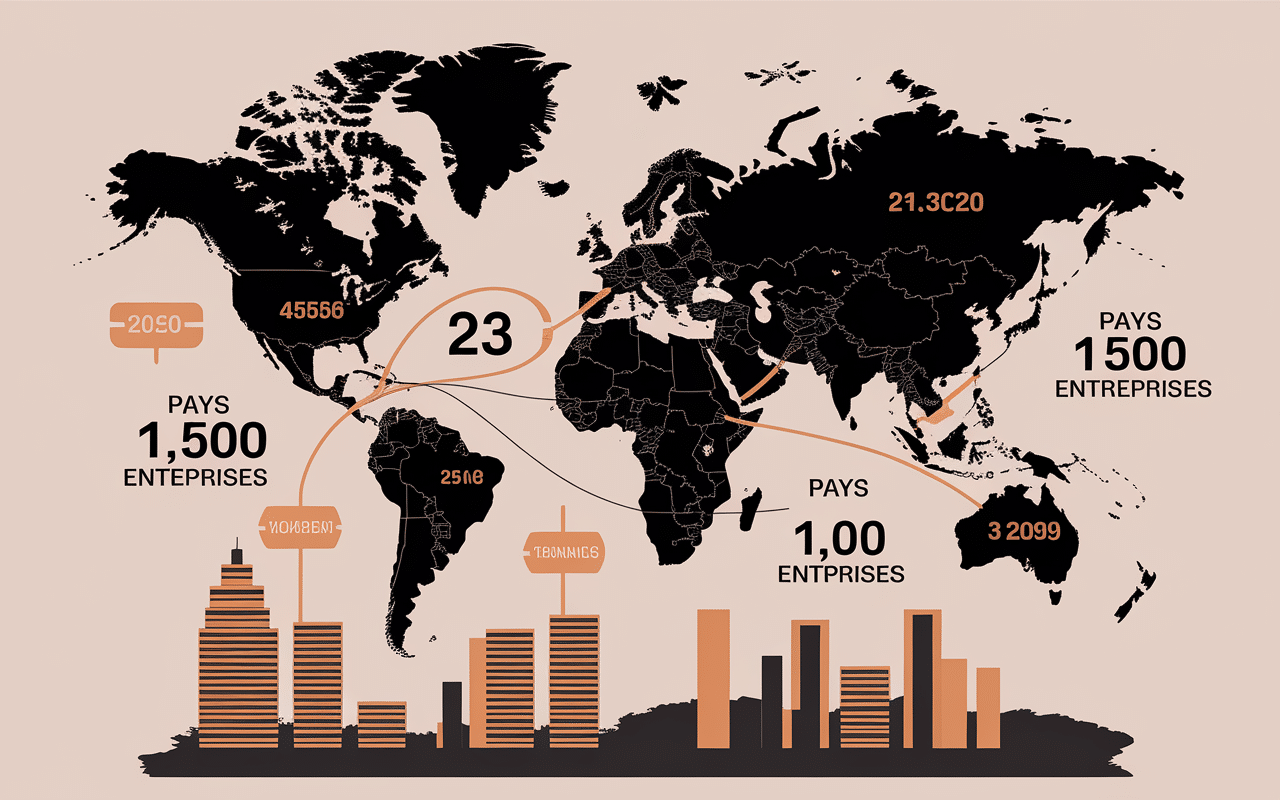
From the first glance, this ETF presents several arguments – it aligns with the MSCI World index (about 1,500 major companies, 23 countries concerned), via a so-called replication « Synthetic » (by swap), and is distinguished by a Competitive TER at 0.25 % per year, while guaranteeing access via the PEA – interesting on long-term taxation. Since its launch on 26 March 2024, it has quickly reached nearly €1 billion and has achieved rather notable performances, with a global exposure that is obtained without increasing costs. Behind this attractive facade, it remains relevant to decorate its structure: swaps, regulatory security, real or no exposure to derivatives, specific assets of the PEA... This is what we can remember in detail to make an informed decision.
Presentation of the iShares MSCI World Swap PEA UCITS ETF: identity card and key points
The MSIC World Swap PEA UCITS ETF (ISIN: IE0002XZSHO1) offers a gateway to the world's most prominent companies via a UCITS compliant fund, compatible with PEA. More concretely, what priority should be given to focusing on?
- Method used: synthetic replication via unfunded swap (here, no direct holding of index shares, but setting up a performance exchange with a financial contribution; A partner bank shall transmit to the ETF the performance of the index against a charge).
- Annual fee (TER): Only 0.25 % – a quasi-floor level on the global PEA market.
- Type: capitalization (the dividends are automatically reinvested in the fund).
- Creation date: 26 March 2024 – a recent arrival, already 991 M€ outstanding and 143 portfolio lines « cash » (for swap mechanics).
- Home: Ireland – this choice facilitates PEA eligibility and guarantees UCITS compliance (European fund regulation).
Another point to remember, management is passive and respects the sectoral and geographical distribution of the index. This represents close to 70% of US shares, the rest mainly targeting Japan and Europe. Some observers note a volatility over 12 months of 15,32 % (which remains usual for a global exposure to shares).
Why choose a synthetic replication if you invest through the PEA?
On paper, synthetic replication may raise questions. Why not just buy MSCI World shares? With the PEA, this is simply not allowed: advantageous taxation is reserved for European securities, while the MSCI World index is dominated by US companies. Synthetic replication circumvents this regulatory lock in a creative and perfectly framed way.
Specific assets for the PEA investor
The use of an ETF swap removes the regulatory barrier PEA and allows the entire performance of the international index to be captured (with tax withholding on foreign dividends generally reduced by the very structure of these products).
- Eligible on the PEA: Optimized taxation on capital gains and income after five years of detention.
- Homogeneous exposure to MSCI World: composition sticks to the index, at a particularly low cost.
- Dividends reinvested automatically: management remains ultra simplified.
To illustrate, the mechanics of unfunded swaps, adopted by both iShares and Amundi, are closely structured: the ETF systematically places collateral with a third-party bank to limit counterparty risk. A former customer, initially skeptical ("we don't buy the real shares!"), confessed, examples to support, having finally grasped that it is this montage that makes this type of exhibition possible, and not just an accounting artifice. Some professionals also say that this framework reassures the majority of French investors today.
Comparison iShares vs Amundi and other MSCI ETF World Swap PEA: Objectives, Costs, Weights
At the time of the decision, there is a relatively high degree of hesitation between iShares and Amundi. Their MSCI World ETFs Swap are close, but small nuances can make the difference depending on your profile.
| ETF | Annual fee (TER) | Date of establishment | Fund size | Replication | Performance 6m / 1 year | Distribution |
|---|---|---|---|---|---|---|
| iShares MSCI World Swap PEA | 0,25 % | 26/03/2024 | 991 M€ | Synthetic | +11,42 % / +11,84 % | Capitalization |
| Amundi MSCI World Swap PEA | 0,18 % | 2017 | 4,500 M€ | Synthetic | +11,37 % / +11,02 % | Capitalization |
It may be noted that the Amundi offers a fee one step below (0,18 %) and a longevity rarely matched in the PEA offer. iShares, more recent, takes advantage of BlackRock's know-how, is distinguished by annual quality reports, detailed guides on the majority of brokers, and a marked increase in liquidity (164.7 million shares Issued). Some investors prefer the side « historic house » d
In practice, the difference in fees (0.25% compared to 0.18%) is barely equal to 7 € per year for 10 000 € invested – it is not decisive alone, but the gap grows with duration. What makes the real difference is accompaniment, ease of use on web or mobile, and the stability of tracking. An independent trainer recently pointed out that many clients arbitrate primarily on ergonomics, or user experience rather than the cost criterion only.
Historical performance, 5-year projections and performance scenarios
The available data are telling: since the end of March 2024, the ETF iShares signs +0.48% in one month, +11.42% in six months, +11.84% in the year, a net posted fee performance. Many rely on these figures for advice, but it is useful to read them in the light of market scenarios and their potential volatility.
- Since the creation, the product has recorded a performance of +21,73 % (March-June 2024).
- PRIIP scenarios to be monitored over 5 years – from +1.2 %/year (unfavorable scenario: 10 630 € per 10,000 € investment), to +12,3 % (intermediate) or +16,3 % (favourable).
- 12 month volatility observed: 15,32 %.
In practice, an investor deciding to place 10 000 € today could, according to the PRIIP regulations, see its valuation evolve between +600 and +10 000 € Over five years... but without contractual insurance, of course! These projections are those necessarily provided by UCITS ETF companies to ensure a minimum level of transparency. Sometimes an investor compares these figures with other global indices to further refine his choices.
Risks and regulation: synthetic replication, investor protection and pitfalls to avoid
We sometimes hear: "The synthetic replication is risky, isn't it?" However, European regulations provide a strict framework for the safety of all holders of UCITS shares, whether managed physically or through swaps.
The UCITS framework in practice (sustainable)
ETF funds of the iShares type deposit with a European depositary a "collateral" (often liquid bonds or shares, up to and including 105 % of total exposure). This mechanism protects assets even if the counterparty defaults. In practice, the risk of defects appears marginal: since the rise of swap ETFs accessible to the general public, no major incidents have been observed. In this regard, a senior analyst recently pointed out that no structural loss has been recorded since the generalisation of the UCITS model in the 2000s.
- UCITS compliance (European rules for open funds)
- PRIIP: risk/performance sheets, scenarios, documentation available before subscription
- Backup via depositary bank located in Ireland or Luxembourg
Experience shows that the real risk to be anticipated remains above all that of the equity markets themselves (volatility, possible capital loss). The swap layer simply adds a highly controlled level of financial engineering, without changing the nature of the risk to the global investor.
Adding iShares MSCI World Swap PEA to your portfolio: practical benchmarks
Accessing this ETF on PEA has never been so fluid. On Fortuneo, Boursorama, Direct Stock Exchange, Trade Republic... the procedure usually boils down to a search of the ISIN code (IE0002XZSHO1), then to the definition of the amount and type of order chosen. Platforms provide relatively easily a complete sheet (KID, prospectus, fee, performance, distribution method) without unnecessary jargon.
Some basic tips to make your investment reliable:
To compare diversification strategies, discover also Amundi PEA S&P 500 Screened UCITS ETF: full analysis of the ETF PE500.
- Check the legal documentation before any transaction: KID, prospectus, PRIIP sheet are within easy reach of click.
- Integrated alerts help you keep track of your progress; You can also consider a programmed investment plan (DCA) to smooth market entry.
- For tracking and comparing your ETFs, sync them on a virtual portfolio via JustETF or ExtraETF – a trick that some investors find valuable to get a dynamic overview.
Small, experienced digression: sometimes the ETF savings plan simulation (proposed free of charge by Fortuneo or JustETF) helps visualize the potential over 5 or 10 years by adapting the savings effort. At home, Mathis even had fun "investing like Dad" to discover his first virtual action... proof that the simplicity of access really democratizes up to the youngest.
FAQ and Regulatory Resources: Frequently Asked Questions and Access to Key Documents
Because a wise investment decision is based primarily on knowledge, here is a selection of regularly raised questions, accompanied by direct access to essential resources:
What is an ETF with synthetic swap replication?
A synthetic replication ETF does not hold the index shares live: it reproduces performance via a swap contract with a large bank. The amounts deposited in collateral secure the holders of shares, with a continuous update under regulatory control (this point often comes back to online information sessions).
Why IiShares MSCI Is World Swap eligible for the PEA while other global ETFs are not?
In France, the PEA requires massive investment in European equities. Only the synthetic replication method "transforms" a global exhibition into Europe-labelled product, thanks to swap mechanics and home ownership in Ireland. It's a real regulatory trick. A physical version would simply not have the right to be included in the PEA.
What are the actual costs, are there hidden costs?
The TER displayed is 0,25 % per year. No fee « hidden » on day-to-day management, but attention should be paid to brokerage commissions imposed by each broker. Swap costs are already included in the overall TER.
Where can I find the official KID/prospectus documentation?
It is available on the iShares website, on ExtraETF or within your investment interface (Fortuneo, Boursorama...). European legislation requires that these documents be available before any order is reached.
How to add the ETF to my broker?
Simply insert the ISIN code: IE0002XZSHO1 into the PEA personal space, then proceed with the traditional purchase procedure. In case of doubt, the platforms now offer step-by-step guides.
To complete your information, the iShares MSCI World Swap Full Profile on ExtraETF, JustETF guide and the details about Fortuneo remain at your disposal for further verification.