

Luxury watchmaking has left the narrow circle of collectors to become a fully active class. Faced with volatility in financial markets, invest in a watch seduces savers looking for tangible assets. However, turning a passion into a profitable investment requires overcoming aesthetics to master the mechanisms of scarcity, demand and speculation.
Why does the luxury watch market attract investors?
Unlike an automobile that loses value when it comes out, some watches see their rating climb as soon as the signed sales certificate. The market is divided into two segments: primary, in-store, and secondary, dedicated to the occasion and collection. It is in this second segment that the greatest gains are realized.
The strength of this investment lies in its resilience. A prestige watch is a physical, durable and internationally recognized object. In times of inflation, it acts as a safe haven. In addition, the shortage strategy organized by manufacturers such as Rolex or Patek Philippe creates an imbalance between growing world demand and limited production. This mechanism ensures high liquidity in the international market for the most popular models.
The pillars of successful valuation: how to choose your timepiece?
To hope for a return, buying a well-known brand is not enough. Several technical and historical factors determine whether a coin will remain a mere object of pleasure or become an effective financial asset.
The power of the brand and the prestige of the model
In the universe of auctions, the hierarchy is established. The « Holy Trinity » — Patek Philippe, Audemars Piguet and Vacheron Constantin — dominates the debates alongside Rolex. Investing in a watch of these houses reduces the risk of capital loss. Iconic models such as Daytona, the Nautilus or Royal Oak benefit from an aura that crosses the modes. In addition, independent brands such as Richard Mille and F.P. Journe have remarkable performance thanks to extremely low production volumes.
Conservation status and « Full Set »
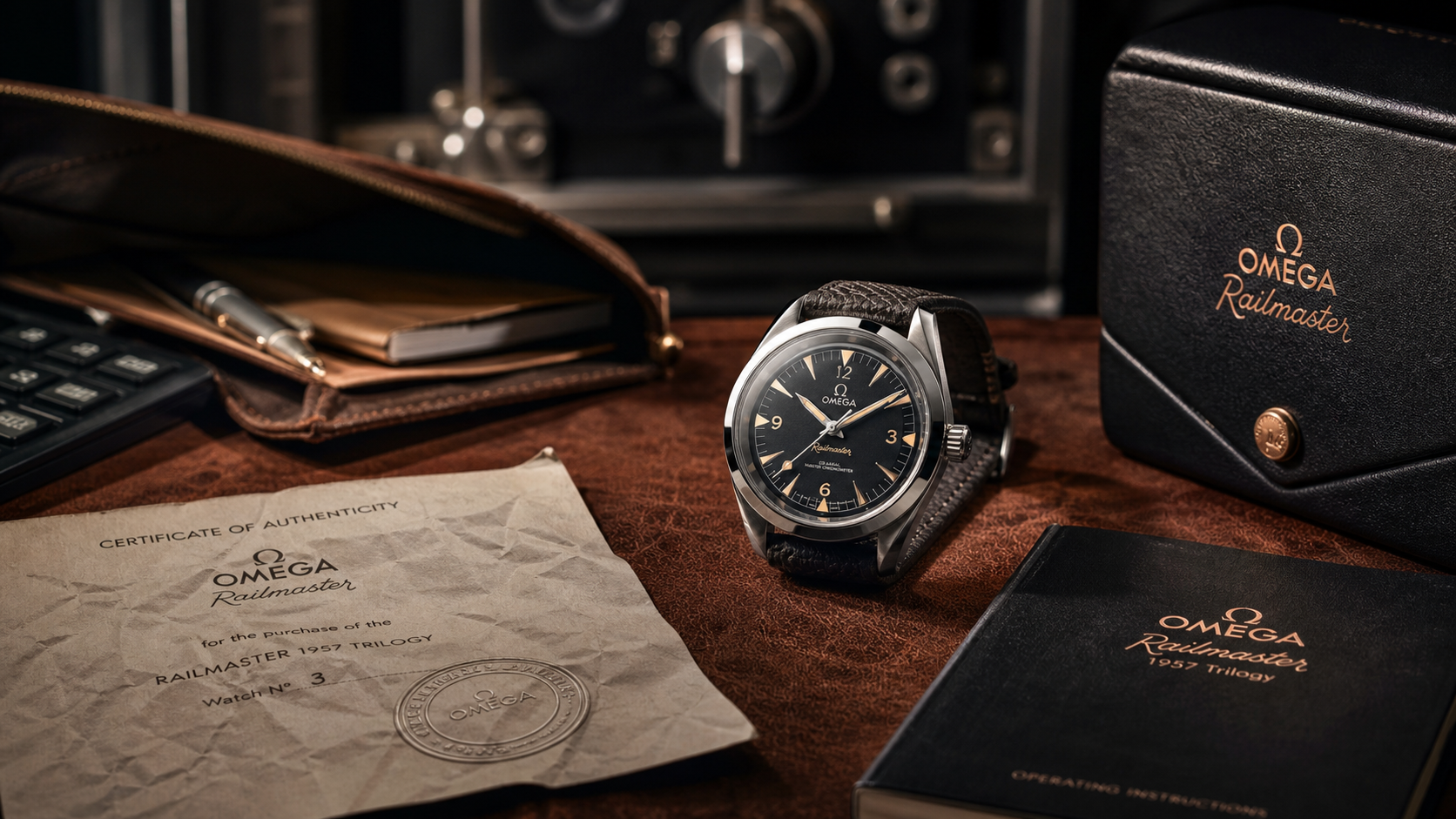
The value of a collection watch is based on its integrity. A piece whose dial has been restored or the case excessively polished loses much of its appeal. The Grail for an investor is the « Full Set » : the watch accompanied by its original box, its manual and, above all, its guarantee certificate buffered. The absence of these documents can result in a discount of 10% to 30% depending on the scarcity of the model.
Rarity and watchmaking complications
The more complex a watch is, the higher its value potential. Complications, such as the perpetual calendar, the minute repeat or the tourbillon, bear witness to the know-how of the factory. Limited editions or models with production characteristics — Like dials « Tropical » having evolved over time — regularly trigger sustained auctions.
Buying strategies: from new to vintage
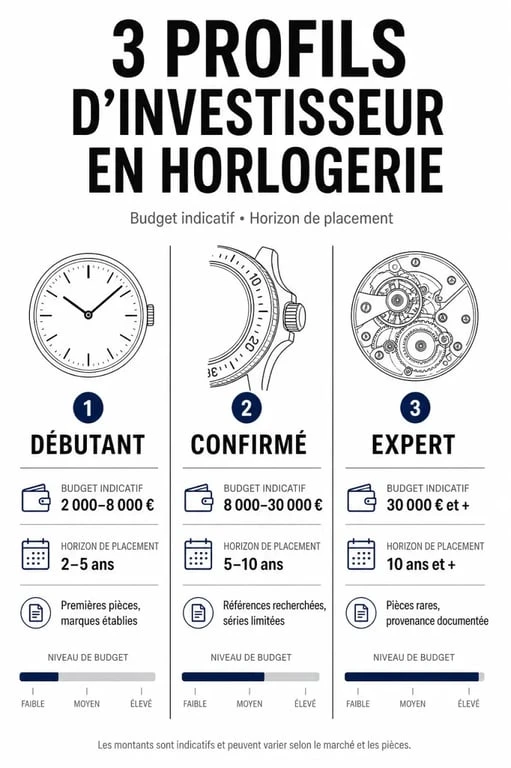
The investor profile dictates the acquisition channel. Each option has advantages and areas of vigilance.
Buying new in the official shop guarantees authenticity. However, for the most popular models, waiting lists last for several years. Obtaining a Rolex at the catalogue price ensures immediate latent surplus value, as the price on the secondary market often exceeds twice the retail price. Conversely, for less speculative brands, the new purchase is subject to a quick discount.
The second-hand and vintage market offers superior performance opportunities but requires cutting-edge expertise. This is where we track the models « neovintage » In the 1990s and 2000s, a segment that is gaining value as the 1960s coins become inaccessible. It is crucial to go through certified platforms or recognized experts to avoid counterfeiting, the quality of which has become alarming.
| Investor profile | Indicative budget | Recommended templates | Investment horizon |
|---|---|---|---|
| Careful starter | 5 000 € – 10 000 € | Omega Speedmaster, Tudor Black Bay | 5 to 10 years |
| Confirmed investor | 15 000 € – 40 000 € | Rolex Submariner, Cartier Santos (Gold) | 10 years + |
| Expert collector | 50 000 € + | Patek Philippe Calatrava, Audemars Piguet Royal Oak | Transmission / Long term |
Anticipating risks and market psychology
Investing in a watch is not a linear path to wealth. The market undergoes corrections after periods of speculative overheating. The liquidity of a watch differs from that of a stock exchange: quickly selling a rare coin can take months if one wishes to get the right price.
The evolution of prices follows a dynamic where desirableness feeds rarity, which inflates prices and attracts new buyers. This movement is reversed if aesthetic trends change or if a brand saturates its market by overproduction. A wise investor analyses the consistency of the brand's strategy over the long term. This vision can be used to detect when a tendency blows or, on the contrary, when a despised model becomes a classic future.
Taxation is also a key issue. In France, the resale of a watch by an individual is subject to the system of capital gains on movable property. A flat-rate tax often applies beyond a threshold of 5 000 €although exemptions exist depending on the length of detention. Keeping your purchase invoices is a legal obligation and a commercial necessity.
Secure your investment: the necessary reflexes
Once the acquisition is completed, asset management begins. Unlike a title account, a watch requires physical maintenance and rigorous protection.
Insurance is the first bulwark. Don't rely on your classic home insurance. For coins of value, a specific contract « valuables » is indispensable, covering theft, loss and sometimes the breakage. With regard to storage, a fireproof safe is the minimum required. The use of a winder is debated: it keeps the mechanism moving but accelerates the wear of the components.
Have your watch reviewed every 5-7 years by the manufacturer or an approved watchmaker. Explicitly ask not to polish the case if you are aiming for resale, in order to preserve the original edges. Finally, digitally archive all documents, high definition photos and maintenance evidence. This will facilitate the transaction on the day you decide to separate from your investment.
Investing in a watch is a balancing exercise between watchmaking passion and financial rigour. While the returns can be exceptional, they reward those who study model history and respect the technical integrity of these masterpieces. The pleasure of wearing an exceptional piece on the wrist remains the first dividend of this investment.