
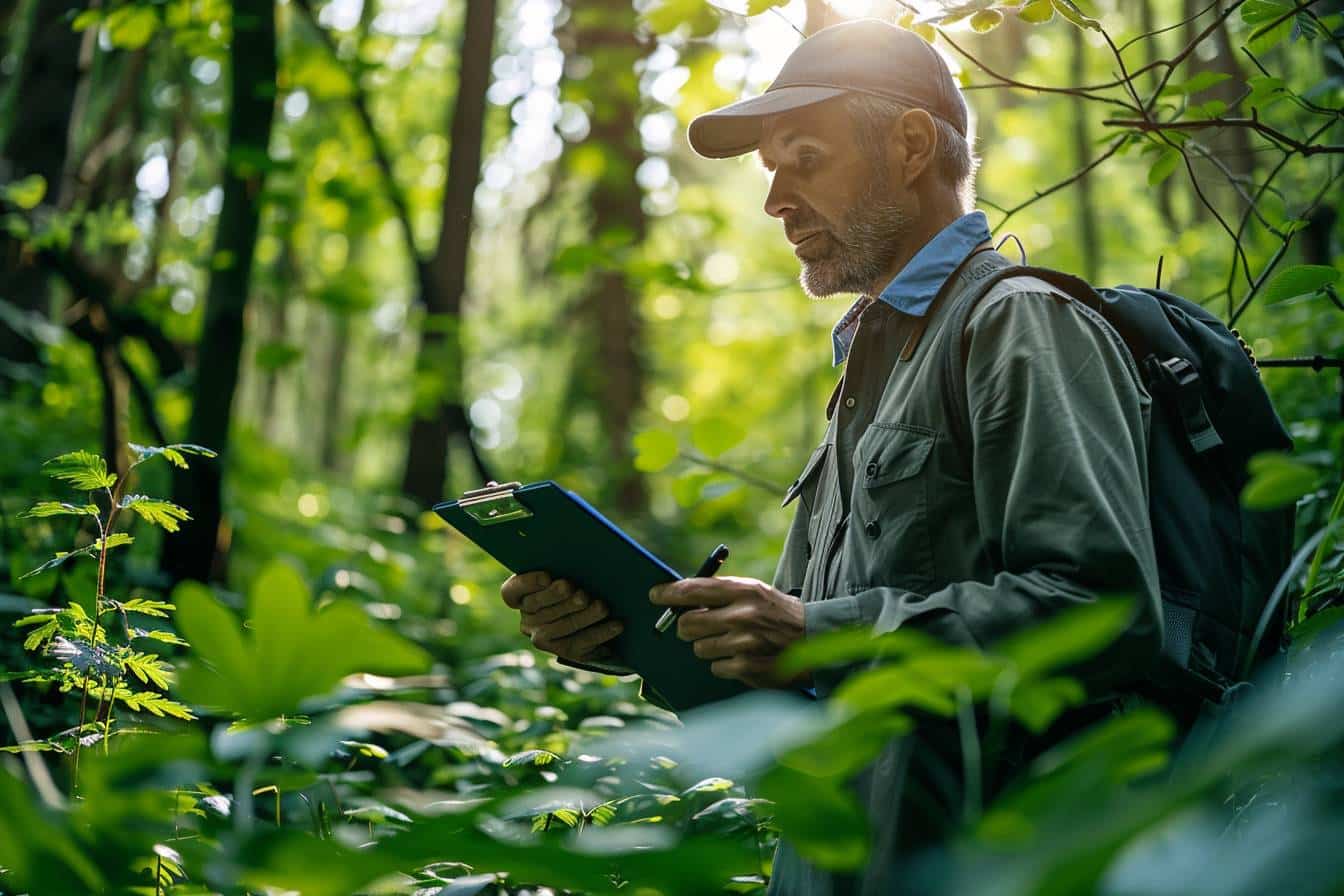

Investing in forests goes well beyond just a financial commitment. While financial and real estate markets remain traditional pillars of investment, Forests represent a unique asset class, combining economic resilience and environmental preservation. Find out how and why to integrate this investment into your portfolio.
Reasons to Invest in Forests
Investing in forests is not only a profitable action, but also an eco-responsible gesture. The main attraction of this investment lies in its ability to offer robust and long-term diversification. Unlike traditional assets that depend on fluctuations in financial markets, forests, as tangible assets, have remarkable stability.
The forests play a crucial role in climate regulation, carbon sequestration, and biodiversity conservation. This meets the growing expectations of investors concerned about the environmental impact of their financial choices. Demand for wood, particularly in the sustainable construction sector, ensures a stable source of income, evolving with increasing environmental concerns.
Forest investment is characterized by a long-term yield horizon and reduced volatility. Unlike other investments, the value of forests naturally increases over time, ensuring protection against inflation and risk diversification. In short, investing in forests combines patience, long-term vision and a significant contribution to the preservation of our planet.
Methods for Investing in Forests
Buying private forests, the forest groupsand the forest savings companies are the main methods of investing in this sector. Each offers specific advantages and addresses different investor profiles.
Buying Private Forests
Buying private forests allows investors to get involved directly in managing their assets. However, this method requires a thorough knowledge of the forest land market and a careful assessment of the economic characteristics of the property. The costs of acquisition, maintenance, reforestation and ecological certification can be substantial.
Annual yields of this method range from 2% to 4%, which requires a long-term vision. In spite of the high initial costs, direct purchasing offers great freedom of management and the possibility of maximizing profits through sustainable forest management practices.
Forestry groups
The forest groups allow investors to participate in the green economy without having to directly manage forested land. By acquiring Shares In these groups, investors benefit from specialised management and pool risks and costs. Although annual net yields are generally less than 2%, this method offers stability and environmental impact.
The forest cluster model is ideal for those seeking less involvement in day-to-day management while wishing to contribute to forest conservation. Investment in forest groups In addition, the tax advantagesmaking this investment even more attractive.
Forestry Savings Companies
The forest savings companies, inspired by the Civil Real Estate Investment Companies (SCPI), invest at least 60% of their assets in forests or shares of forest groups and up to 40% in financial assets. These companies must obtain approval from the Autorité des Marchés Financiers (AMF).
Annual investments may vary between 9 500 € and 19 000 €, providing a favourable fiscal framework with management by a professional manager. This model combines the stability of tangible forest assets with the growth potential of financial assets, thus providing additional diversification for knowledgeable investors.
Comparison between Forest Investment, Real Estate and Private Equity
It is crucial to understand the differences between forest, real estate and forestry investment. Private Equity to make an informed choice.
| Criteria | Real estate | Forests | Private Equity |
|————————|————————————-|————————————–|———————————————————-|
| Nature of investment | Tangible (buildings, land) | Tangible (wooded land) | Financial (participation in unlisted companies) |
| Liquidity | Low to medium | Low | Very low |
| Investment horizon | Long-term medium | Long term | Long term |
| Potential yield | 3% to 8% (depending on location and type) | 2% to 4% | > 10% (highly variable depending on company success) |
| Risk | Variable (by location and market) | Low to moderate (according to forest management) | High |
| Tax advantages | Yes (challenges) | Yes (ISF exemption, tax reduction) | Limited |
| Environmental impact | Variable (depending on project sustainability) | Positive (carbon sequestration, biodiversity) | Variable (by business sector) |
Tax advantages of forests
Lforest investment benefits from many tax advantages to support sustainable management. The forest land groups benefit from advantageous taxation on social benefits. Finance Act 2023-2025 strengthened these benefits, transforming certain tax reductions into tax credits.
Acquisitions of forests or shares in forest groupings provide an opportunity for tax credit 25% of the purchase price, encouraging investments of 4 to 25 hectares with a minimum holding period of 15 years.
Tax credits also apply to forest work and insurance covering natural hazards, thus increasing the protection and sustainability of long-term forest investment.
Finally, forestry investment offers significant exemptions forTax on the Fortune Immobilier (IFI), facilitating the reduction of the tax burden while contributing to the conservation of natural resources.
Investing in forests combines robust financial perspectives with environmental responsibility. By diversifying your portfolio with tangible and sustainable assets, you also contribute to the preservation of nature. That you choose direct purchase, forest groupsor forest savings companies, each method offers unique advantages adapted to different investor profiles.
In summary,forest investment is a strategy that requires patience and long-term vision, but that offers significant financial returns and a positive environmental impact. For wise investors, it is an opportunity to combine profit and protection of the planet.
FAQ
Why should I consider investing in forests?
Investing in forests offers a unique combination of environmental responsibilities and financial perspectives. It is a way to diversify your portfolio with tangible and renewable assets that are less susceptible to fluctuations in traditional financial markets. In addition, forests play a crucial role in climate regulation and biodiversity conservation. The growing demand for wood, especially in sustainable construction, ensures a stable long-term source of income.
How can I invest in forests?
There are several ways to invest in forests:
- Private forest procurement: This method allows direct involvement in forest management, but requires a good knowledge of the forest land market and maintenance and reforestation costs.
- Forest clusters: By buying shares in forest groups, you can pool risks and costs while benefiting from specialized management.
- Forest savings companies: These companies invest a large part of their assets in forests and offer an advantageous fiscal framework with professional management.
What are the tax advantages associated with investing in forests?
Forest investments benefit from many tax advantages to encourage sustainable management. For example, acquisitions of forests or shares in forest groupings may qualify for a tax credit of 25% of the purchase price. In addition, there are tax exemptions for the Fortune Immobilier (IFI) and tax credits for forestry work and insurance covering natural hazards.
What are the main differences between investing in forests, real estate and Private Equity?
Investments in forests, real estate and private equity differ on several criteria:
- Nature of investment: Forests and real estate are tangible assets, while Private Equity consists of equity interests in unlisted companies.
- Liquidity: Forests and real estate have low to medium liquidity, while Private Equity is very little liquid.
- Potential Performance: Forests offer an annual yield of 2% to 4%, real estate 3% to 8%, and private equity more than 10%, although the latter is very variable.
- Risk: Forests present a low to moderate risk, real estate a variable risk, and Private Equity a high risk.
- Tax benefits: Forests and real estate benefit from significant tax benefits, while private equity benefits are more limited.
- Environmental impact: Investment in forests has a positive environmental impact in terms of carbon sequestration and biodiversity conservation.
What are the expected yields when investing in forests?
Annual yields of forest investment are generally between 2% and 4%. However, these yields must be considered over the long term, as tree growth is a slow but constant process independent of economic fluctuations. This stability also offers protection against inflation and helps to diversify the risks of your portfolio.