

Planning a cash purchase or anticipating a significant expense requires knowing exactly how much cash it is possible to withdraw from the bank. This management of ceilings, modified by the policy of each institution and the type of credit card, remains a central point of vigilance to avoid surprises and blockages. Check out the current rules, the steps to get a large amount of money, and advice to optimize your withdrawals safely.
Understanding withdrawal limits in France
The cash withdrawal ceilings in France depend mainly on the internal policy of each bank: neither the law nor the Monetary and Financial Code set an identical threshold for all. Thus, the amount available at once at the counter or on a distributor (DAB) varies according to your contract, the associated card and the options subscribed.
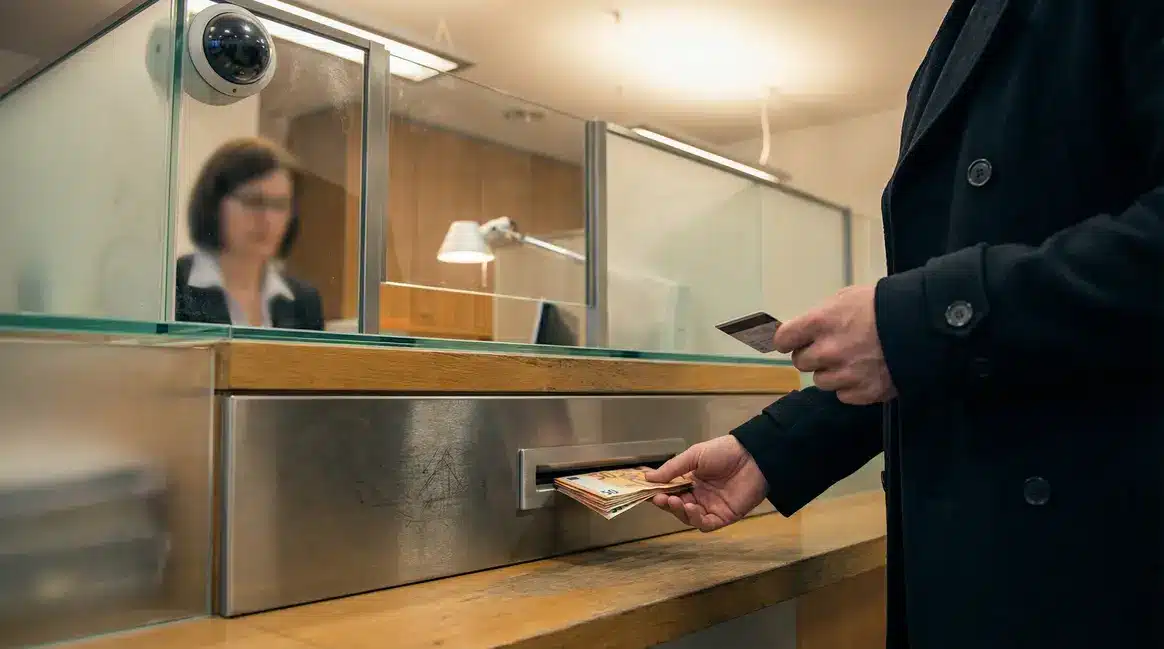
At the counter, there is a need to systematically present a valid identity document and the credit card of the debited account. Depending on the establishment, a withdrawal slip may be required. This protocol aims to ensure fiscal traceability and to comply with anti-money laundering obligations. The current ceiling is around 1,000 € daily without special justification. To obtain more, it is necessary to notify the agency between 48h and 5 days before withdrawal.
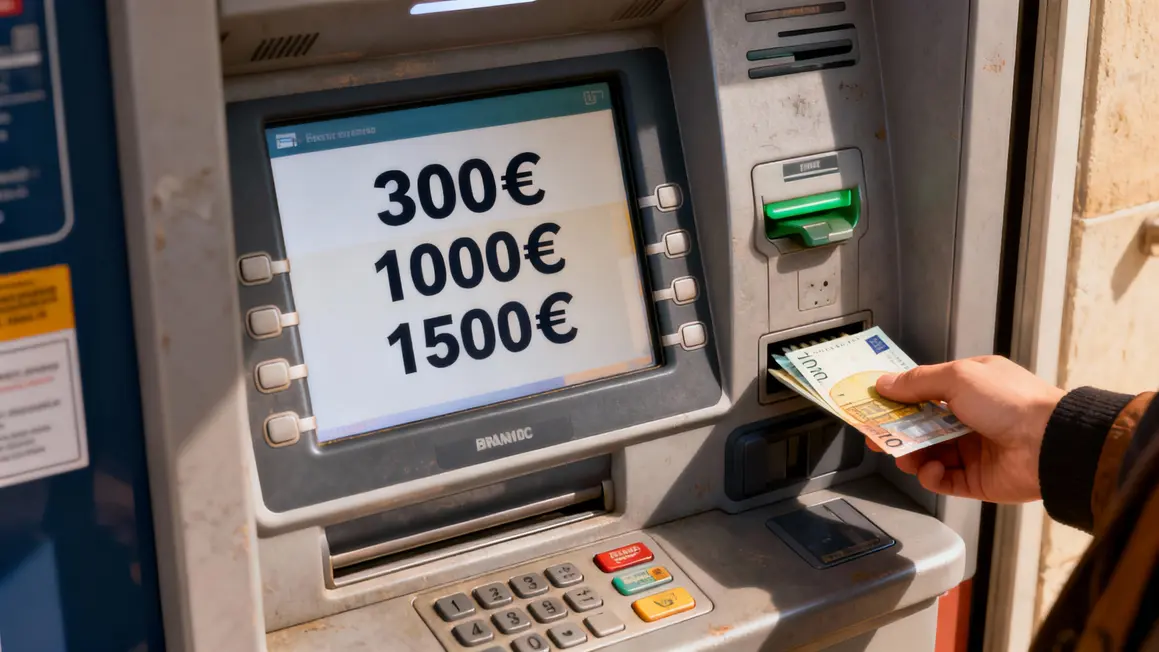
On DAB, the rule derives from the card contract. Current limits extend by 300 € at 1,500 € per week. Note: some distributors charge a maximum amount per transaction, sometimes limited to 300 € or 500 €. In poorly equipped cities or rural areas, these technical constraints are more frequent. Banks also adjust their ceilings according to location, especially in tourist or border regions for foreign exchange requirements.
- Classic card: 300 to 1,500 €/week on DAB, 1 000 €/day at the counter
- Premium card: up to 2,000 €/week on DAB, 3,000 €/day at the counter
- Card with systematic authorisation: 300 to 800 €/week and counter
The withdrawal ceilings set by banks
The limit depends as much on the type of card as on the level of offer chosen upon opening the account. The classic, premium cards (Visa Premier, Mastercard Gold) and with systematic authorization are distinguished by their weekly ceilings.
| Card type | DAB ceiling/week | Window/day ceiling |
|---|---|---|
| Classic (Visa, Mastercard standard) | 300 to 1 500 € | 500 to 1,000 € |
| Premium (Visa Premier, Mastercard Gold) | 800 to 2 000 € | 1,000 to 3,000 € |
| Systematic authorization | 300 to 800 € | 300 to 800 € |
Attention: Some distributors and agencies apply their own limits per operation, sometimes making it necessary to multiply withdrawals to achieve your goal. Before an exceptional expense, check the terms of your contract or contact customer service to avoid blocking.
Cards with systematic authorisation, adapted to strict management and often endorsed to limit the overdraft, are less flexible in large withdrawals. Premium cards are generally more suitable for high or international needs.
Remove a large sum in cash
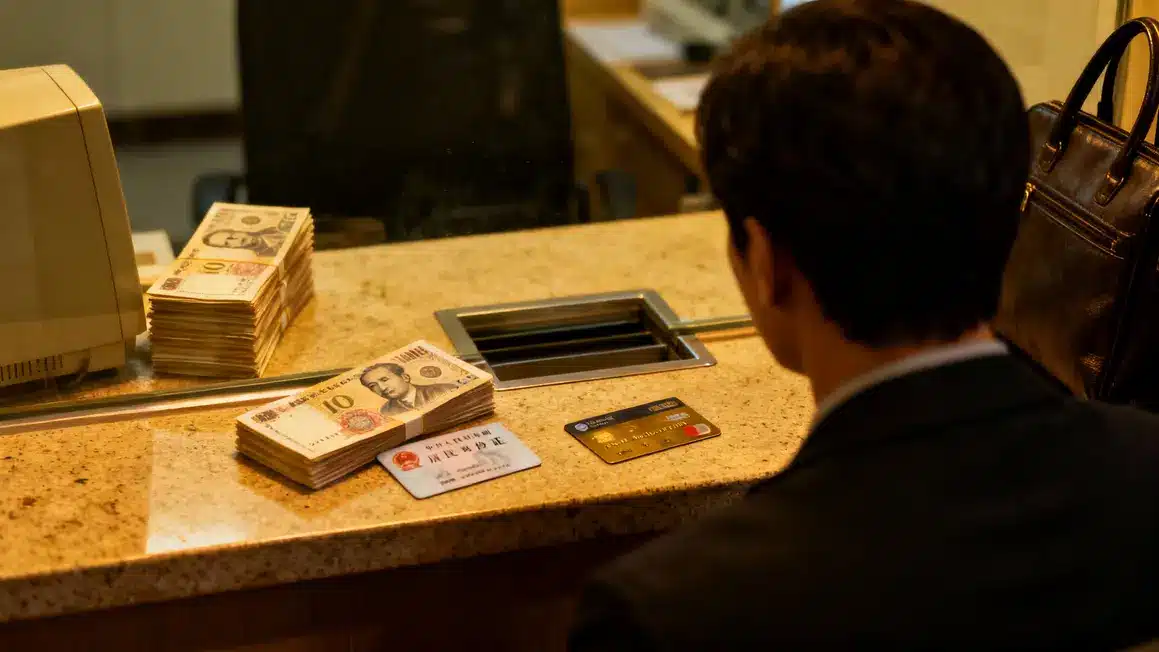
For a withdrawal of several thousand euro, a prior preparation is imperative. Banks require 48 to 5 days to make funds available, particularly in non-central agencies. The request is made online, by telephone or on site. In addition to the card and ID, proof of use (invoice, promise of purchase) may be required beyond a threshold considered high. This procedure facilitates the fight against money laundering and illicit financing.
Where cumulative withdrawals exceed 10,000 € Over a month, the bank makes an automatic declaration to the Tracfin service. The transaction is carried out without any particular consequence but may cause the adviser to ask the precise reason for the withdrawal. Prepare your justification not to slow down the process.
In case of unforeseen and impossibility to wait, there are several alternatives: immediate transfer, bank check, or recourse to a merchant equipped with cashback. These solutions should be preferred in order to respond quickly to an urgent demand for liquidity.
Think about security: Transporting or retaining large amounts of money is subject to risk. For significant amounts, explore other payment solutions or ask your bank for advice on a suitable choice.
Payment and withdrawal ceilings for bank cards
The « slippery days » is the rule: the ceilings do not apply over fixed weeks, but on a 7-day slippery basis for withdrawals and 30 days for payments. This rotation can cause blockages if you perform several close operations. Classic cards typically grant 300 to 1,500 € per week, up to 2 000 € for premium cards.
Tip for use: request a temporary increase of the ceilings to anticipate a purchase or departure abroad: this operation is often feasible in an agency, by mobile application or via customer service. Attention to the time taken to take account (immediate for payments, sometimes longer for withdrawals).
- Use different DABs to multiply withdrawals
- Submit a request for one-time recovery
- Use bank cheque or immediate transfer
Check the terms and conditions to identify both your ceilings and any associated costs. Multiplying small withdrawals outside the banking network often creates additional costs.
Temporarily increase withdrawal ceilings and bypass limits
Temporary raising of ceilings is a common solution in case of exceptional need. A simple call or request via the bank app is sufficient in most modern banks. For large amounts, validation may be accompanied by additional proof.
Frequently used alternatives include: bank cheque (no ceiling), instant bank transfer (free depending on the institution), or cashback at merchants (up to 60 € current, 150 € from 2026). This latter solution is interesting in areas with little vending machines.
Multiplying withdrawals on different DABs can sometimes bypass a strict limit, but remains binding on a card with systematic authorization. By experience, planning the amount and timing of operations remains the most reliable way to avoid blocking.
Legislative and practical developments until 2026
From 2026, cashback at traders will rise to 150 €facilitating access to species in both large and rural cities. Networks like La Poste will also extend the delivery of cash without purchase. In addition, a European regulation will harmonise the ceiling for cash payments to 10 000 €, adding a common Union-wide traceability framework. In France, the limit for traders or professionals remains at 1000 €, except for exceptions.
To anticipate your cash needs, discover what maximum amount can be withdrawn in cash at the bank in accordance with the rules in force in 2024.
For important withdrawals, discover how to withdraw more than 3000 euros from the bank following the procedures and limits set by your establishment.
To learn more about the steps and precautions to take, discover how to withdraw a large sum of cash from the bank.
This knowledge of legislative frameworks and future developments allows you to anticipate your needs for several years and adapt your uses to the regulatory context.
Tips to secure your withdrawals and cash
Before any significant withdrawal, reread the terms of your contract to find out the exact ceilings and proofs to prepare. During operations, keep proof of withdrawals and store cash safely: avoid any visible or risky transportation, prefer a low-flow moment at the counter, and use a safe or a suitable cache at home. For notes of 500 €, favor smaller cuts due to the current refusal of traders.
Transporting more than 10,000 € In cash, anticipate mandatory reporting to customs or your institution in accordance with the legislation on money laundering. For any doubt, consult the customer service or online space of your bank. Good preparation is the best way to avoid any unexpected worry or expense.
What amounts have you already needed to withdraw in cash, and what steps have you taken with your bank? Share your feedback experience to help other readers anticipate their next withdrawal.
Did you enjoy these tips? Share this article with your loved ones or colleagues to avoid bad surprises in their banking operations.
What other aspects of withdrawals, payments or card choices do you consider essential to explore? Submit your suggestions on the next topics to be addressed.
Sources: Bank of France, Ministry of Economy, Bank statements, Tracfin
Article written by Fabien Durand, banking specialist and author for 01bank.com, last update: June 2024.