
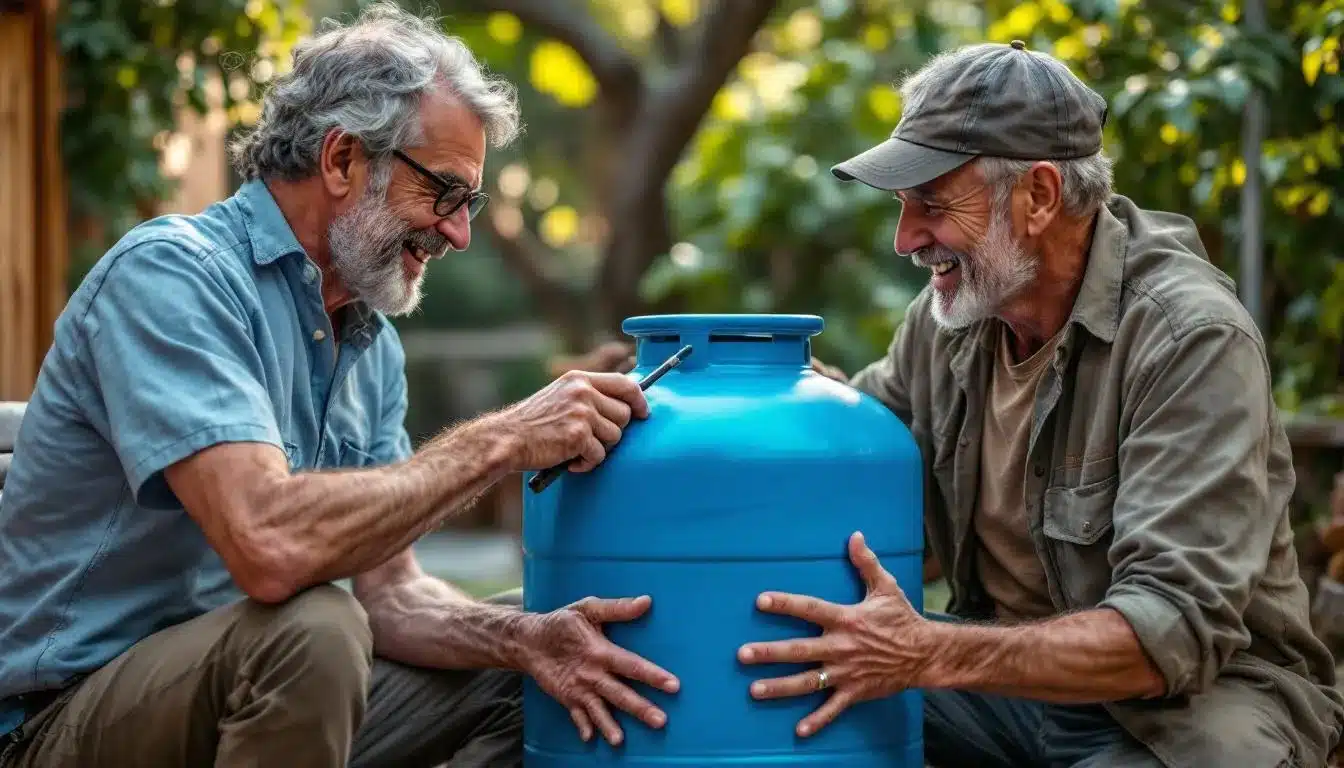

The drums of 200 litres represent valuable allies for your gardening, storage or DIY projects at a lower cost. Yet, where to eat these containers free of charge, while escaping the pitfalls of questionable ads or risky recoveries? No need to worry, there are many reliable methods that offer the possibility to find these containers without paying anything, and with the assurance that they will perfectly suit your achievements.
With concrete advice and validated tips on the ground, I will accompany you as a passionate friend would, so that you can move forward calmly. Go ahead, and take the opportunity to give a new dynamic to your DIY ideas with the recovery of these drums ready to support your initiatives!
Summary of key points
- ✅ Anticipating tax and estate processes
- ✅ Formalize any occupation to avoid disputes
- ✅ Consult a notary to secure the transmission
Find a free 200 liter drum for your projects without mistake
The 200-litre drums have become difficult to circumvent for the garden, the water supply or some DIY projects. No need to get away a lot: with the right tricks, it quickly becomes easy to find it without charge, without fear of falling on a bad plan. Let us work together where to find the rare pearl, how to avoid pitfalls, and how tinkerers like Lucie and her loved ones take it on a daily basis. Sometimes an association of the neighbourhood may be concerned with the redistribution of these drums.
Where to find a free 200-litre barrel near you
Local companies such as breweries or some food producers regularly dispose of their containers. Sometimes water treatment companies or even local authorities also offer BWIs or drums that have reached the end of their lives. So try your luck by contacting the managers directly – expose your approach to them with ease.
At the same time, keep an eye on the classified sites (Leboncoin, Vivastreet) and join Facebook groups dedicated to donating or exchanging material. Diversifying these methods increases your chances of getting hold of a 200-litre industrial barrel without paying anything.
DIY, shredding and other good plans to watch
Some DIY or garden shops offer damaged or unsold drums; Sometimes we'll let you take a barrel in good condition to the garbage store. For your information – a DIY store employee explained that at the end of the season, some unused containers could be given, provided the question was asked.
Simply present your project, consider asking if useful accessories are also available (this is happening!), and ensure safe transportation with gloves or a suitable vehicle. A neighbour recently obtained several plastic cans from a local brewery: they were very well suited for rainwater recovery.
This practice of the field, reported within collectives of recuperation, confirms that by trying its luck regularly and refining its demand, it is difficult to let pass an interesting opportunity.
How to be sure that the free ad is really reliable
Before you start, check the consistency and freshness of the information – are the photos explicit and recent? Is the location correctly specified? Does the seller quickly follow up?
A direct contact by telephone or courier simplifies checking availability and hunting, often, uncertainties. Consider also seeking advice from former waste pickers if possible (in some groups or associations, good pipes circulate quickly). These reflexes help you make discoveries and avoid mishaps.
Be vigilant during the exchange: courtesy and punctuality are major assets.
Ensure safety and quality of a free recovered drum
Keep in mind some essential checks: the condition and history of the barrel really make the difference before leaving. This verification can, in most cases, guarantee the quality of all future uses, whether for gardening, water recovery or other storage. It is often repeated on the ground – it is always better to give these barrels or recycle them locally, instead of letting them hang around or end up at the dump.
What check points before accepting a free drum for water recovery or storage
Before charging your find, inspect its general condition: no visible cracks or corrosion marks, and especially a careful nose to detect any chemical odours. Also ask what was the former contents of the container. Prioritise, if possible, a container previously reserved for food; It will be much easier to clean and more reassuring, mainly for the recovery of rainwater or the vegetable garden.
For any food use, do not forget to check the presence of the necessary markings. These actions lay the foundation for a secure project.
Good to know
I recommend that you always ask the history of the barrel and give priority to models used to contain food for greater safety.
How to quickly examine the sealing of a 200-litre barrel
Take a simple seal test: add a small amount of water, carefully observe the seals and the bottom. For even finer verification, apply liquid soap to sensitive areas. If bubbles form, there's probably a leak!
This process, often referred to in recycling workshops or discussions between members of recovery, avoids a lot of inconvenience afterwards.
What standards and precautions for peaceful use at home
For domestic use, prefer a can with food marking (UN or specific logo), essential for water collection or for the garden. Polyethylene drums remain safe, robust and versatile.
For decoration or some DIY, metal or steel variants also draw their pin from the game. To align with these standards is to ensure safe use and to act responsibly with respect to containers.
To optimize your savings and maximize your discoveries, find out how to rare 2 euro coin: understand, identify and value your findings can also inspire your research for free drums.
Transport, clean and transform its free drum
To make the most of your acquisition, plan: opt for a suitable car and, if possible, mutualize the collection between neighbours or friends. It's more convenient and a little more economical!
Combining several drums during a single displacement saves time and limits the carbon footprint. Occasionally, a local association coordinates the collection or sets up a solidarity redistribution of these containers (do not hesitate to ask your town hall: in some municipalities, partnerships exist to recycle old industrial drums).
What precautions should be taken for cleaning and first use
Mix gloves, a brush, very hot water with soap or bicarbonate – good internal decrashing is essential. Rinse carefully, then let dry completely before starting your project.
This stage, sometimes neglected, is a prerequisite for the success of your future transformations, especially if you are thinking of reusing the barrel for something sensitive.
Easy ideas to turn your recovered barrel into a smart DIY project
- Water collector: Make your container a rainwater collector for the garden or, why not, for collective use within a local association.
- Giant gardener: Enjoy a large volume for an unusual vegetal corner, or animate a shared garden in a group in the neighborhood.
- Terrace furniture : Turn the drum around in a coffee table or sitting – something to boost your outside corner in a wink.
Try it? The re-use of these containers gives a second life to a resistant and free material, reduces the use of new and stimulates imagination. Many people also transform their can into composters: re-use, as it seems, is cultivated in various contexts and each collective project finds a new flavor there!
Anticipate risks, responsibilities and good environmental reflexes
Free can never be careless. It is best to remove any cans of fuzzy origin, especially for the storage of water or foodstuffs: always ask the old owner the right questions and inspect the inside to eliminate any suspicious residue.
If the doubt remains, drop it and find a new collection or a specialized association. These reflexes guarantee your use, protect your crops and participate in a reasoned waste management.
Recovery must be carried out with the consent of the donor, whether it be a company or a waste plant, at the risk of sanction. Allow yourself a few minutes to learn about local regulations: in many regions, specific rules govern the collection and valuation of barrels or IBCs.
By adopting these gestures, you avoid any legal hassle while acting concretely for the environment and the common management of recovery approaches.