
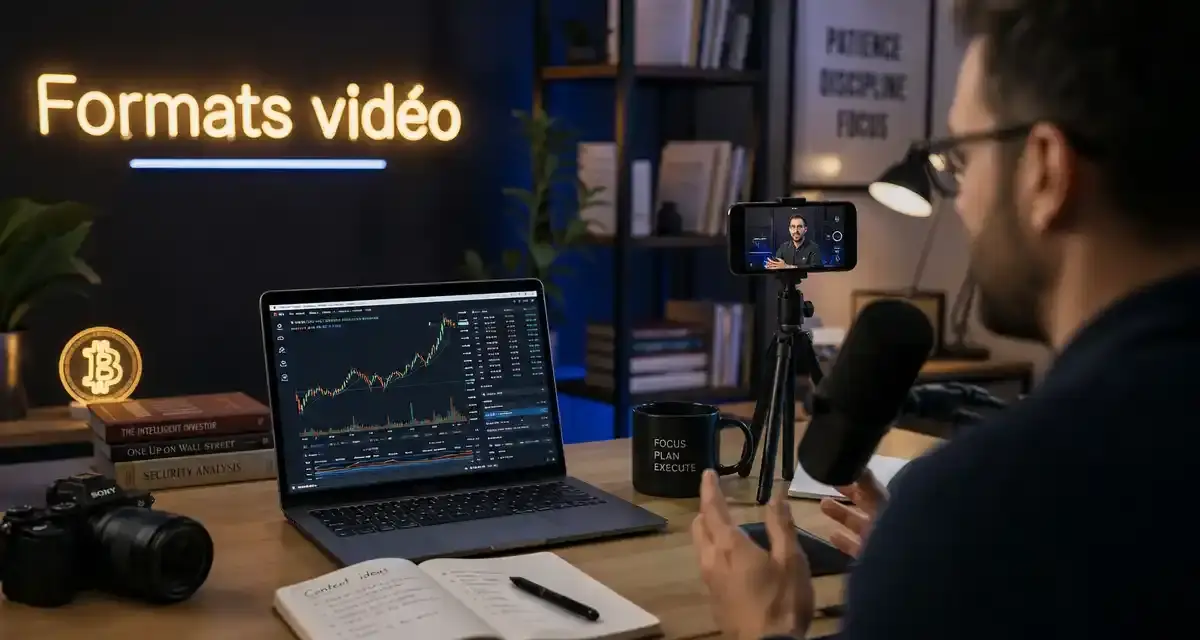

Video has become an essential format for talking about Internet finance. Whether it is explaining the operation of an investment, decrypting economic news or presenting the results of a business, it makes it possible to make sometimes complex subjects much more accessible.
But producing a good financial video is not just about treating its content. The file format also plays an essential role. Image quality, weight, platform compatibility or ease of editing: choosing the right format can make all the difference when publishing.
MP4: the versatile choice for most content
To publish a financial video on a website, YouTube or social media, MP4 is usually the simplest solution. Its great strength lies in its excellent balance between quality and file size.
Let's take the example of an analyst who wants to publish a short video each week showing the main market developments. With a properly compressed MP4 file, it can keep legible graphics and a clean image without creating an excessively heavy video.
This is particularly important in the financial field. A stock market graph, a comparative table or a few figures displayed on the screen must remain perfectly legible, even on a smartphone.
MOV: Practice when quality is a priority
MOV format is often associated with very good quality files and is particularly well integrated into some mounting environments. It may therefore be interesting to produce interviews, webinars or institutional videos before they are converted into a lighter format for dissemination.
Imagine a company recording a 30-minute interview with its financial manager. Keeping a MOV version during the assembly phase allows you to work from a high quality file. A lighter MP4 version can then be created for publication.
The main drawback remains the weight. For direct webcasting, a large file can slow down loading and complicate sharing.
WebM: an alternative thought for the web
WebM also deserves to be known when videos are primarily intended to be embedded in web pages. This format has been designed to offer good quality while limiting the amount of data required for reading.
It may be relevant to incorporate a short explanation directly into an article on investment, credit or budget management. Before adopting it systematically, however, it remains preferable to check its compatibility with the tools, browsers and platforms used by its audience.
Specialized formats are not always suitable for publication
Not all video files were designed for the same use. Some are associated with television broadcasting, archiving or specific video streams. A file ts, for example, may be encountered in some broadcast environments, but it does not necessarily represent the most convenient choice to directly publish a financial video intended for the general public.
The right question is therefore not: « What is the best video format? »But rather: « What format does my channel match? »
Also adapt the video to the platform
The file format is only one part of the equation. You should also think about the dimensions and orientation of the video.
A detailed financial analysis for YouTube will naturally work in horizontal format. On the other hand, a 45-second explanation of inflation or compound interest may be much more efficient in vertical on TikTok, Instagram Reels or YouTube Shorts.
It is therefore wise to keep a source file of good quality and then create several versions. The same analysis can become a long video, several vertical extracts and a few short sequences embedded in an article.
Conclusion: choose the format according to usage
For most financial content creators, MP4 is an excellent starting point because of its compatibility and reasonable weight. MOV can be preferred during production when quality is essential, while WebM offers an interesting alternative for some web uses.
Beyond the technical aspect, the objective remains the same: to provide financial information in a clear and accessible way. Before each publication, check three simple elements: the readability of the numbers, the weight of the file and its compatibility with the chosen platform. A good format must remain invisible to the viewer and leave room for content.