

Entrepreneurs, managers or creators, distinguishing between balance sheet of the Result account remains a solid basis for managing an activity: the first book provides a clear vision of financial health at a given date, the other measures performance on an exercise, two useful benchmarks to convince your partners, convince investors or anticipate future strategic choices.
The difference between profit and loss account in 2 minutes
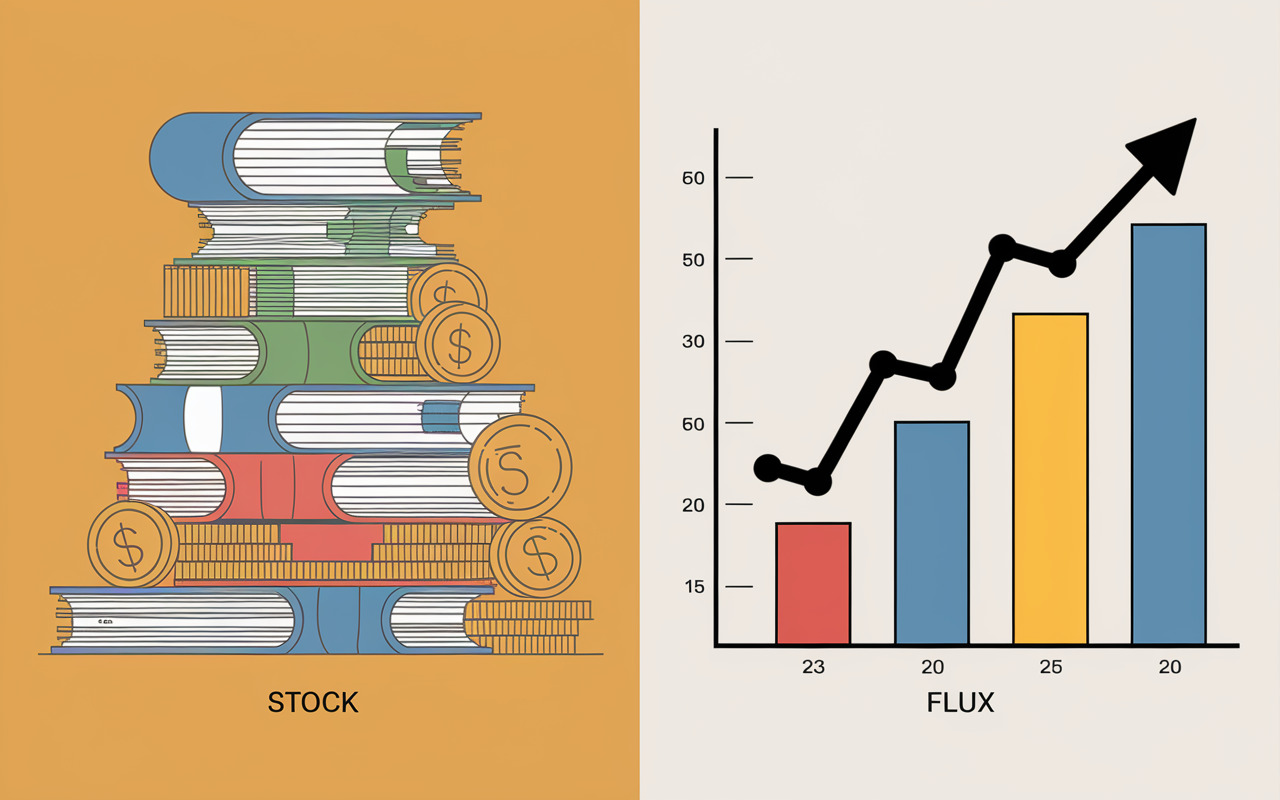
Do you regularly confuse "balance sheet" and "balance sheet"? Don't worry: confusion is common! The main idea to keep: the balance sheet captures the health of the company at a given time (the famous "stock"), while the result account presents the performance over an entire year (the "flows"). This principle is always reflected in financial management training.
In practice: the balance sheet specifies what the company owns (its assets) and what it has to repay (its debts) at the end of the financial year, while the profit and loss account lists all revenue on one side, all expenditure on the other, to achieve a net result. For example, let's take an SME: for the year 2023, its profit and loss account has a turnover of 1 200 000 € and net income of 858 000 €, while at the end of the year's balance sheet its assets accumulated 730 000 € (machinery, stock, liquidity, etc.) and its equity amounted to 200 000 €. Some creators discover with surprise the importance of this double look from their first request for bank credit!
What is a balance sheet?
Figure the photograph of the company's assets at a specific date: this is the main contribution of the balance sheet. This document helps to assess what a company really is worth (on paper), reassures partners and can displease the tax authorities. But it remains unavoidable.
Review: simple definition & concrete objectives
The accounting statement summarizes, through two columns, all that a company holds (the assets), and all that it owes (the liabilities), at 31 December or at the end of any defined financial period. This is never the retrospective of a year, but a frozen photo. Banks, investors or large customers use it to probe a company's robustness, for example before offering financing or accepting a large order. A trainer recently admitted that "the presentation of the balance sheet is sometimes sufficient to obtain an agreement in principle for a loan", proof of its concrete strength.
To illustrate, a typical SME will often present on the balance sheet: a total of 730 000 €of which: 250 000 € capital assets (materials, buildings, etc.), 50 000 € stocks, 105 000 € Cash. For liabilities: 200 000 €, 187 000 € in undistributed profits, and the rest in various debts. Some entrepreneurs, after several exercises, see it as a real identity card of their company.
Balance sheet structure – assets, liabilities... and mandatory balance
The balance sheet is always presented in two equal halves: the asset (what it owns) on the left, the liability (how everything is financed) on the right. There is no exception to the strict equality between total active and total passive. A few points to remember to read this table at a glance:
- Assets: fixed assets, physical stocks, receivables, bank funds
- Liabilities: equity arising from contributions/investments, bank or supplier debt, tax and social debt
Monitoring the proportion of equity in liabilities remains a management tip that is regularly shared by experts (inspires confidence in financiers). Some young leaders discover on the job that a sudden decline in equity makes it difficult to obtain credit...
What is a profit or loss account?
Need to know if an activity "generates money" and with what efficiency? The profit and loss account provides a summary of all the company's financial flows by period (often 12 months).
Definition + practical utility
The profit and loss account adds together all revenue (sales, benefits, other receipts) and all expenses (purchases, wages, taxes, etc.), and then assesses the final balance over a period for many, from January 1 to December 31. It thus provides concrete benchmarks on performance and profitability: positive net result = profit, negative = loss. It is noted that many managers of SMEs mainly track turnover (1 200 000 € in our example), the amount of social security contributions (60 000 €), taxes (250 000 €) and look for a comfortable net result (858 000 €). This document is essential to satisfy the tax administration, reassure the financers... or satisfy the curiosity of some important partners!
Detailed structure: outputs/loads, intermediate balances
The profit and loss account breaks down each transaction according to its nature. Generally, you will meet:
- Products: income from sales, benefit fees, interest received
- Expenses: purchases of goods, wages, rents, interest or tax payments
Educational accounts regularly value "management intermediary balances" such as gross margin or EBE (Excess Brut d'Exploitation) valuable to guide your decisions. Some online tools also offer clear schemes to self-train quickly, even without initial management training. An accountant recently pointed out that understanding the details of her balances can avoid many misunderstandings when raising funds...
Good to know
I recommend that you monitor the proportion of equity in the liabilities of the balance sheet, this is a key indicator to inspire confidence in financiers and facilitate crediting.
Main differences between balance sheet and profit and loss account
Let's try to make it clear: when we look at both documents, they never tell the same story. These are, for the record, the major deviations to be kept in mind in order to avoid misinterpretation.
Quick comparison table – visual summary
| Criteria | Review | Profit and loss account |
|---|---|---|
| Nature | Static (photo at instant T) | Dynamic (year film) |
| Utility | Solvency, wealth, guarantee | Performance, profitability |
| Structure | Assets / Liabilities | Products / Expenses |
| Legal obligation | Companies (SARL, SAS, EURL, etc.), annual | Companies, annual (compulsory also in AR under the actual scheme) |
| Key analysis | Equity, debt | Net profit, margins |
According to most leaders' opinions, at least understand this opposition: the balance sheet sheds light on "solidity", while the profit and loss account focuses on "performance". This helped more than one entrepreneur during a first bank interview!
Concrete illustration: express case study
Imagine a classic SME: at the close of 31/12/2023, its assets total 730 000 €, liabilities 730 000 € (including 200 000 € equity, 530 000 € debt). In the profit and loss account for the same period, it recorded income from 1 200 000 €, charges 342 000 € and net income of 858 000 €.
The banker will focus on the balance sheet to gauge the strength of his guarantees ("what are the assets that can be mobilised?"), while the potential partner will focus on the profit and loss account ("Is profitability real?"). It's a two-way line that no manager should save. Sometimes an entrepreneur "gets out" his loan on the simple quality of his balance sheet...
How do I read and analyze your accounting records?
Being able to translate these two tables always puts you in front of others: to spot a weakness in time avoids bad surprises, to take advantage of a strength can speed up growth.
First benchmarks for reading a review
First take the fixed asset (the assets that last) and the cash flow. Then go through the column of equity to the liability and assess the short debts. Good reflex shared by several advisors: regularly monitor the debt/equity ratio (if debts are close to the amount of capital, prudence...). Some managers, reading a three-year comparative balance sheet, avoided over-indebtedness thanks to this simple ratio.
An input from the online tools: one clearly visualizes each shift evolution, over two or three exercises, which refines the diagnosis.
Decrypt your result account: easy steps
Here are some reflexes frequently adopted by experienced managers:
- First look at the turnover, then detail where the main costs (wage bill, taxation, etc.) go.
- Quickly identify intermediate margins (gross, operational), followed by operating result and net profit
- If your result deteriorates, do you question: fixed charges rising? Lower commercial revenues? (Current issue in practice during an audit)
Tips from experts: Crossing your result account with an online simulator allows you to anticipate critical thresholds at best without necessarily mastering in-depth accounting. Some users report that a simple simulation helped decide a risky investment...
Examples and practical cases: an SME's balance sheet and profit and loss account
Are you looking for concrete? What do these documents look like when translated into numbers? Together, let us look at a simplified case, which is relatively used in training given by Chambers of Commerce or certain support networks, coaches also like to use comparative cases to demystify the analysis of accounts.
Numbered example of balance sheet (end of year)
| Assets | Amount (€) | Liabilities | Amount (€) |
|---|---|---|---|
| Capital assets | 250 000 | Social capital | 200 000 |
| Stock | 50 000 | Profits not distributed | 187 000 |
| Accounts receivable | 325 000 | Bank debt & suppliers | 343 000 |
| Treasury | 105 000 | ||
| Total active | 730 000 | Total liabilities | 730 000 |
Keep in mind: the equality of the two totals attests that the balance sheet is perfectly constructed (no "disequilibrium" in practice, which also reassures investors). Several experts stress this balance as a condition for accepting a bank file.
Example of profit and loss account for the same SME
| Wording | Amount (€) |
|---|---|
| Turnover | 1 200 000 |
| Social charges | 60 000 |
| Taxes | 250 000 |
| Other charges | 32 000 |
| Net profit | 858 000 |
A consistent net result is often observed as a positive signal... but comparing to the previous year is fundamental to finding a hidden evolution. Some colleagues also found real surprises by recalculating the trend over three years.
Legal obligations, practical tools and resources
Stalking on the production of the balance sheet is subject to sanctions, sometimes heavy. Fortunately, a large number of devices simplify the task, especially for beginners or those who "past" administrative phobia (this is not uncommon, even in experienced leaders!).
Legal obligations by status (SARL, SAS, EI...)
Each commercial company (SARL, SAS, EURL, etc.) must draw up its annual balance sheet and profit and loss account, to be forwarded to the competent registry. On the micro-entrepreneurs side: clearly reduced obligations you then in principle limit yourself to a revenue/expenditure book, except in case of option for the real regime. Some entrepreneurs report that documentary regularity has prevented them from having a problem during a check.
In case of forgetfulness or default, the fine usually starts at several hundred EUR and can quickly rise. So it's best to use simple software or an accountant (count about 79 € HT/month for overall support in the most frequently observed rates on the market). A consultant points out that the extra cost of a service sometimes avoids a much heavier penalty...
Free tools, simulators and templates to download
Nothing more classic than getting lost at the beginning... Many firms now offer:
- Downloadable media (PDF, checklists, free summary templates)
- Online simulators to easily estimate margins or test various tax regimes
- Ready-to-use templates on spreadsheet (Excel or Google Sheets), to create your own balance sheets and profit and loss accounts
Want to be better accompanied? Don't hesitate to take advantage of the presence of a registered professional at the Order of Accountants (in practice or on an online platform), check the published customer reviews (some actors display 4,8/5 and post your questions, even those that "are obvious". A trainer noted that the best advances often start with a simple request, even considered "beast".
Good to know
I recommend that you use online simulators to easily anticipate critical profit and loss thresholds, this can greatly improve your decisions without needing to be an accounting expert.
Express FAQ: Frequently Asked Questions
What is the concrete difference between balance sheet and profit and loss account?
The balance sheet provides a statement of the company's assets at a given date (storage), while the profit and loss account tracks the activity's performance over the year (flow). This distinction seems obvious, but many forget, in a strategic meeting.
How to calculate the net income from the profit and loss account?
The net result is achieved by subtracting total expenses from total revenues for the period under review. Ex: 1 200 000 € less products 342 000 € charge = 858 000 € net income. One adviser pointed out that "reading the net result often guides the investment decision".
Balance sheet and profit and loss account: mandatory for a self-enterprise?
For self-entrepreneurs, there is no balance sheet or profit or loss account charged, unless there is a real flow of funds. On the other hand, a recipe book is required (and the team of chambers of commerce strongly recommends it).
How to analyse profitability through these documents?
Look at the operating margin, the result, and then monitor the evolution on both tables: profit and loss account and equity growth. Many entrepreneurs neglect this double reading... At their expense!
R&D (Research & Development) costs: where do they count?
Depending on the context, some R&D expenditures are recorded as expenses in the profit and loss account, while others are activated on the assets of the intangible capital balance sheet. Several professionals recommend always consulting a specialist to validate this point (the legislation is evolving regularly).
Need a model or personalized advice?
More 10 000 entrepreneurs have already received support, with an average of 4,9/5 on a handful of 1,300 opinions Since 2009: let yourself be guided, download a template or ask a professional for advice. Many sites offer direct access via a button "Download the guide" or "Similar my status"... Why not you? Some have discovered a decisive lever simply by crossing this course!