


Take control of your Life insurance with the free management Here, every investment decision comes back to you, offering total flexibility, among the lowest costs on the market and a wide choice of media accessible on a clear interface. This option often convinces self-employed people, attentive to optimizing both returns and costs, and allows them to finely adjust their portfolio to their own expectations or risk tolerance, while being supported, whether digital or human, to invest calmly.
What is free life insurance?
Free management in life insurance allows every saver to take charge of the direction of his investments, without having to go through an intermediary. In concrete terms, you orchestrate the choice of media (euro funds, units of account, ETF...) and ensure the distribution according to your desires and objectives. This option contrasts with managed management – a professional automatically distributes your savings from a predefined profile.
It is regularly observed that this wide access to more than 600 media offers you the opportunity to develop a portfolio that is faithful to your temperament: prudent, balanced, or growth-oriented. This independence seduces both those who discover the world of savings and those who like to understand the investment; But this choice implies taking on certain decisions along the way. A trainer also showed that many new entrants appreciate the effect « Customized »... But they also like to be able to rely on effective customer service in case of question.
Simple definition and context
With this operation, each investment can fit your investment horizon, your ability to cash fluctuations, your beliefs (real estate, equity, bonds, responsible finance...). It is up to everyone to measure the share of secured funds (e.g. a Euro-fund to 3% in 2025 at BoursoBank) compared to more dynamic media such as units of account, ETF or SCPI.
The main banks and insurers are now promoting this type of management, which can be accessed on their web platforms, simulators, or in a range of resources that are really leading towards an experience tailored to each individual. One expert recently mentioned that educational tools are progressing rapidly, stressing the value of getting informed before starting.
Free Management vs Piloted Management: Differences
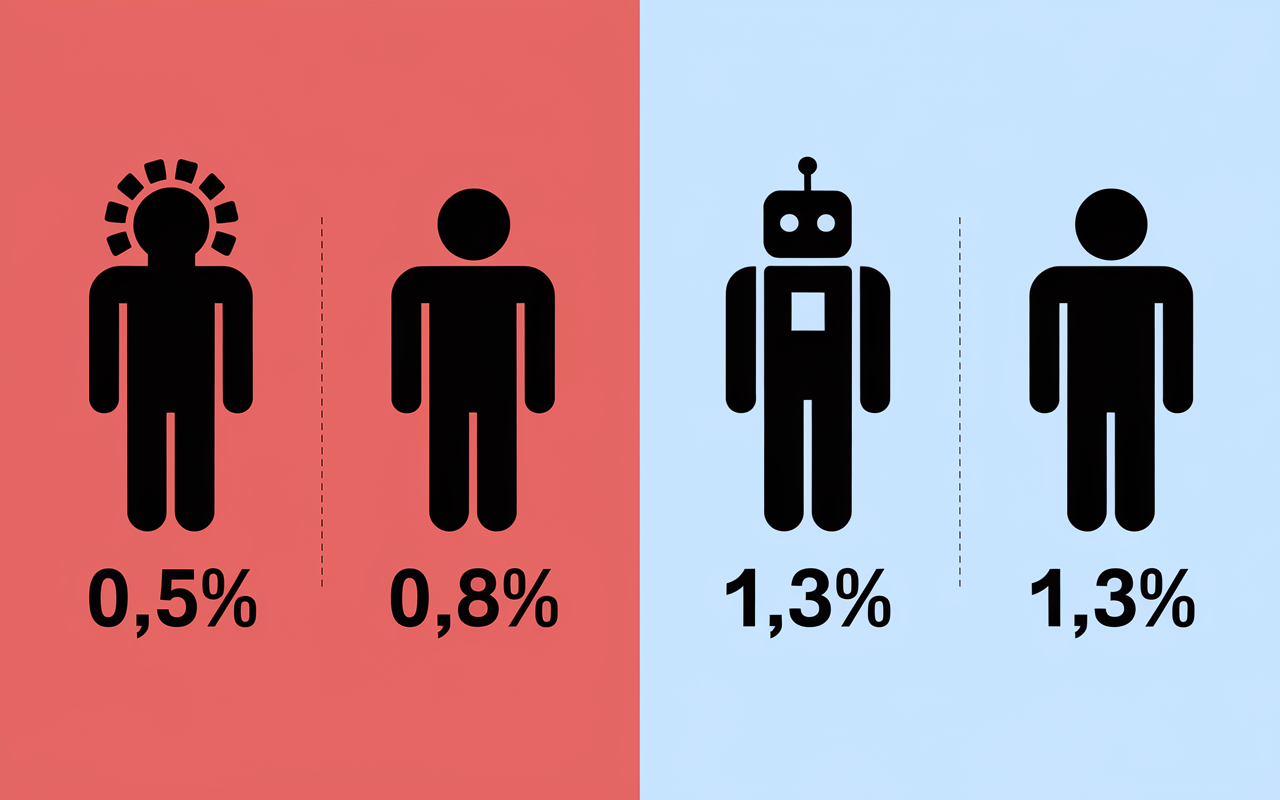
Do you hesitate between driving everything yourself or putting the reins back to a pro? Here are some concrete distinctions at a glance:
| Free management | Managed |
|---|---|
| Full freedom of choice and arbitration | Delegation of management, automatic monitoring of allocations |
| Annual fee 0.5% to 0.8% | Piloted cost up to 1,3%/year (excluding ETF) |
| Specific adaptation to your situation | Distribution according to pre-established standard profiles |
| Pilotage and follow-up | Support, automatic alerts as required |
| Ideal for profiles wanting autonomy | Suitable for those who prefer not to spend time |
Free management logically attracts curious profiles, relatively sensitive to fees and to the search for personalized performance. On the other hand, piloted management offers some tranquillity to those who want to get rid of daily monitoring or fear of making mistakes. Some professionals point out that switching from one mode to another is now possible in many contracts, for more flexibility: it is not uncommon to see a customer test different styles according to their needs at the moment.
How does free management work?
Entering this mode is starting a dynamic adventure: it is better to select your media, distribute your capital and adjust over time (wholly online, or on application). For example, a saver opts for 70% Euro funds (secured) and 30% ETF or units of account, then adjust this distribution according to how markets evolve or to secure unexpected surplus value.
A performance simulator is often made available as soon as the contract is opened, allowing different strategies to be tested in a few clicks. It is generally observed that some users appreciate viewing several scenarios before deciding. This facilitates arbitration.
Key steps and tools
In free management, important moments are usually:
- Opening of the contract, with immediate choice of management method.
- Selecting media from Euro funds, units of account, real estate, etc.
- Arbitration, i.e. rebalancing of the portfolio, sometimes carried out at no cost or at no cost 0,25% and 0,5% According to the operator.
- Performance monitoring via a digital interface, with built-in alarms and simulators.
Over the course of your experience, the distribution can evolve to seek more return or consolidate savings, provided that you invest a little time on it. If an unexpected event occurs in the markets, no panic: you can intervene immediately to adjust your main supports. Is it really accessible to novices? Several clients report that the "test-error" side is rather reassuring, especially since online help is now well thought out.
Do you ever compare different scenarios before you validate a choice? This is a simple option, often recommended by heritage coaches.
Advantages and disadvantages of free management
Choosing free management means making the bet of autonomy, accompanied by reduced costs and real flexibility in the creation of its portfolio. But this latitude still requires vigilance. Unwise distribution or poorly controlled arbitrations can in fact amputate performance especially for those tempted by impulsive movements on the current trend. Some say that you should like to "put your hands in the camboo": it has its charm, but it is better to remain attentive.
Benefits and vigilance
Strengths and Precautions:
- Uncommon freedom: arbitration is done as soon as desired, on several dozens of media.
- Mastery of fees: generally 2 times lower than piloted management (e.g.: 0.5%/year at Lucy Cardif).
- Optimized efficiency: access to dynamic euro funds, ETFs, many units of account.
- However, attention should be paid to risks: regular monitoring is necessary, or too late to react to a market reversal.
It is regularly recommended that free management be treated as a medium-term project, even if it is tested with small amounts first. One counselor added that even the most cautious people get great satisfaction... But we must agree to inform ourselves with the water.
What supports for free management?
Hard to fall short of choice: free management is really more reserved for an insider elite, with a range of media that extends widely across the main platforms.
Overview of media
Depending on your profile and desires, diversifying easily becomes possible:
- Euro funds: a stable solution, with 3% to 4.1% performance in 2025 according to contract.
- Units of account: SICAV, FCP, shares, bonds, offering varied performance.
- ETF (trackers): management camels, with tiny fees, sometimes more than 40 references on the same contract.
- SCPI: to bet on real estate, with a yield displayed in the area 3% to 5%.
- Responsible Funds certified ISR/ESG: combine investment and societal impact.
At BoursoBank, users have access to more 600 mediaof which: 380 funds, 40 ETF and 100 live titles. Some experts dedramatize: even a cautious near-beginner can compose a tailor-made allowance, provided that they are properly accompanied at the start.
Standard profile for open management
This option mainly attracts those who like to adjust their savings strategy in detail, compare multiple funds and measure performance. The most common case: a saver from 30 to 55, with a minimum of follow-up, curious enough not to confide the keys... But careful enough not to bet everything on a single card. According to some experts, many users started small before allowing more dynamism by seeing the first results: free management lends itself well to these progressive approaches.
Zoom on adapted profiles
Imagine a real situation: an active person with 2 000 € and ready to spend about 20 minutes each quarter to adjust its portfolio.
In parallel, for those who lack time or want absolute security (euro funds only), automated management remains the reference option.
Thus, in free management:
- Rather dynamic profiles, enjoying testing ETFs or gradually boosting the gains achieved.
- Wealth-based people who want to optimize taxation and prepare for the transfer of their assets.
- Adepts of hybrid models, able to move from piloted management to free management as they evolve.
Do you like to keep your hands on your money? Many recognize that they can do so, provided they appreciate a minimum of follow-up. One advisor mentioned that it is not uncommon to see changes in strategy over the years: changes in life (marriage, birth, real estate purchase) often influence the degree of initiative of each individual.
Free management costs
Fees are a crucial point of comparison! Free management presents annual tariffs to many savers between 0,5% and 0,8% (or less), while the management entrusted to a professional easily reaches 1,3% or more, in particular for arbitrations not included. Some institutions are now highly transparent, while others are somewhat confusing, depending on the complexity of their offers.
Typologies of costs and transparency
To be checked, before any decision:
- Management fees from euro funds: usually between 0,5% and 0,8%/year.
- Unit of account costs: 0,85%/year for traditional bank, sometimes less at connected establishments.
- Arbitration costs: free option for some, if not for 0,25% to 0,5% by operation.
- Payment costs: 0% to 3% according to the operator selected.
Some insurers highlight clear comparison tools to accurately estimate each real cost. Others, on the other hand, sometimes camouflage some secondary expenses in small lines: do not hesitate to consult the details before signing. The Association of Consumer and Finance recommends that opacity be removed, and that tariff schedules be systematically requested. An old reflex that avoids many disappointments!
| Mode | Typical annual fees |
|---|---|
| Free Management (Lucya Cardif) | 0.5%/year |
| Managed (Yomoni) | 1.3%/year + 0.3% ETF |
| Traditional bank | 3% payment, 0.85%/year UC, 0.5%/arbitration |
Underwriting and arbitration management
The subscription route has been greatly simplified: today, everything is done online, whether you are an expert or a novice. As soon as the contract is in place, you access an intuitive platform (or application), with the possibility of arbitrating between different portfolios in just a few operations. Schematically, everything goes from registration to regular management: personalized allowance, one-off rebalancing (classical example: quarterly adjustment or secure earnings). Some users report real satisfaction at seeing their strategy evolve according to their situation.
UX steps and utility tools
Digital tools accompany each step:
- Fill in your contact information and choose the appropriate contract
- Define the desired type of management
- Make the initial payment (20 € 5 000 € as required)
- Discover your custom space, possibly guided by tutorials or enjoying explanatory pop-up
Arbitrations are performed directly via the customer area, but it is also possible to obtain the assistance of an advisor in case of doubt, or simply to use the telephone call, to keep a human side. A heritage coach recently testified that the possibility of talking to a real person remains reassuring for a majority of clients, even "ultra-connected".
Have you ever feared making a risky choice? Express access to the FAQ or an explanatory video partly responds to these last-minute doubts: this immediate support has sometimes allowed hesitants to jump in full clarity.
Frequently Asked Questions
Many of you have questions about free management: here is a grouping of the most frequent questions, accompanied by some concrete points:
FAQ Free life insurance
- What is free life insurance?
It allows you to compose your allowance, to make instant arbitrations, from 20 € The Commission's contribution to many contracts. - Free or controlled management, what difference?
In free mode, it is up to you to choose and intervene; In pilot mode, a manager takes control of your profile, which regularly results in a higher cost and leaves less room for customization. - Can beginners choose free management?
Yes, provided you rely on the practical guides, FAQs, and simulators provided. It is better to start carefully with Euro funds or a balanced mix. - What particular costs should be monitored?
Management fees: 0.5 % to 0.8 %; costs of arbitration: often less than 0,5 % ; fee on piloted management: sometimes until 1,3 % ; Payments: Free is now the rule on many online spaces. - Change management after subscription, is it possible?
Absolutely, most modern contracts allow this shift, free of charge most of the time. - What are the most monitored media?
Efficient euro funds (example: 3,4% in 2025), reduced-cost ETF, SCPI to vary its investments. - How can you avoid misallocation of your wallet?
Prioritize the use of guides, simulators, and allocate between euro funds and units of account; adjust the allowance several times a year remains convenient to make online.
Expert reminders: security, optimization and assistance
Need advice or comfort? Major establishments highlight the availability of human advisors, ISR/ESG labels to invest responsible, and rely on a large number of clients (you knew BoursoBank announced it) 8 million?). We also note the increased presence of educational tools, simulators to test your assumptions over 5, 10 or 20 years, or even small quizzes to better understand your profile. Engaging in free management is not just getting into the water: transparency and accompaniment today make all the difference... And it's no coincidence that customer satisfaction is progressing!